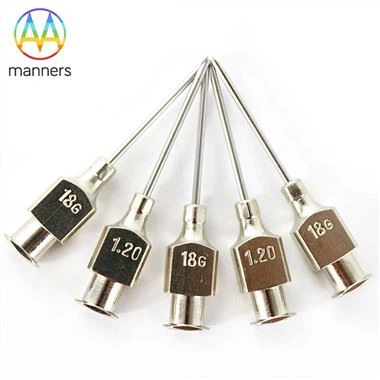
Technological Innovation And Market Trends Driven By The 18G Fine Needle (Type E)
Jun 15, 2026
The evolution of the brachytherapy field has always been accompanied by instrumentation breakthroughs. The 18G fine needle (Type E) is not a static product; it is becoming a carrier for a series of cutting-edge technological innovations, profoundly influencing the trajectory of the global radiotherapy market.
I. Deep Integration with Image Guidance
Future 18G Type E needles will transcend their role as mere "puncture tools" to become "smart probes" integrated with multiple sensors.
- MRI-Compatible Variants: With the increasing prevalence of MR-guided brachytherapy (MRgBT), developing 18G Type E needles made entirely of non-ferromagnetic materials (such as titanium alloys or PEEK polymers) has become a focal point. These needles produce no artifacts in strong magnetic fields, providing sub-millimeter soft tissue resolution that allows physicians to visualize changes in tumor boundaries in real-time during treatment.
- Fiber-Optic Sensing Needles: Embedding miniature Fiber Bragg Grating (FBG) sensors into the needle tip enables real-time monitoring of temperature and stress changes. This not only aids in verifying implantation accuracy but also provides precise thermal dose feedback during combined "thermo-radiotherapy" procedures involving thermal ablation.
II. Drug-Loading and Multifunctionality
"Theragnostics" (Therapeutics + Diagnostics) represents a major trend in oncology. The 18G Type E needle is being endowed with new functionalities.
- Drug-Eluting Needles: Beyond carrying radioactive sources, the needle body itself can be engineered as a drug delivery vehicle. For instance, coating the shaft with a biodegradable polymer loaded with chemotherapeutic or immunomodulatory agents. This allows for the local, sustained release of drugs concurrent with radiotherapy, achieving multimodal synergistic therapy ("Radiotherapy + Chemotherapy + Immunotherapy").
- Biopsy-Therapy Integrated Needles: Novel Type E designs allow for the acquisition of small tissue samples for pathological analysis during insertion. Upon confirming the tumor's nature, radioactive seeds can be implanted or the afterloader connected without changing the needle, truly realizing a "see-and-treat" workflow.
III. Global Market Trends and Localization Opportunities
- Market Growth: Driven by aging populations, rising cancer incidence, and the普及 (popularization) of precision radiotherapy concepts, the global brachytherapy needle market is projected to maintain steady growth. The Asia-Pacific region, particularly China and India, is expected to be the fastest-growing area.
- Domestic Substitution Wave: For a long time, the high-end radiotherapy needle market was monopolized by a few Western brands. In recent years, domestic Chinese enterprises have achieved significant breakthroughs in materials, coatings, and precision machining for the 18G fine needle (Type E), with product performance nearing or even surpassing imported alternatives. Encouraged by national policies and pressure to control medical costs, the "domestic substitution" process is accelerating.
- Customization and Democratization: Leveraging 3D printing technology, personalized implantation templates perfectly fitted to each patient's anatomy can be manufactured, paired with specific lengths of 18G Type E needles. This will standardize and replicate what was once a complex, high-end implantation technique, making it accessible to patients in grassroots hospitals.
Conclusion
The 18G fine needle (Type E) is not only the cornerstone of current brachytherapy but also a key to unlocking the future of precise, intelligent, and personalized cancer treatment. Each iteration of this technology signifies another step forward in humanity's fight against cancer.