Orthopedic Shaver Blades + Manufacturers: A Deep Dive Into Global Market Structure And Competitive Landscape
Apr 22, 2026
Orthopedic Shaver Blades + Manufacturers: A Deep Dive into Global Market Structure and Competitive Landscape
As a core instrument in minimally invasive orthopedic surgery, the orthopedic shaver blade occupies a significant position in the global medical device market. According to industry research data, the global bone knife market was valued at approximately 909millionin2025∗∗andisprojectedtoreach∗∗1.259 billion by 2032, exhibiting a Compound Annual Growth Rate (CAGR) of 4.8% during the forecast period. Within this market, orthopedic shaver blades, as an important sub-category of bone knives, continue to grow with the popularization of minimally invasive surgery. From a regional perspective, North America, Europe, and the Asia-Pacific region are the primary markets, with the Chinese market undergoing rapid transformation in recent years, accounting for a notable share of the global market in 2025.
Analysis of Market Competition Landscape
From the perspective of market competition, the global orthopedic surgical instrument market exhibits a high degree of concentration. International giants such as Stryker, Medtronic, Johnson & Johnson/DePuy Synthes, Zimmer Biomet, and Smith+Nephew collectively command approximately 89% of the global market share, often acquiring surgical robotics startups to bolster their portfolios. The core of their business model lies in constructing a closed-loop ecosystem of "capital equipment + dedicated consumables," creating strong user stickiness and profit barriers. In the specific niche of orthopedic shaver blades, international brands dominate the high-end market through technological superiority and brand influence.
However, profound changes are occurring in the competitive landscape of the Chinese market. Data from 2024 indicates that domestically produced consumables accounted for 97% of the tender bids and catalog listings in the orthopedic surgical instrument sector. The main product types include external fixation systems, bone traction pins, and shaver blades. In contrast, imported consumables accounted for only 3%, primarily covering power system tools, drills, and electric saw blades. This data suggests that, driven by Volume-Based Procurement (VBP) policies, domestic orthopedic surgical instruments have achieved large-scale substitution of imported products.
Profiles of Key Manufacturers
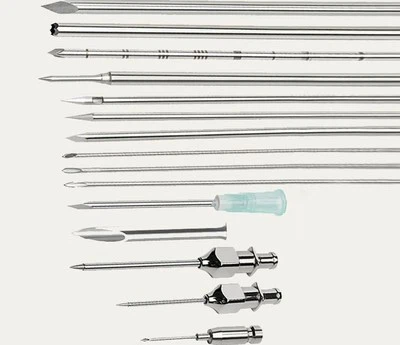
From a manufacturer's perspective, Zoray Precision Technology Co., Ltd. (ZorayPT) stands out as a representative player in the field of orthopedic shaver blades. As a leading one-stop OEM/ODM manufacturer of minimally invasive surgical instruments in China, ZorayPT offers sports medicine orthopedic shaver blades in specifications including 4.0mm, 4.2mm, 4.5mm, 4.8mm, 5.2mm, or custom sizes. Blade geometries include teardrop, double-tooth flat bite, angled double-tooth bite, burr type, or custom configurations. These products are manufactured in ISO 13485 certified cleanrooms, utilizing high-grit fine grinding wheels to ensure cutting edges are smoother and sharper.
Another significant manufacturer, CIS (Nanjing) Medical Technology Co., Ltd., also provides orthopedic arthroscopic shaver blades. Their products feature high-efficiency cutting and debridement capabilities, with a tight clearance between the inner and outer shafts achieving precise "scissor-like" cutting for powerful tissue removal and effective debris clearance. The company, holding ISO 13485 and ISO 9001 certifications, specializes in the production of medical device components, including wires, cables, tubing, needles, and standard products.
Market Drivers and Product Segmentation
The primary drivers of the market are the intensifying aging population and the rising incidence of orthopedic diseases. Clinical demands for fracture repair, joint replacement, and spinal surgery continue to grow, imposing higher requirements on the sharpness, durability, and adaptability of bone knives, compelling companies to optimize product design and manufacturing processes. Furthermore, trends in minimally invasive surgery and precision medicine reinforce the direction of technological upgrading; traditional bone knives struggle to meet the demands for miniaturization and refinement, pushing new-generation blades toward minimally invasive compatibility and precise depth control.
In terms of product types, orthopedic shaver blades are mainly divided into reusable and disposable categories. With increasing demands for hospital-acquired infection (HAI) control, disposable shaver blades are gaining favor due to their advantage in preventing cross-contamination. These single-use blades are typically made of medical-grade stainless steel, offering high corrosion resistance and strength, fully compliant with ISO 13485 standards.
Future Market Outlook
Future market trends indicate that the surgical powered shaver system market, valued at 418.84millionin2025∗∗,isexpectedtogrowto∗∗454.8 million in 2026 (CAGR of 6.81%), reaching $664.37 million by 2032. This growth is primarily fueled by the proliferation of minimally invasive surgeries, technological advancements, and improvements in medical infrastructure in emerging markets.
In conclusion, the orthopedic shaver blade market maintains steady global growth, driven by technological innovation and clinical demand. While international brands still dominate the high-end segment, domestic manufacturers are rapidly rising through cost advantages and technological progress. With the continued spread of minimally invasive surgical techniques and the growing demand for precision medicine, the market prospects for orthopedic shaver blades and related instruments are exceptionally broad.