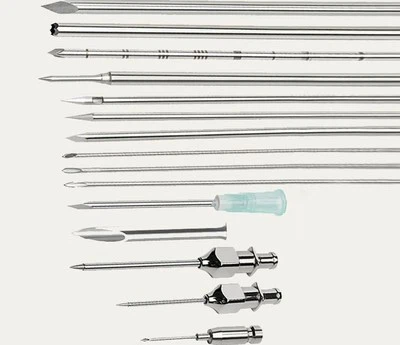
Micron-Level Precision Manufacturing Supports, Hardcore Processes Lay A Solid Foundation For The Medical Safety Of Shaver Instruments
Apr 20, 2026
Micron-Level Precision Manufacturing Supports, Hardcore Processes Lay a Solid Foundation for the Medical Safety of Shaver Instruments
The machining precision of precision medical device components directly determines the operational stability, service life of intraoperative instruments, and the safety of clinical diagnosis and treatment. As an invasive active supporting consumable for orthopedic surgery, the arthroscopic conical shaver blade is in long-term and high-frequency contact with human soft tissues, body fluids, and bone tissues, which imposes strict industry mandatory standards on machining tolerance, structural flatness, and assembly fit. Leading professional medical tool manufacturers adhere to the bottom line of precision intelligent manufacturing, relying on a closed-loop production system of high-precision automated equipment throughout the entire process, and strictly controlling every process in accordance with micron-level quality control standards. This effectively avoids intraoperative medical risks caused by instrument precision defects from the source of processing, empowering the localization upgrading of high-end orthopedic minimally invasive instruments.
The core precision turning process is the key link determining the dimensional compliance of the blade. Benchmark manufacturers in the industry have abandoned the extensive processing mode of traditional manual lathes, and fully adopted the Citizen L12-1M7 high-end CNC precision sliding head lathe for exclusive mass production operations. This special equipment is aligned with international manufacturing standards for precision medical components, adopting full-process digital programming closed-loop control to realize the integrated and synchronous forming of the blade's conical tip, cutting window, and built-in shaft. The overall machining dimensional error is strictly controlled within ±0.01mm. The ultimate micron-level tolerance control can ensure the precise coaxial matching between the blade and the medical power handle, avoiding eccentric jitter, abnormal noise and vibration during high-speed rotation in the operation, greatly reducing the probability of local tissue thermal damage in the surgical area, and adapting to the continuous and stable operation of long-time, high-intensity and complex orthopedic arthroscopic surgeries.
Differentiated composite forming processes work together to balance the dual needs of blade structural strength and medical adaptability. After the precision turning forming of the blade main body, manufacturers adopt an exclusive supporting medical-grade injection molding integrated coating process, strictly controlling the constant temperature and pressure closed-loop operation throughout the injection molding process. This eliminates process defects such as coating shrinkage and depression, internal bubbles and impurities, and surface cracks and defects that may occur in later use. The integrated coating layer is closely attached to the metal substrate without falling off risks, which not only enhances the overall bending resistance and corrosion resistance of the blade, but also isolates the metal substrate from direct contact with human body fluids, reducing the incidence of electrochemical allergic reactions and complying with the biosafety specifications for medical invasive instruments.
The finishing process highlights the manufacturer's strong quality control capabilities, abandoning the extensive grinding method of ordinary machinery and adopting a dual-process linked in-depth refinement treatment. First, professional electropolishing technology is used to comprehensively optimize the micro-texture of the inner and outer surfaces of the blade, eliminating residual micro-burrs, metal sharp edges, and stress concentration points from turning processing. Then, high-frequency ultrasonic full-range in-depth cleaning treatment is superimposed to completely strip the residual processing dust, oil impurities, and metal micro-debris in the micro-pores and gaps. There is no secondary manual contact pollution throughout the process, and the surface finish of the finished blade meets the standard, being sterile and free of foreign objects, which fully complies with the factory acceptance standards for Class II orthopedic sterile implant supporting instruments. The complete set of precision intelligent manufacturing processes can be mass-produced and standardized, ensuring the consistent precision and stable quality of each batch of collected products, and helping medical institutions purchase and use them safely and in compliance.