Micron-Level Craftsmanship, The Foundation Of Safety — Material Science And Precision Manufacturing Of Laparoscopic Trocars
Apr 17, 2026
Micron-Level Craftsmanship, the Foundation of Safety - Material Science and Precision Manufacturing of Laparoscopic Trocars
A laparoscopic trocar must integrate multiple functions-puncture, sealing, fixation, and conversion-at the millimeter scale. The upper limits of its performance and safety are fundamentally determined by material selection and the sophistication of manufacturing processes. From medical stainless steel to specialty polymers, and extending to titanium alloys and ceramics, the evolution of materials represents a history of minimally invasive surgical instruments striving for greater safety, efficiency, and humanization.
The Classic Choice: The Reliability of Stainless Steel and Its Processing Challenges
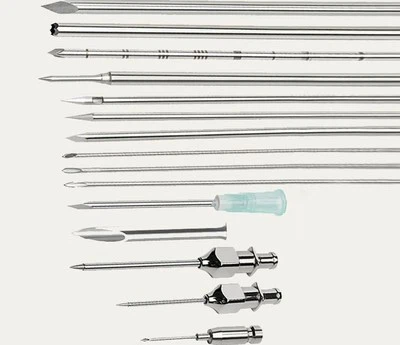
Medical stainless steel (such as 440A) remains the primary material for reusable trocars, holding over 50% of that market segment. Its core advantages lie in exceptional mechanical strength, corrosion resistance, and mature biocompatibility. However, processing stainless steel into qualified trocars exemplifies precision manufacturing. The needle tube requires extreme concentricity and cylindricity to ensure instruments pass through smoothly without obstruction. The bevel geometry and sharpness of the obturator tip must be precisely ground to balance puncture force with tissue trauma, while the internal seal valve seat structure is exceedingly complex. This demands that manufacturers possess top-tier CNC machine tools (e.g., Swiss-type lathes) and exquisite heat treatment and surface finishing (such as electropolishing) techniques. Domestic high-end OEMs like LZQ specialize in the ultra-precision grinding and forming of such high-hardness materials, providing key component manufacturing for international brands.
Revolutionary Materials: Medical-Grade Polymers and the Disposable Era
The proliferation of disposable trocars is inseparable from the application of medical-grade engineering plastics. These materials (e.g., Polycarbonate, ABS resin), formed through precision injection molding, enable the low-cost, one-time production of trocar bodies, seals, and adapters with complex structures. The advantages are evident: they eliminate the risk of cross-infection due to inadequate cleaning and sterilization; lightweight design reduces surgeon fatigue; and they permit the integration of more complex features like anti-slip mechanisms and visualization windows. However, the challenge lies in ensuring that polymer materials do not deform or rupture under intra-abdominal pressure (typically 12–16 mmHg) and that their sealing performance remains reliable even after repeated instrument passage. This requires extremely deep control over material formulation, mold design, and injection molding processes.
High-End Advancements: The Future Potential of Titanium Alloys and Ceramics
In fields pursuing ultimate performance, titanium alloys and ceramics are beginning to show their charm. Titanium alloys combine the strength of stainless steel with the lightweight properties of polymers, offering superior biocompatibility and broad prospects in high-end instruments requiring repeated use and sensitivity to weight. Ceramic materials represent an emerging direction; they possess an extremely low coefficient of friction, excellent wear resistance, and biological inertness. Imagine a ceramic sleeve seal valve-its wear resistance would far exceed that of rubber or plastic, maintaining airtightness over extended periods. Although costly, ceramic trocar components could become the "pearl on the crown" in scenarios with extremely high demands for instrument longevity and precision, such as robot-assisted surgery.
Surface Treatment and Cleanliness: The Last Line of Defense
Regardless of the material, surfaces ultimately contacting human tissue must be absolutely clean and smooth. For metal trocars, electropolishing is a critical step; it removes microscopic burrs to form a smooth, passivated surface, reducing the risk of tissue adhesion and thrombus formation. Subsequently, rigorous ultrasonic cleaning must be performed to remove all processing residues. For disposable products, assembly and packaging are completed in Class 10,000 cleanrooms, followed by validated sterilization methods (e.g., Ethylene Oxide or irradiation). These seemingly minor processes are, in fact, the lifeline for preventing postoperative infections and ensuring patient safety.
Conclusion
Therefore, the manufacturing of laparoscopic trocars is a systems engineering project that fuses material science, precision mechanical engineering, polymer chemistry, and sterilization science. Top-tier manufacturers are the "hidden champions" capable of pushing the limits of precision, reliability, and cost control at every single link of this industrial chain.