Material Performance And Processing Technology Of UPPP Surgical Electrode Needles
Sep 29, 2026
1. Industry Pain Points
Most traditional UPPP surgical electrode needles in the market have material and process defects that restrict clinical application. Ordinary single-material electrode needles have poor structural stability and uneven energy conduction, which are prone to energy deviation during ablation, resulting in incomplete removal of turbinate hyperplasia or accidental injury to normal tissues. Rough processing technology leads to burrs and uneven surface of the needle body, which is easy to scratch delicate nasal and pharyngeal mucosa during operation, causing intraoperative bleeding and postoperative inflammatory edema. In addition, traditional products lack personalized processing customization, with single size and fixed structure, unable to adapt to the individual anatomical differences of patients' nasal cavity and pharynx, resulting in poor surgical pertinence and low treatment accuracy. The backward processing technology also leads to poor product durability and short service life, increasing clinical medical consumable costs.
2. Functional Principle of Composite Material Electrode Needles
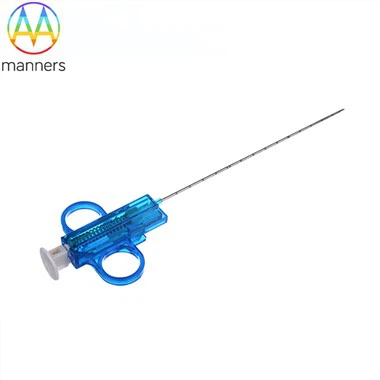
The UPPP treatment special electrode needle adopts composite material formula of medical stainless steel and tungsten, giving play to the complementary advantages of different materials. Stainless steel provides excellent structural support and biological safety, with strong deformation resistance, ensuring that the needle body remains stable during intubation and ablation operation, and will not produce allergic or inflammatory reactions in contact with human mucosal tissues for a long time. Tungsten alloy has ultra-high thermal conductivity and stable electrical conductivity, which can realize uniform and stable conduction of radio frequency energy, avoid energy attenuation and local aggregation, and ensure that the ablation energy acts accurately on the turbinate hyperplastic lesion area. The composite material structure effectively solves the problems of unstable energy output and easy structural deformation of single-material products, and improves the accuracy and safety of UPPP ablation surgery.
3. Product Classification Based on Processing Technology
According to processing technology and application attributes, UPPP electrode needles are divided into conventional process standard products and precision process customized products. Conventional standard products are completed through basic necking, swaging and grinding processes, with standardized overall dimensions and stable basic performance, suitable for routine primary hospital UPPP surgery and mild turbinate hyperplasia ablation, with high cost performance. Precision customized products adopt integrated precision processing technologies including laser cutting, laser marking and electropolishing. The laser cutting process ensures the precise size of the needle body, laser marking realizes accurate positioning of the ablation area, and electropolishing makes the needle body ultra-smooth and burr-free. This type of product supports full customization according to customer drawings and samples, and is suitable for tertiary hospital fine UPPP surgery and complex severe turbinate hyperplasia treatment.
4. Processing and Use Standard Operation Guidelines
In the production and processing stage, manufacturers need to strictly follow medical-grade processing standards, carry out layered processing of necking, swaging and grinding for the needle body, and use laser equipment for precise sizing and marking to ensure consistent product specifications. After processing, electropolishing treatment is carried out to remove surface burrs and impurities to meet medical sterile and smooth standards. In clinical use, medical staff should select products with matching processing accuracy according to surgical difficulty: standard processed products for routine simple lesions, and precision customized products for complex lesions. During operation, avoid violent extrusion and bending of the needle body to prevent structural damage and affect energy conduction. After operation, clean and disinfect the equipment in time to ensure repeated use safety and extend product service life.
5. Practical Application Experience of Process Advantages
Clinical application fully proves that the multi-precision processing technology and composite material design of UPPP special electrode needles bring significant clinical advantages. The ultra-smooth needle body after electropolishing avoids mucosal scratching during operation, greatly reduces intraoperative trauma and postoperative edema and congestion. The precise laser sizing and positioning technology ensures accurate ablation range, completely removes turbinate hyperplastic tissues, and effectively improves nasal airflow patency. The stable composite material performance ensures long-term stable energy output, no energy deviation in the operation process, and low surgical error rate. Compared with traditional rough-processed products, the postoperative complication rate is reduced significantly, and patients' nasal ventilation function is recovered more thoroughly. With standardized postoperative nursing such as cold prevention and light diet, the clinical cure rate is greatly improved.
6. Summary and Sublimation
The innovative composite material formula and multi-dimensional precision processing technology of UPPP treatment electrode needles solve the material performance defects and process backward pain points of traditional surgical tools. The perfect combination of high-quality materials and sophisticated processing technology endows the products with stable performance, high precision and high safety, which comprehensively improves the operation accuracy and clinical curative effect of UPPP surgery. It not only optimizes the intraoperative operation experience of clinicians, but also reduces postoperative patient discomfort and recurrence risk, and realizes the upgrading of UPPP surgical consumables from rough treatment to precise minimally invasive treatment.
7. Industry Prospect and Optimization Suggestions
In the future, medical minimally invasive surgical consumables will develop towards higher precision, stronger durability and richer customization. It is suggested that manufacturers continue to upgrade precision processing technology, optimize composite material ratio, and develop high-performance electrode needles suitable for complex oropharyngeal and nasal surgery. Strengthen the standardized construction of production processes, unify medical-grade processing and testing standards, and ensure stable product quality. Medical institutions should match different process products according to surgical grading, give full play to product performance advantages, and improve the overall standardized level of UPPP clinical surgery. The industry should accelerate the elimination of backward rough-processed products and promote the high-quality upgrading of UPPP surgical consumable industry.