Clinical Outcome Comparison: ENT Endoscope Bipolar Probe Vs Traditional Turbinate Surgery
Sep 29, 2026
1. Industry Pain Points
Traditional inferior turbinate reduction techniques have obvious clinical limitations. Conventional partial turbinectomy resects mucosal tissue, destroys ciliary function, and frequently causes postoperative dry nose, crusting and nasal adhesion. Unipolar radiofrequency has wide thermal diffusion, damaging surrounding normal tissue. Laser turbinate surgery requires expensive equipment and has high thermal injury risk. These traditional methods often bring heavy intraoperative bleeding, blurred surgical vision and long recovery time. Many patients suffer from persistent nasal dryness and reduced olfactory comfort after open turbinate resection. In addition, traditional surgery has high recurrence rate for residual hypertrophic tissue, and some patients need repeated operations, increasing medical burden and psychological pressure.
2. Core Working Principle
ENT Endoscope Bipolar Probe adopts submucosal bipolar radiofrequency ablation under endoscopic visualization. Made of stainless steel and tungsten, bipolar electrodes confine RF energy locally, different from the wide thermal spread of unipolar devices or high-temperature laser ablation. The probe creates only a tiny puncture at anterior inferior turbinate with maximum penetration depth of 2mm. RF energy induces submucosal tissue degeneration and gradual fibrosis, shrinking turbinate volume while preserving surface mucosa and ciliary function. The impedance monitoring system automatically stops energy and triggers alarm once tissue resistance rises, preventing over-ablation. Digital power regulation supports precise energy adjustment. The probe has excellent hemostatic performance, limiting intraoperative blood loss to 1–5ml and maintaining clear endoscopic vision for supplementary ablation of residual hypertrophic tissue.
3. Equipment Classification
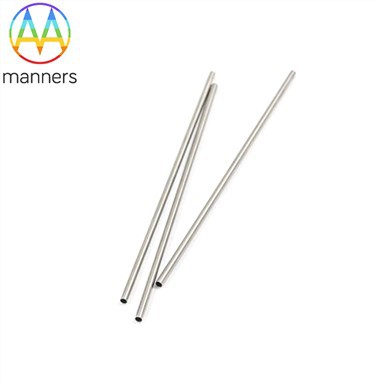
Traditional treatment tools include surgical cutting instruments, unipolar RF probes and laser fibers. They are mostly fixed specification, lacking customized options for asymmetric lesions. ENT Endoscope Bipolar Probes are divided into standard universal type and customized precision type. Standard probes are manufactured by necking, swaging, grinding, laser cutting, laser marking and electropolishing for routine symmetric hypertrophy. Customized probes can be produced according to 2D/3D drawings or samples for complex asymmetric and posterior turbinate hypertrophy. Both types have bipolar electrode tissue ablation property, with standard carton or customized packaging available.
4. Operational Guidelines
Traditional turbinectomy: Requires wider mucosal incision, larger tissue resection, higher bleeding volume, longer recovery period and higher risk of mucosal function damage. Unipolar RF surgery: Energy diffuses widely, thermal spread is hard to control, no automatic tissue impedance feedback. Bipolar endoscopic probe operation: Local anesthesia, endoscopic visualization, micro-puncture at anterior turbinate, penetration depth ≤2mm. Adjust digital power, perform segmented submucosal ablation. The system automatically stops on tissue impedance threshold. Control bleeding 1–5ml, clear vision for precise supplementary ablation. Postoperative humidification care to reduce crusting. Compare postoperative ventilation improvement, bleeding volume, complication rate and recovery cycle between different groups.
5. Practical Clinical Experience
Multi-center comparative clinical data shows that ENT Endoscope Bipolar Probe ablation achieves superior comprehensive outcomes. Intraoperative bleeding is far less than turbinectomy, and the surgical field keeps clear for precise manipulation. Postoperative complication rate including crusting and nasal adhesion is significantly lower than traditional resection, because mucosal surface and ciliary function are preserved. Symptom improvement is gradual as fibrosis develops within several weeks, and long-term nasal ventilation improvement is stable. Traditional turbinectomy brings immediate volume reduction but permanent mucosal damage and dry nose risk. Unipolar RF has higher risk of unintended thermal injury. Bipolar probe surgery can be finished in outpatient setting with shorter recovery time and less postoperative discomfort. For drug-resistant inferior turbinate hypertrophy, bipolar endoscopic probe provides a safer alternative with lower recurrence rate.
6. Summary and Sublimation
ENT Endoscope Bipolar Probe minimally invasive surgery overcomes multiple drawbacks of traditional turbinate reduction including large trauma, mucosal function destruction, heavy bleeding and high complication risk. Its bipolar confined energy, automatic impedance protection and micro-puncture design realize precise submucosal ablation while preserving nasal mucosal physiological function. Compared with turbinectomy, laser and unipolar RF technology, it achieves a better balance between therapeutic efficacy, safety and postoperative quality of life. It represents an upgraded technical route for inferior turbinate hypertrophy minimally invasive treatment.
7. Prospect and Suggestions
Carry out more long-term multi-center controlled trials to collect 2–5 year follow-up data of bipolar probe treatment. Medical institutions should establish comparative training curriculum for different turbinate surgery techniques, helping surgeons select appropriate surgical modality according to patient condition. Manufacturers continue optimizing bipolar probe tip design to further improve hemostasis and precision. Popularize bipolar endoscopic radiofrequency technology in primary hospitals, reducing the reliance on destructive traditional turbinate resection.