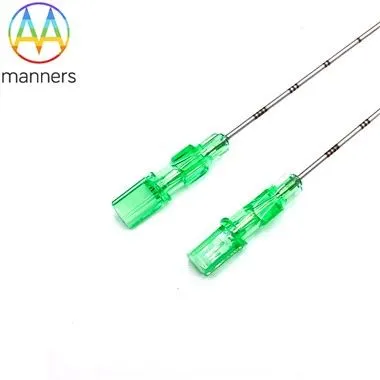
Safety And Minimally Invasive Advantages Of UPPP Treatment Electrode Needles
Sep 29, 2026
1. Clinical Industry Pain Points
Traditional Uvulopalatopharyngoplasty (UPPP) for obstructive sleep apnea and turbinate hyperplasia has long faced prominent clinical drawbacks. Conventional surgical resection tools rely on mechanical cutting and rough ablation, causing large-area trauma to pharyngeal mucosa and turbinate tissues. Most patients suffer from severe postoperative sore throat, mucosal swelling, nasal congestion and poor airflow, which seriously affect breathing and swallowing function. In addition, traditional tools have poor operation precision, easily leading to excessive tissue resection or incomplete removal of hyperplastic turbinate tissue, resulting in persistent nasal airway blockage and high postoperative recurrence rate. Moreover, traditional surgery is accompanied by large intraoperative bleeding, long recovery cycle, and patients are prone to secondary inflammation caused by cold stimulation and spicy diet irritation. The lack of professional minimally invasive electrode equipment has become a core bottleneck restricting the safety and curative effect improvement of traditional UPPP surgery.
2. Working Principle of UPPP Special Electrode Needle
The Electrode Needle For UPPP Treatment adopts precise radio frequency tissue ablation technology tailored for oropharyngeal and nasal cavity minimally invasive surgery. Different from traditional mechanical cutting and high-temperature thermal ablation, the equipment converts radio frequency electric energy into stable mild thermal energy, realizing targeted ablation and resection of turbinate hyperplastic tissues at a controllable low temperature. The uniform energy output can accurately act on the lesion hyperplasia area, effectively remove redundant turbinate and pharyngeal soft tissues that block the airway, and reshape normal nasal and pharyngeal airway structures to restore smooth nasal airflow. While eliminating lesion tissues, the electrode needle avoids damage to surrounding normal mucosal tissues and capillary networks, retains the physiological function of pharyngeal and nasal mucosa, and greatly reduces intraoperative trauma and postoperative inflammatory reaction. Its stable energy conduction mode solves the problems of uneven ablation and excessive tissue damage of traditional surgical tools.
3. Classification and Structural Characteristics of UPPP Electrode Needles
According to clinical application scenarios and structural specifications, UPPP treatment electrode needles are divided into standard universal type and personalized customized type. The standard type is made of high-quality medical stainless steel and tungsten materials, with stable hardness and excellent biocompatibility. It is processed through necking, swaging, grinding and other basic precision processes, with standard needle body size, suitable for routine turbinate hyperplasia ablation and ordinary UPPP airway plastic surgery. The customized type supports personalized production according to customers' 2D/3D drawings and sample parameters, with adjustable needle body length, tip fineness and bending angle, adapting to different patient nasal cavity and pharyngeal anatomical differences and complex hyperplastic lesion positions. All products adopt laser cutting, laser marking and electropolishing processes, ensuring smooth and burr-free needle body surface, accurate ablation positioning and stable energy output, which fully meets the refined operation needs of UPPP minimally invasive surgery.
4. Standard Clinical Operation Guidelines
Before UPPP surgery, clinicians need to complete nasal endoscopy and airway imaging examination to confirm the location and scope of turbinate hyperplasia and airway blockage, and select a matching electrode needle model according to the patient's lesion characteristics and anatomical structure. Conduct strict high-temperature disinfection and sterile pretreatment of the equipment to ensure surgical aseptic safety. During the operation, under endoscopic visualization, align the electrode needle tip with the turbinate hyperplastic lesion area, turn on the radio frequency energy system, and perform layered and quantitative ablation and resection of hyperplastic tissues. Control the operation speed and energy output intensity stably to avoid damage to normal nasal mucosa and pharyngeal tissues. After the lesion removal is completed, check the airway patency to ensure unobstructed nasal airflow, and complete intraoperative hemostasis and sterile dressing. After surgery, standardize daily nursing to avoid cold stimulation and spicy and irritating food intake, so as to reduce postoperative inflammation and edema.
5. Practical Clinical Application Experience
Long-term clinical practice verifies that the specialized electrode needle for UPPP treatment has far better surgical effect and safety than traditional tools. The precise ablation technology can completely remove turbinate hyperplastic tissues, fundamentally solve the problem of nasal airway blockage, and effectively restore normal nasal ventilation function. The minimally invasive operation greatly reduces intraoperative bleeding and mucosal trauma, and patients have mild postoperative discomfort with low incidence of complications. Clinical nursing experience shows that patients who adhere to light diet, keep warm to prevent colds, and insist on daily nasal care after surgery can recover quickly. Winter cold water face washing and regular massage of bilateral nasal Yingxiang points can effectively promote nasal mucosal microcirculation, accelerate postoperative repair, and significantly reduce the risk of postoperative congestion and recurrence. The overall effective rate of surgery is significantly higher than that of traditional resection surgery.
6. Summary and Sublimation
The professional electrode needle for UPPP treatment perfectly solves the industry pain points of large trauma, low precision, many complications and high recurrence rate of traditional UPPP and turbinate ablation surgery. With its excellent material performance, precision processing technology and targeted minimally invasive ablation principle, it realizes precise removal of hyperplastic lesions and maximum protection of normal physiological tissues. It not only improves the patency of patient airway and surgical curative effect, but also shortens the postoperative recovery cycle and reduces patient pain, providing a safe and efficient minimally invasive solution for the clinical treatment of turbinate hyperplasia and obstructive sleep apnea.
7. Industry Development Prospects and Suggestions
With the increasing incidence of obstructive sleep apnea and turbinate hyperplasia, the demand for high-precision and low-trauma UPPP surgical equipment continues to rise. It is suggested that medical institutions fully promote the application of professional UPPP electrode needles, standardize surgical operation procedures and postoperative nursing specifications, and improve the overall level of clinical diagnosis and treatment. Equipment manufacturers should continue to optimize product customization technology, enrich product specifications suitable for different lesion degrees and patient groups, and further improve equipment energy control accuracy and operation adaptability. The industry should strengthen the popularization of standardized postoperative nursing knowledge, form a complete set of surgical treatment and nursing system, and promote the standardized and minimally invasive development of UPPP surgery industry.