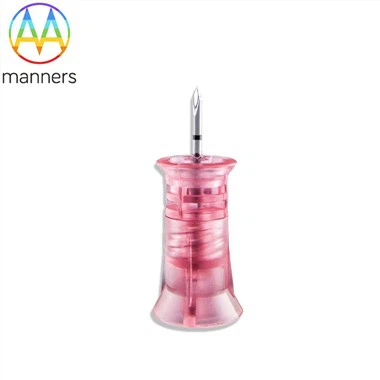
Insulin Pen Needles: User‑Experience Engineering For Micro‑Dose And High‑Frequency Drug Delivery
May 15, 2026
Within the extensive family of hypodermic needles, insulin pen needles form a unique and vital subset, enabling daily insulin injections for hundreds of millions of people living with diabetes worldwide. Unlike conventional medical injections, insulin self‑administration is a high‑frequency routine performed multiple times a day (up to 4–6 times) by patients themselves. Consequently, the core design challenge shifts from simple "effective drug delivery" to the extreme optimisation of pain, ease of use, psychological burden, and feasibility of long‑term injection‑site rotation, while ensuring precise micro‑dose delivery. This represents sophisticated user‑experience engineering tailored for chronic care.
I. Foundation of Precise Drug Delivery: Dose Accuracy and Dead‑Space Control
Insulin therapy requires strict matching between blood glucose levels and food intake, with dose errors limited to an extremely narrow range (typically within ±5%). Insulin pen needles must be engineered to meet this exacting standard.
Precision Coupling with Insulin PensInsulin pen needles connect to insulin pens (pen‑type syringes) via standardised ISO‑compliant screw threads. The primary design priority is zero‑loss dose transfer. When a patient turns the dose dial to select 3 units of insulin, internal pen mechanisms advance the plunger by an exact distance. As the final delivery channel, the needle's internal volume - particularly dead space - must be minimal and consistent.
The Microscopic Battle Against Dead SpaceDead space refers to the volume of residual drug retained in the needle hub and cannula after injection. For costly insulin formulations, dead space causes waste; for micro‑doses (e.g., 1–2 units), it may lead to severe under‑dosing. Pen needles minimise dead space through the following designs:
Dual‑tip construction: The forward skin‑penetrating tip is ultra‑fine and short, while the rear tip that pierces the insulin cartridge rubber septum is slightly thicker. The rear cannula is kept extremely short, just long enough to puncture the septum and eliminate redundant space.
Optimised hub inner lumen: Tapered or straight‑through internal channels avoid recessed cavities where drug solution may accumulate.
Post‑injection dwell time: Patient education recommends leaving the needle under the skin for at least 10 seconds after injection. This balances tissue pressure with residual pressure inside the cannula, enabling full drug dispersion and reducing the risk of solution withdrawal with the needle.
II. Synergistic Design for Painless Injection: Ultra‑Fine Gauge, Ultra‑Short Length and Multi‑Facet Tips
Pain is the primary factor undermining patient adherence. The pain‑free performance of pen needles results from the synergy of multiple technologies.
The Golden Combination of "Ultra‑Fine" and "Ultra‑Short"
Cannula gauge: Needle gauges have evolved from early 29G and 31G to modern 32G, 33G and even 34G. Finer cannulas (e.g., 33G with an outer diameter of only 0.21 mm) significantly reduce stimulation to cutaneous nerve endings and damage to muscle fibres. However, excessively fine needles lack rigidity and tend to bend, requiring high‑grade stainless steel and advanced drawing processes to maintain structural strength.
Cannula length: Traditional hypodermic needles are often 12.7 mm or 8 mm long, whereas modern pen needles commonly feature ultra‑short lengths of 4 mm, 5 mm and 6 mm. Clinical studies confirm that 4 mm needles reliably deliver insulin into subcutaneous fat tissue for most body types, including overweight individuals, avoiding intramuscular injection. Shorter penetration depth means less nerve contact and milder tissue trauma. The pairing of fine gauge and short length forms the physical basis of pain‑reduction design.
Painless Penetration via Multi‑Facet TipsAs discussed previously, tri‑facet or five‑facet tips transform the cutting action of conventional single‑bevel needles into tissue dilation, reducing penetration force by up to 50%. For patients undergoing multiple daily injections, this shift from stinging pain to smooth insertion is revolutionary, directly alleviating pre‑injection anxiety and fear.
Cannula Wall Thickness and Ultra‑Thin‑Wall TechnologyWhile preserving cannula rigidity, ultra‑thin‑wall technology minimises wall thickness to create a larger inner lumen for a given outer diameter. This ensures the needle remains rigid and resistant to bending while lowering injection resistance for effortless, smooth drug delivery.
III. Ergonomic and Psychological Design Details
High‑frequency self‑injection imposes strict requirements for operational simplicity and psychological comfort.
Integrated Needle Caps and Safe Assembly/DisassemblyInsulin pen needles typically feature inner and outer protective caps: the outer cap safeguards rear‑end sterility, and the inner cap protects the front tip. Designs ensure easy, smooth screwing and unscrewing with moderate force, preventing needle contamination or patient frustration due to difficult handling. Many products incorporate textured or oversized outer caps for patients with arthritis or poor eyesight.
Minimising Visual DistressSome pen needles adopt a hidden‑tip design with only the cannula exposed and a fully transparent or compact hub, so patients barely see the needle during injection, reducing visual fear. Additionally, all pen needles are single‑use, greatly lowering infection risks and psychological burden.
Consistent Injection DepthThe base of the pen needle hub usually features a flat supporting surface, ensuring uniform penetration depth during perpendicular injection and avoiding overly deep or shallow insertion caused by unstable angles.
IV. Long‑Term Support for Injection‑Site Rotation
Repeated injections at the same site may cause lipohypertrophy or lipoatrophy, impairing insulin absorption. Patients are therefore advised to rotate injection sites regularly (abdomen, thighs, upper arms and buttocks).
Balance of Universal Compatibility and Specialised ModelsPen needles must be compatible with mainstream insulin pens (NovoPen, KwikPen, Lantus SoloStar, etc.), guaranteed by ISO standards. Meanwhile, shorter and finer specialised models are available for children or highly sensitive patients.
Facilitating Standardised Injection ProtocolsEvery design element of pen needles - from easy‑open sterile individual packaging and clear dimensional markings (though patients typically rely on pen dials rather than needle markings) to sharps‑bin compatibility for safe post‑use disposal - guides patients toward safe, standardised and sustainable self‑injection routines.
Conclusion: From a Tool to a Reliable Companion
The design principles of insulin pen needles exemplify how medical devices can be deeply integrated into the daily lives of chronic‑disease patients. Beyond mere penetration and delivery functions, through micro‑dose precision control, multi‑dimensional pain‑free design, extreme usability optimisation and long‑term treatment support, these devices transform cold medical hardware into trusted companions for patient disease management. Each advancement - finer gauge, shorter length, smoother insertion - directly translates to tangible improvements in quality of life for millions of people with diabetes. This represents the most heartfelt and powerful embodiment of user‑experience engineering in healthcare.