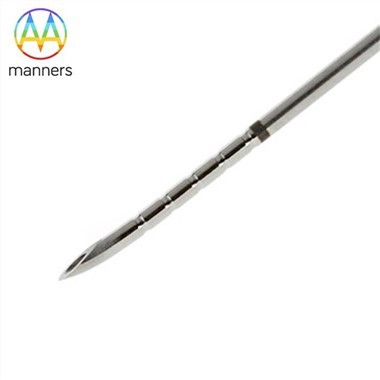
In-Depth Analysis Of The Global Nasal Surgery Electrode Needle Market Landscape And Regional Supply Chain Characteristics
May 07, 2026
The nasal surgery electrode needle is a critical energy device in minimally invasive otorhinolaryngology surgery, specifically designed for refined procedures such as endoscopic sinus surgery (ESS), turbinate reduction, and septoplasty. Its global market and supply chain have evolved closely with the widespread adoption of minimally invasive surgical techniques and the rising incidence of chronic nasal diseases. According to industry reports, the global market for disposable radiofrequency plasma surgical electrodes (including nasal applications) is expected to sustain growth from 2025 to 2031. This market is driven by global aging, increased respiratory diseases caused by air pollution, growing patient preference for minimally invasive surgery, and technological iterations. Geographically, the supply chain is concentrated in three core regions-North America, Europe, and Asia-Pacific-exhibiting distinct traits: technology-led, manufacturing-concentrated, demand-diversified.
North America: Innovation Hub and High-Value Market
North America, particularly the United States, is the world's largest market for nasal surgery electrode needles and the most important source of technological innovation. The region is home to top global medical device companies (e.g., Erbe Elektromedizin), a robust healthcare payment system, and a large patient population.
Upstream in the supply chain, the U.S. leads in the research and development of high-grade medical metal materials (e.g., specialty tungsten alloys, platinum-iridium alloys), precision machining software, and biocompatible insulating materials. In the midstream manufacturing segment, international giants typically retain core R&D and production of high-value-added products domestically to protect intellectual property and ensure premium quality.
Downstream, the market demands exceptional product innovation, safety, and clinical evidence, driving products toward greater precision, safety (e.g., low-temperature plasma technology), and intelligence. The defining feature of North America's supply chain is the integration of R&D, brand strength, and high value-added operations, controlling industry standard-setting and the most profitable segments.
Europe: Bastion of Quality Compliance and Precision Engineering
Europe is another mature, high-end market renowned for its stringent medical device regulations (MDR) and strong focus on patient safety. Countries like Germany and Switzerland boast profound expertise in precision machining and medical device design. The supply chain emphasizes ultra-precision craftsmanship, end-to-end traceability, and sustainability.
Many European firms are suppliers of high-end insulating materials, precision molds, and testing equipment. On the brand front, in addition to international giants, there is a cohort of "hidden champion" enterprises specializing in the otorhinolaryngology segment, such as Germany's Sutter Medizintechnik, whose RaVoR™ bipolar electrodes have a successful track record of over 15 years in the market. The European market enforces strict standards for product durability (for reusable devices), environmental friendliness (e.g., reduced use of hazardous substances), and reprocessing.
Asia-Pacific: Dual Role as a Manufacturing Hub and Growth Engine
The Asia-Pacific region is the fastest-growing market for nasal surgery electrode needles globally and the world's most important medical device manufacturing base. It plays a dual role: on the consumption side, developed markets like Japan and Australia demand high-end products on par with Europe and the U.S., while China, India, and Southeast Asian countries exhibit enormous potential driven by a large patient base, improving healthcare infrastructure, and expanded medical insurance coverage.
On the supply side, China has emerged as a core manufacturing hub for global nasal surgery electrode needles. Leveraging a complete industrial system, mature precision machining clusters (especially in the Yangtze River Delta and Pearl River Delta), and significant cost advantages, China fulfills a large volume of OEM/ODM orders for international brands.
Meanwhile, domestic enterprises led by Manners Technology, Wuhan Mailang Medical, and Hefei Junbang Precision Medical are transitioning from contract manufacturing to independent design and branding. By mastering core processes such as multi-axis CNC machining, laser cutting, and electropolishing, they deliver cost-effective customized products and actively expand domestic and overseas markets. For example, Manners Technology specializes in customized solutions and manufacturing for disposable medical needle products, which have gained widespread industry recognition.
Supply Chain Structure: Technology-Intensive and Specialized Division of Labor
The supply chain for nasal surgery electrode needles is a typical technology-intensive chain:
Upstream: Suppliers of electrode materials such as specialty medical-grade stainless steel, tungsten alloys, and platinum-iridium alloys, as well as high-performance insulating materials like polytetrafluoroethylene (PTFE) and polyimide.
Midstream (Core): Processes including high-precision machining (multi-axis CNC, laser cutting, electrical discharge machining), precision bonding of electrodes and insulating layers, surface treatment (electropolishing, plasma treatment), cleaning, sterilization, and rigorous quality testing (e.g., high-voltage insulation performance tests). The precise processing of insulating layers in microspaces is a technical challenge, requiring prevention of current leakage.
Downstream: Products are sold through specialized medical device distributors or directly to hospitals and ambulatory surgery centers. Devices need to be compatible with specific radiofrequency or plasma surgical console systems, forming an ecosystem of consoles + dedicated consumables.
Future Trends: Regionalization, Intelligence, and Value Extension
The future supply chain will see three major trends:
Supply Chain Regionalization: To enhance supply chain security and respond to local market demands, brands may establish more localized assembly and packaging facilities in key consumption regions.
Intelligent Upgrading: Smart electrodes integrated with sensors (e.g., temperature, impedance monitoring) are emerging to provide real-time tissue feedback, requiring the supply chain to integrate microelectronics and software capabilities.
Value Extension to Services and Solutions: Competition in standalone electrode needle sales is intensifying, making value-added services such as surgical training, device management, and postoperative effect analysis new profit drivers.
In summary, the global supply chain for nasal surgery electrode needles is a high-value-added ecosystem integrating materials science, ultra-precision machining, and clinical medicine. Its landscape continues to evolve as manufacturing shifts eastward and technology advances.
需要我把这份英文译文整理成一份可直接使用的英文报告文档,并标注专业术语的中英