Compliance And Customization in Parallel: The Development Strategy Of The Chiba Needle Industry And Market Adaptation
May 11, 2026
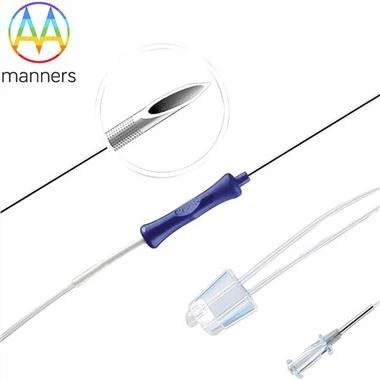
Compliance and Customization in Parallel: The Development Strategy of the Chiba Needle Industry and Market Adaptation In the context of the global trend of standardized and refined development of the medical device industry, medical needle consumables, as basic medical devices, have their core development directions centered around compliance, customization, and specialization. Chiba needles, as a benchmark product in the specialized field of interventional radiology, leverage a comprehensive compliance system and flexible customization services to occupy an important position in the global medical market and have pointed out the direction for the development of medical consumables. Compliance of the system is the core threshold for medical devices to enter the global market and is also the fundamental prerequisite for the development of the Chiba needle industry. Medical devices directly relate to patients' lives and health, and various countries have established strict regulatory standards for their production, sales, and use. Among them, ISO9001:2015 Quality Management System Certification and ISO13485 Medical Device Quality Management System Certification are globally recognized as the entry standards for medical devices. ISO9001:2015 certification ensures the standardization of production processes, quality control, and after-sales services, ensuring stable and controllable product quality; ISO13485 certification specifically targets the medical device industry, proposing stricter requirements throughout the entire chain from product design, raw material procurement, production processing, finished product testing, storage and transportation to after-sales traceability, covering the entire lifecycle management of medical devices. A qualified Chiba needle manufacturing enterprise must hold both certifications and organize production strictly in accordance with the certification standards, establish a complete quality traceability system, and achieve full traceability of each product from raw materials to finished products. At the same time, the product must comply with the registration requirements of various countries for medical devices and complete special certifications such as CE and FDA to enter the corresponding international markets. Compliance is not only the responsibility of enterprises but also a guarantee for the healthy development of the industry. Only by adhering to the compliance bottom line and preventing inferior products from entering the market can the order of the medical consumables industry be maintained and clinical diagnosis safety be guaranteed. With the increasingly strict global medical device regulation, compliance will become the core competitiveness of Chiba needle manufacturing enterprises and an inevitable trend for industry development. Customization services are the key strategy for Chiba needles to meet clinical needs and improve market adaptability, and they are also the core advantage that distinguishes them from standardized medical needles. In clinical diagnosis, there are significant differences in operating habits, instrument requirements, and surgical procedures among different departments, different surgeries, and different doctors, and standardized products cannot meet all scenarios. Chiba needle manufacturing enterprises rely on professional R&D and production capabilities to launch customized services based on 2D/3D drawings and physical samples, which can be customized for parameters such as needle body length, outer diameter, needle tip angle, material, packaging, etc., to precisely match special surgical needs and individual operating habits. For example, for deep and complex lesion punctures, longer and higher-strength needle bodies can be customized; for small lesion biopsy, more slender and precise needle tip specifications can be customized; for hospital brand management needs, exclusive packaging and labels can be customized. Customization services break the limitations of standardized products, allowing Chiba needles to better adapt to diversified clinical scenarios, improving the convenience of medical staff operation and treatment effects, and also helping manufacturing enterprises precisely connect with specific market demands, enhancing customer stickiness, and increasing market share. From an industry development perspective, with the continuous progress of minimally invasive interventional medical technology, clinical requirements for the precision, safety, and adaptability of medical puncture needles continue to increase. The Chiba needle industry will develop in the direction of "more stringent compliance, more precise customization, and more professional technology". Manufacturing enterprises need to continuously increase R&D investment, optimize production processes, improve customization service capabilities, and at the same time adhere to compliance standards and strictly control product quality to gain an advantage in the fierce market competition. For the medical market, the compliant production and customized services of Chiyoda needles have achieved a precise alignment between enterprise production and clinical needs. This not only ensures the safety and reliability of medical consumables but also meets the personalized diagnosis and treatment requirements. It has driven the medical needle industry to upgrade from standardized production to precision and customization. In the future, under the dual driving forces of precision medicine and minimally invasive medicine, the Chiyoda needle industry will continue to unleash market potential and become an important growth pole in the field of medical precision equipment.