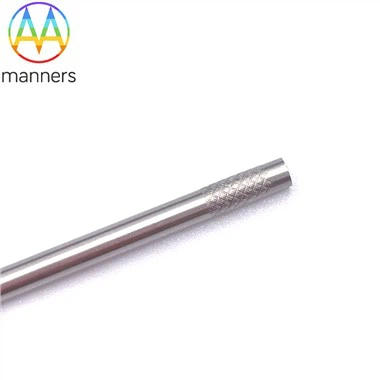
Hypotube Kerf
Sep 20, 2026
Pain point
As interventional devices continue to shrink in size, targeting ever-smaller vessels such as those in the brain, the demand for ultra-fine laser cutting has intensified. However, the pursuit of minimal kerf width-the narrow slit created by the laser-has become a double-edged sword. Many manufacturers face the pain of plummeting production yields when attempting to achieve kerfs near the 0.012mm limit. At these microscopic scales, the heat-affected zone (HAZ) can become disproportionately large, leading to recast layers, micro-cracks, and distorted cut patterns. These defects are often invisible to the naked eye but can cause catastrophic fatigue failure during clinical use. Moreover, the inconsistency in kerf width across a production batch can result in variable device performance, making it impossible to achieve the reliable, repeatable outcomes that regulatory bodies demand. The industry is caught in a trap where the desire for "smaller is better" conflicts with the practical limitations of laser physics and material science.
Principle
The kerf width is a direct manifestation of the laser's interaction with the metal. It is determined by the beam diameter, pulse duration, and the material's absorption characteristics. In the context of hypotubes, a narrower kerf preserves more of the original tube's structural integrity, which is crucial for maintaining strength while introducing flexibility. However, the principle of laser cutting is a balance between material removal and thermal damage. As the kerf narrows, the assist gas struggles to evacuate molten material, leading to the formation of dross and recast. Therefore, achieving a 0.012mm kerf is not merely a matter of turning down the laser power; it requires a holistic optimization of the entire cutting system, including beam quality, gas pressure, and feed rate. The goal is to create a cut that is clean, precise, and free of metallurgical defects, ensuring the hypotube can withstand the rigors of minimally invasive procedures.
Equipment classification
To master the art of ultra-thin kerf cutting, manufacturers rely on a suite of advanced equipment. Femtosecond lasers, with pulse durations in the quadrillionth of a second, offer near-cold ablation, minimizing the HAZ and making them ideal for cutting Nitinol and other sensitive alloys. High-resolution vision systems are integrated into the laser cutting machines to provide real-time monitoring and autofocus, compensating for any tube ovality or wall thickness variations. Five-axis CNC controllers enable complex cutting patterns, such as continuous spirals and radial cuts, with high repeatability. Additionally, electrochemical machining (ECM) stations can be used as a post-processing step to remove any remaining recast layer, achieving a burr-free surface. Metrology equipment, like scanning electron microscopes (SEM), is essential for verifying kerf dimensions and edge quality at the micron level.
Practical guide
For engineers aiming to optimize kerf width, a methodical approach is key. Start by selecting the appropriate laser source for the material: fiber lasers for stainless steel, femtosecond for Nitinol. Use design of experiments (DOE) to fine-tune parameters such as pulse energy, repetition rate, and gas pressure. Always incorporate a post-cutting cleaning and passivation process to eliminate any micro-debris. Implement statistical process control (SPC) to monitor kerf consistency across production runs. When designing the cut pattern, consider the functional requirements: a slightly wider kerf may be acceptable if it enhances the device's flexibility or reduces manufacturing complexity. Collaborate closely with the laser equipment manufacturer to leverage their expertise in process optimization.
Real-world experience
A case in point involves a manufacturer of coronary stents who insisted on a 0.010mm kerf to maximize the open area of the stent cells. The initial production runs were plagued by a 30% rejection rate due to micro-cracks at the cut edges. By widening the kerf to 0.015mm and adjusting the laser pulse profile, the defect rate dropped to below 2%, and the stent's clinical performance was unaffected. Another example is a neurovascular guidewire that required a hypotube with a 0.012mm kerf for optimal flexibility. The manufacturer achieved this by using a femtosecond laser and implementing a rigorous in-process inspection regime, resulting in a product that set a new standard for trackability in tortuous vessels.
Conclusion
The kerf width is a critical parameter that embodies the precision of hypotube manufacturing. While the allure of ultra-fine cuts is strong, it must be tempered with a pragmatic understanding of process capabilities and clinical needs. A well-executed kerf, even if slightly wider, is far superior to a flawed one that compromises device integrity. The true measure of success is not the number on a spec sheet, but the reliability of the device in the hands of a surgeon.
Outlook
The future of kerf technology lies in adaptive laser systems that can dynamically adjust parameters based on real-time feedback from the cutting front. Artificial intelligence will play a growing role in predicting and compensating for thermal effects, enabling the consistent production of sub-10-micron kerfs. As materials science advances, we may see the development of self-passivating alloys that mitigate the effects of the HAZ, further pushing the boundaries of what is possible in hypotube design.