Materials Science — What Makes A Blunt Filter Needle Trustworthy
Nov 03, 2026
The Pain Point
A needle looks like a simple tube, but its performance lives in microscopic details. Poor-grade stainless steel corrodes or leaches metal ions into medication; low-quality membranes shed fibers; weak hub connections leak under pressure. Operators rarely see these failures because they occur at the molecular level - yet they compromise both drug safety and device reliability. A corroding cannula can contaminate the medication with metal ions, which is particularly dangerous for protein-based drugs sensitive to trace metals. A membrane that sheds fibers introduces exactly the kind of particulate contamination the filter is supposed to prevent - a failure that is both ironic and clinically significant. A hub that cracks under pressure creates a leak pathway for both medication loss and airborne contamination. The pain point is compounded by the difficulty of detection: these failures do not announce themselves. A cracked hub may pass visual inspection; a shedding membrane is invisible; corrosion develops over time. By the time a problem surfaces - an inexplicable failed preparation, an out-of-spec assay, a patient reaction - the root cause has long since disappeared with the used device. Without material science knowledge, purchasers and operators are forced to trust labels, and labels can be misleading.
The Principle Behind the Solution
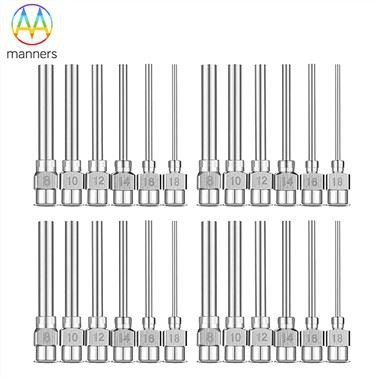
A CE-marked blunt filter needle is engineered from three critical materials, each with a specific role. The cannula is made from medical-grade stainless steel - typically 304 or 316 series - chosen for its corrosion resistance, mechanical strength, and biocompatibility. The alloy composition matters: the addition of molybdenum in 316 steel provides superior resistance to chloride-induced corrosion, making it the preferred grade for prolonged fluid contact. The filter membrane, often nylon, PVDF, or PTFE, is manufactured to a precise pore structure that retains particles without shedding fibers of its own - the membrane's integrity is validated during manufacturing by bubble-point testing, which confirms that the pore size distribution meets specification. The hub, made from medical polycarbonate or polypropylene, forms a leak-proof Luer lock connection; these polymers are chosen for their dimensional stability, chemical resistance, and absence of leachables that could contaminate medication. The CE mark validates that all materials meet the biocompatibility and safety requirements of the Medical Device Regulation - an assurance that cheap, unmarked alternatives cannot provide. The regulatory pathway includes ISO 10993 biocompatibility testing for cytotoxicity, sensitization, and irritation, ensuring that nothing in the device harms human tissue or alters the medication it carries.
Classifying Filter Needle Equipment
Material-grade distinctions separate medical devices from industrial look-alikes, and understanding them prevents costly mistakes. Cannula grades: surgical stainless steel vs. commercial steel - the former is certified for tissue and fluid contact, with documented alloy composition and surface finish; the latter may contain impurities and exhibit surface defects invisible to the naked eye. Membrane types: nylon offers broad chemical compatibility and is the default for most medications; PVDF provides low protein binding, making it essential for biologics and monoclonal antibodies; PTFE resists aggressive solvents and is chosen for specialized compounding with DMSO or other challenging vehicles. Hub designs: Luer slip vs. Luer lock - the lock is mandatory for high-pressure transfer to prevent disconnection, while the slip suits low-pressure, rapid workflows. Surface treatments: silicone-free lubrication for low particulate shedding and drug compatibility, versus coated options for specific use cases. Packaging materials also matter: Tyvek pouches allow ethylene oxide sterilization while maintaining barrier integrity, while foil-foil pouches support gamma sterilization; the choice affects shelf life and sterility assurance. Each material decision is documented in the device's technical file, which the CE mark makes available for regulatory scrutiny - a level of transparency that generic products rarely provide.
Practical Operating Guide
When evaluating a blunt filter needle, request the manufacturer's material data: stainless steel grade, membrane material and pore-size distribution, hub polymer, and sterilization method. Verify the CE certificate number against the European Commission's notified body database - a five-minute check that confirms the certification is genuine and current. Perform a simple water-flow test on arrival: a properly manufactured 18G 5-micron filter needle should pass 10 mL of water in under 15 seconds without leakage at the hub; a significant deviation suggests a clogged membrane or an obstructed cannula. Conduct a drop test: connect the needle to a filled syringe and hold it inverted - no droplet should appear at the hub junction, confirming the Luer lock seal is intact. Inspect the cannula surface under magnification for burrs, scratches, or uneven finish, which can indicate poor manufacturing quality. Document these acceptance tests in your goods-inspection records, so that every lot received is verified, not assumed. For long-term monitoring, track device performance by lot number: if a particular lot shows a higher-than-baseline clog rate or leakage incidence, the material data and manufacturing records become the basis for a formal quality complaint with the manufacturer.
Real-World Experience
A procurement manager at a Middle Eastern hospital group discovered that a low-cost filter needle supplier had been substituting polycarbonate hubs with recycled plastic - causing intermittent hub cracking during high-pressure transfers. Switching to a CE-marked manufacturer with full material traceability eliminated the failures. The hospital now audits material certifications annually, and their pharmacist notes that the documented materials data also simplifies regulatory inspections. A second example comes from a European oncology pharmacy that noticed protein aggregation in a monoclonal antibody preparation. Investigation revealed that the previous filter needle brand used a membrane with higher protein-binding characteristics, causing drug loss and aggregation at the filter interface. Switching to a PVDF-membrane CE-marked needle resolved the issue, and the pharmacy now specifies membrane material in its purchasing requirements. These cases illustrate a central truth: the material specification is not a technical footnote; it is a clinical decision with measurable consequences for drug integrity and patient outcome.
The practical implication for purchasing teams is to treat material data as part of the specification, not as marketing collateral. When a supplier cannot provide ISO 10993 biocompatibility documentation, membrane bubble-point test results, or stainless steel alloy certificates, that absence is itself a red flag. Conversely, a supplier that publishes this data proactively demonstrates a quality culture that tends to extend to manufacturing consistency, packaging integrity, and complaint responsiveness. Procurement specifications should therefore require material documentation as a contractual condition, and goods-inspection procedures should verify the documentation against the delivered lots. Pharmacists, for their part, should record any device-related observations - protein aggregation, unexplained clogging, hub leakage - in a device performance log, because these field signals are often the first indication that a material change has occurred in manufacturing. The dialogue between pharmacy and procurement, mediated by material data, turns device selection into a shared clinical responsibility rather than a purely administrative decision.
Summary and Elevation
Trust in a medical device begins with trust in its materials. The CE mark is not a decoration; it is a documented promise that every component - from the steel cannula to the membrane pores - meets the standard claimed on the packaging. For operators, understanding materials science turns purchasing from a price decision into a safety decision. In an era of global supply chains and aggressive cost competition, material knowledge is the operator's best defense against products that look identical but perform very differently.
Future Outlook
Material innovation continues at the frontier: antimicrobial coatings on cannulas that reduce surface contamination, biodegradable polymers for single-use hubs that address the environmental burden of medical waste, and filter membranes with self-healing pore structures that maintain integrity under stress. Regulatory frameworks are adapting to these innovations, with CE marking evolving to cover digital material traceability through blockchain-based supply chain records. The needle of the future will carry not just a CE mark but a digital material passport - readable at the point of use, auditable at the point of inspection, and traceable to the exact batch of steel, polymer, and membrane from which it was made.