Clinical Market Perspective: From Black Box To Transparent Tool—Decoding OPU Needle Gauges For Global Breeders
Apr 13, 2026
Clinical Market Perspective: From "Black Box" to Transparent Tool-Decoding OPU Needle Gauges for Global Breeders
Provocative Question:
For cattle breeders in South America or Europe investing in OPU/IVP technology, the most common question is: "Why should I care whether my system uses an 18G or 19G needle?" The answer is that this single parameter directly impacts two critical commercial metrics: Oocyte Recovery Rate and Donor Longevity. Understanding wire gauge is not merely a technical issue; it is an economic imperative.
Historical Context
The wire gauge system provides a universal language for a fragmented global market. When a Brazilian veterinarian orders needles from a Chinese manufacturer, specifying "18G x 55cm OPU needle" guarantees a functionally identical product to that from a German supplier. This interoperability, rooted in the 19th-century Birmingham standard, has enabled the rapid global dissemination of OPU/IVP technologies-technologies now being refined in emerging breeding programs across China.
Defining the Standard
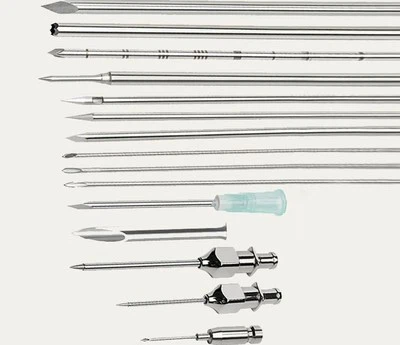
In clinical settings, wire gauge is the primary filter for risk management. The standard OPU needle is a specialized instrument, distinct from a standard hypodermic needle:
Length: 55–60 cm, necessary to reach the ovaries via the vagina under transrectal ultrasound guidance.
Tip Geometry: A short bevel designed to precisely pierce the follicle wall without causing damage via through-and-through puncture.
The Gauge Reality: While 18G is common, studies indicate that 21G needles (thinner) can achieve similar recovery rates but require significantly higher vacuum. This presents a clinical decision: choose a thicker gauge for reliability, or a thinner gauge for donor comfort and reduced adhesion risk.
Clinical Application
As emphasized in Zhejiang University reviews, OPU/IVP application is the cornerstone of modern genetic advancement. The OPU needle serves as the most direct physical interface between the donor's genetics and the laboratory.
For High-Yield Embryo Demand: Breeders aiming to maximize embryo numbers from a single session-for instance, from elite Holstein donors-typically prefer 18G needles. Their larger lumen accommodates varying viscosities of follicular fluid without clogging, ensuring a stable harvest.
For Precious Genetic Resources (Beef/Indigenous Breeds): When handling high-value, sometimes smaller-framed beef or Zebu breeds, 19G needles offer a distinct advantage. Their smaller diameter minimizes tissue damage, which is crucial because these donors are often the nucleus of breeding programs and must maintain productivity over many years.
Conclusion
The implication for international breeders is clear: the OPU needle is not a generic consumable. It is a precision tool whose gauge selection should be dictated by the donor's genetic value and the frequency of collection. As China cultivates its own elite herds and accumulates OPU expertise, the global knowledge base regarding needle optimization will only expand. Consequently, the historic "Wire Gauge" system becomes more relevant than ever to the future of livestock genetics.
Clinical Market Perspective: From "Black Box" to Transparent Tool-Decoding OPU Needle Gauges for Global Breeders
Provocative Question:
For cattle breeders in South America or Europe investing in OPU/IVP technology, the most common question is: "Why should I care whether my system uses an 18G or 19G needle?" The answer is that this single parameter directly impacts two critical commercial metrics: Oocyte Recovery Rate and Donor Longevity. Understanding wire gauge is not merely a technical issue; it is an economic imperative.
Historical Context
The wire gauge system provides a universal language for a fragmented global market. When a Brazilian veterinarian orders needles from a Chinese manufacturer, specifying "18G x 55cm OPU needle" guarantees a functionally identical product to that from a German supplier. This interoperability, rooted in the 19th-century Birmingham standard, has enabled the rapid global dissemination of OPU/IVP technologies-technologies now being refined in emerging breeding programs across China.
Defining the Standard
In clinical settings, wire gauge is the primary filter for risk management. The standard OPU needle is a specialized instrument, distinct from a standard hypodermic needle:
Length: 55–60 cm, necessary to reach the ovaries via the vagina under transrectal ultrasound guidance.
Tip Geometry: A short bevel designed to precisely pierce the follicle wall without causing damage via through-and-through puncture.
The Gauge Reality: While 18G is common, studies indicate that 21G needles (thinner) can achieve similar recovery rates but require significantly higher vacuum. This presents a clinical decision: choose a thicker gauge for reliability, or a thinner gauge for donor comfort and reduced adhesion risk.
Clinical Application
As emphasized in Zhejiang University reviews, OPU/IVP application is the cornerstone of modern genetic advancement. The OPU needle serves as the most direct physical interface between the donor's genetics and the laboratory.
For High-Yield Embryo Demand: Breeders aiming to maximize embryo numbers from a single session-for instance, from elite Holstein donors-typically prefer 18G needles. Their larger lumen accommodates varying viscosities of follicular fluid without clogging, ensuring a stable harvest.
For Precious Genetic Resources (Beef/Indigenous Breeds): When handling high-value, sometimes smaller-framed beef or Zebu breeds, 19G needles offer a distinct advantage. Their smaller diameter minimizes tissue damage, which is crucial because these donors are often the nucleus of breeding programs and must maintain productivity over many years.
Conclusion
The implication for international breeders is clear: the OPU needle is not a generic consumable. It is a precision tool whose gauge selection should be dictated by the donor's genetic value and the frequency of collection. As China cultivates its own elite herds and accumulates OPU expertise, the global knowledge base regarding needle optimization will only expand. Consequently, the historic "Wire Gauge" system becomes more relevant than ever to the future of livestock genetics.