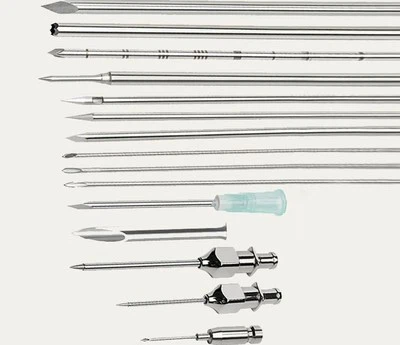
From Leakage To Sealing: Materials And Sealing Dynamics Of H₂O₂ Transfer Needles
Apr 12, 2026
From "Leakage" to "Sealing": Materials and Sealing Dynamics of H₂O₂ Transfer Needles
Core Paradox: In hydrogen peroxide (H₂O₂) low-temperature plasma sterilization systems, transfer needles face a fundamental engineering paradox: the mutual constraint between puncture sharpness and long-term sealing reliability. The needle tip must be sufficiently sharp to pierce the rubber stopper with minimal force, preventing debris generation ("stopper coring"); however, the needle track formed post-puncture must fit tightly against the needle body to resist permeation and leakage of high-pressure H₂O₂ vapor across dozens or even hundreds of cycles. Sacrificing sharpness for sealing leads to difficult punctures and shortened stopper life; excessively pursuing sharpness leaves an un-closable "trauma," causing media leakage and sterilization failure.
1. Mechanical Principles of the Conflict: Puncture Force vs. Sealing Stress
Puncture is a dynamic process of cutting and deformation. The geometric edge angle and surface finish of the needle tip determine the peak puncture force. Conversely, sealing reliability depends on the static interface formed by needle cylindricity, surface roughness, and the resilience of the rubber stopper.
Excessive Puncture Force: A dulled tip acts like a "punch," extruding and tearing stopper material, generating particulate contamination, and leaving a permanent hole larger than the needle diameter, resulting in seal failure.
Insufficient Sealing Stress: Even after successful puncture, if microscopic scratches or diameter inconsistencies exist on the needle body surface, H₂O₂ vapor will "creep" and seep along these micro-channels, leading to insufficient chamber concentration and sterilization cycle errors.
Optimization Goal: We require a geometry that provides extremely low insertion resistance at the moment of puncture, while simultaneously forming a uniform, continuous sealed contact surface in the static state.
2. Calibration Variable 1: Tip Geometry - From "Puncturing" to "Reaming"
The needle tip is not a simple cone; its design is the primary gate for controlling puncture behavior.
Traditional Bevel Tip: Features a single cutting facet. While offering low puncture force, it tends to slice "C-shaped" flakes (coring) from the stopper.
Optimized Reverse Bevel Tip: We have engineered a special reverse-bevel grind on the needle tip. After the primary edge initiates penetration, the reverse bevel immediately applies gentle lateral compression rather than cutting. This acts like uniformly "reaming" the hole instead of "cutting" it, significantly reducing stopper particle generation and forming a more regular needle track with superior elastic recoil.
3. Calibration Variable 2: Body Surface Topology - The Sealing Magic of Micro-Morphology
The microscopic morphology of the needle body surface is critical for static sealing. We pursue not absolute smoothness, but functional, directional textures.
Mirror Polishing: Pros:Resists contaminant adhesion. Cons:Friction coefficient with rubber may be insufficient under unlubricated conditions (e.g., dry H₂O₂ vapor), potentially causing micro-slip during system pressure fluctuations.
Axial Filament Treatment: Our process creates nano-scale axial grooves. While these grooves help divert stopper material during puncture to reduce friction, their crucial role in the sealed state is that rubber material slightly embeds into these grooves under pressure. This creates a mechanical interlocking effect, drastically enhancing resistance to axial slip and upgrading the pure "surface seal" to a "surface-line composite seal."
4. Calibration Variable 3: Material Pairing & Surface Engineering - Combating "Cold Welding" and Corrosion
H₂O₂ is a strong oxidizer, highly sensitive to metal surface conditions. Rough surfaces catalyze its decomposition, and prolonged contact with certain rubber materials (e.g., halogenated butyl stoppers) may induce a "cold welding" effect.
Material Selection: We utilize SUS304 for the needle body due to its excellent passive layer stability. By controlling the chromium-iron ratio and maintaining ultra-low carbon content, we ensure a dense and self-repairing surface chromium oxide layer.
Surface Engineering - Electropolishing: This is more than aesthetics. Controlled precisely according to ASTM B912 standards, we remove approximately 10–20 microns of surface material. This process:
Eliminates Micro-defects: Completely removes machining-induced micro-cracks, burrs, and embedded abrasive particles.
Reduces Surface Free Energy: Achieves a uniform, smooth surface that minimizes adsorption sites for H₂O₂ molecules and reduces decomposition activity.
Enhances Passive Layer: Simultaneously thickens and homogenizes the chromium oxide layer during the polishing bath process, boosting corrosion resistance.
5. Validation: Cyclic Puncture and Helium Mass Spectrometry Leak Detection
How do we prove design efficacy? We execute accelerated life testing far exceeding industry standards.
Test 1: Thousand-Time Puncture Cycle: Using a stopper at a single site, we perform 1,000 puncture/withdrawal cycles. We monitor and record puncture force curves at the 1st, 100th, 500th, and 1000th cycles. Optimized reverse-bevel tips demonstrate a puncture force decay rate of less than 15%.
Test 2: Helium Mass Spectrometry Leak Detection: The encapsulated system post-puncture is subjected to helium leak testing under simulated working pressure. Our standard requires a leak rate lower than 1×10⁻⁹ mbar·L/s. This is the critical metric ensuring that the concentration of pre-filled H₂O₂ capsules does not decline due to slow leakage during long-term storage (up to one year).
Conclusion: The Art of Balancing Dynamic and Static States
Designing a superior H₂O₂ transfer needle is fundamentally about managing the energy balance between the dynamic process of puncture and the static state of sealing. A sharp tip reduces energy input during puncture (deformation work and tearing work), thereby preserving more elastic potential energy in the stopper. This energy transforms post-puncture into a gripping force on the needle body, achieving superior sealing.
At MANNERS TECH, we do not merely manufacture needles; we engineer the interaction between materials and geometry at the microscopic scale. Through the synergistic optimization of edge geometry, surface topology, and material chemistry, we achieve the perfect unity of the contradictory attributes of "sharp puncture" and "absolute sealing," providing foundational assurance for the reliable operation of low-temperature plasma sterilization systems.