From Conduit To Platform: The Technological Evolution And Central Hub Role Of The Arthroscope Cannula in Modern Minimally Invasive Surgery
Apr 28, 2026
From "Conduit" to "Platform": The Technological Evolution and Central Hub Role of the Arthroscope Cannula in Modern Minimally Invasive Surgery
The introduction to arthroscopy by the 403 Hospital of the PLA illustrates how this minimally invasive technique uses instruments "as thin as a pencil or chopstick" to relieve patient suffering through small incisions. However, behind this "minimal trauma" lies a seemingly simple yet crucial component-the arthroscope cannula (Arthroscope Tube/Cannula)-which plays an indispensable, foundational role. It is far more than just a "pipe" for the lens to pass through; it is the technological bridge and multifunctional operational platform that has enabled modern arthroscopic surgery to evolve from simple exploration to complex reconstruction.
I. Evolution of Core Functions: From Single Conduit to Integrated Platform
Early arthroscope cannulas had a singular function, primarily being a metal or rigid plastic tube with a blunt obturator. Their core task was simply to establish the initial working portal and protect the scope. After penetrating the joint capsule, the obturator was removed, the scope was inserted, and the job was done. However, as the scope of arthroscopic procedures exploded (from initial knee meniscectomies to today's ACL reconstructions, rotator cuff repairs, labral fixations, etc.), the demands on the cannula underwent a qualitative change.
The modern arthroscope cannula has evolved into an integrated, systematic entry point for surgical platforms:
1. Visual Portal Creator: It remains the preferred safe pathway for the scope to enter the joint. The smoothness of its inner wall and the precision of its internal diameter directly affect the clarity and stability of the scope's view. Any burr or poor design can scratch the expensive fiber optic lens.
2. Key Component of the Fluid Management System: Continuous joint irrigation is fundamental for obtaining a clear view, maintaining joint distension, and flushing away surgical debris. The side ports or specialized irrigation channel interfaces on the cannula are the hub connecting to the inflow pump. Its hydrodynamic design determines whether fluid flows smoothly, effectively maintains pressure, and avoids turbulence affecting the visual field.
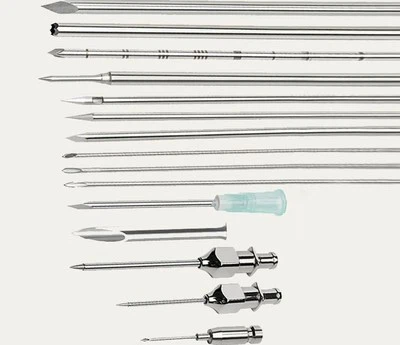
3. Multifunctional Work Portal: Besides the main viewing portal, procedures typically require 1-2 accessory operating portals. These operating cannulas are not only larger in diameter but also more diverse in design: some have sealing diaphragms to prevent fluid leakage during instrument exchange; some have beveled tips for teasing tissue in confined spaces; some even integrate suction channels.
4. Soft Tissue Protector: During repeated instrument exchanges, the cannula isolates sharp instruments (like shavers, radiofrequency probes) from subcutaneous tissue, cutaneous nerves, and the joint capsule, significantly reducing the risk of postoperative pain, subcutaneous hematoma, and nerve injury.
II. Advancement in Materials and Design: The Unsung Hero Supporting Complex Surgery
To meet these complex functions, the materials and design of arthroscope cannulas have undergone continuous innovation:
- Evolution in Materials Science: The shift from initial metals (stainless steel) to high-strength engineering plastics (like Polyether ether ketone - PEEK) has brought multiple benefits. Materials like PEEK offer excellent biocompatibility, high strength, low friction coefficients, and produce no artifacts on MRI, facilitating postoperative assessment. Their moldability also allows for more ergonomic and flexible designs.
- Anti-Fog and Anti-Scratch Coatings: Temperature differences inside and outside the joint often cause lens fogging. Advanced cannulas feature long-lasting hydrophilic coatings on the inner wall, effectively reducing water droplet condensation and maintaining a clear view. Simultaneously, ultra-smooth inner wall treatments protect the lens surface.
- Modularity and Universality: To address differences between joints (knee, shoulder, ankle, hip, wrist, elbow) and anatomical locations, cannulas have developed into a vast family with varying diameters (from 1.9mm to over 8mm), lengths, curvatures, and tip configurations. Modular design allows the surgeon to quickly swap cannulas with different functions according to the surgical step, enhancing procedural efficiency.
- Specialized Designs: For example, in shoulder arthroscopy, posterior portal cannulas are often designed blunt-tipped to reduce the risk of axillary nerve injury; for working in the posterior knee compartment, a curved cannula might be used for better access.
III. As a Hub for Technological Integration: Driving the Development of New Techniques
Advancements in arthroscope cannulas have directly enabled the birth and popularization of new surgical techniques:
- All-Inside Suture Techniques: In meniscal and rotator cuff repairs, suture hooks, suture passers, and other instruments need to be passed accurately into tight spaces through the cannula. The advent of dedicated suture cannulas made these delicate maneuvers possible.
- Arthroscopic Fracture Fixation: For fractures like tibial plateaus or glenoid rims, working portals are established via cannulas to introduce the scope, reduction instruments, and guidewires for cannulated screws. Robust cannulas with precise internal diameters are the foundation for completing minimally invasive internal fixation.
- Minimally Invasive Assistance in Joint Arthroplasty: In uni-compartmental or total knee arthroplasty, arthroscopy can assess liner wear, periprosthetic osteolysis, and even perform debridement. Dedicated arthroscopic cannulas compatible with arthroplasty instruments require even more sophisticated design.
Conclusion:
Therefore, when we focus on the "Arthroscope Cannula," we see the epitome of a humble tool evolving into a high-tech system component. It is the critical interface connecting the庞大 equipment outside the body (camera system, light source, pumps, power systems) with the microscopic surgical battlefield inside. It is the physical cornerstone enabling the realization of the minimally invasive philosophy. Each minor improvement in its material, design, and function embodies a deeper understanding of the surgical workflow, ultimately translating into faster patient recovery, smaller scars, and better functional outcomes. The arthroscope cannula, this silent "conduit," is in fact the "unsung hero" and central pillar supporting the continuous expansion and technical ascension of modern arthroscopic surgery.