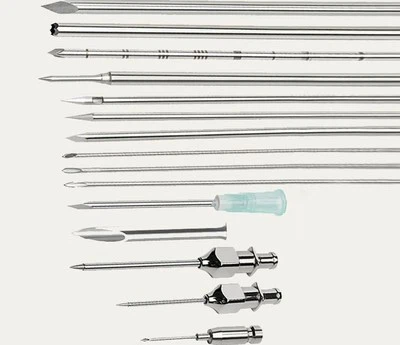
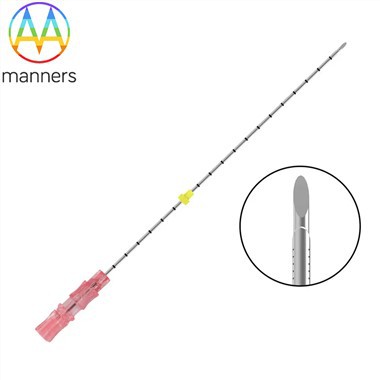
From A Clinical Decision-Making Perspective | Biopsy Needles
Apr 10, 2026
From a Clinical Decision-Making Perspective | Biopsy Needles: The "Tissue Detectives" in the Hands of Clinicians
In the diagnosis of breast nodules, clinicians often face a core dilemma: imaging examinations (such as ultrasound, mammography) can provide a "suspicion index" (e.g., BI-RADS classification), but the ultimate definitive "gold standard" must rely on pathological results. Patients often ask: "Doctor, can't you tell just by seeing the nodule? Why do I need an extra poke?"
In this short article, we discuss how that "one poke" helps doctors and patients find the most definitive answer amidst uncertainty, and how to choose the most suitable "detective tool" for different "cases."
The Core Role of Needle Biopsy: The Essential Bridge from "Imaging Suspicion" to "Pathological Confirmation"
Imaging is like "guessing an object by its shadow" – it can indicate risk but cannot see the inherent nature (benign or malignant) of the cells themselves. Needle biopsy, guided in real-time by ultrasound-a "live monitoring probe"-uses a needle to accurately obtain cells or tissue from the lesion. This sample is then sent to a pathologist for the "ultimate judgment" under a microscope. This directly determines whether subsequent management involves regular observation or requires surgery or neoadjuvant therapy.
Facing Different "Cases": How to Deploy the Most Suitable "Detective"?
Fine-Needle Aspiration (FNA): The Swift "Undercover Scout"
Role: Like an undercover detective, it acts fast and leaves minimal traces. It uses a thin needle (21-25G) to quickly aspirate a small number of cells.
Function: Primarily used for cytological examination, it can rapidly differentiate between benign and malignant masses. Its advantages are simple operation, minimal trauma, and almost no pain. The limitation is that it only obtains scattered cells-like gathering only a few fragmented pieces of information about a "suspect"-making it difficult to assess the complete "organizational structure" (histological architecture) and "background" (molecular subtype). Therefore, FNA often provides insufficient information when precise breast cancer subtyping is needed to guide targeted treatment.
Core Needle Biopsy (CNB): The Standard "Forensic Evidence Specialist"
Role: This is currently the mainstay of breast biopsy. It uses a hollow, side-cutting needle (typically 14-16G) to obtain a solid core of tissue, like taking an "apple core."
Function: The sample obtained is a complete histological specimen. Its key advantage is that it not only provides a 100% definitive diagnosis but also allows for crucial immunohistochemical testing (e.g., determining hormone receptor status, HER2 status, etc.). This provides decisive evidence for subsequent targeted therapy and endocrine treatment plans. It can be said that the CNB procedure directly maps the tumor's "molecular profile" and is the cornerstone of modern personalized treatment for breast cancer.
Vacuum-Assisted Biopsy (VAB): The Powerful "Specialized Task Force"
Role: Executes "precision clearance" missions in complex cases. It uses vacuum suction to draw tissue into the needle aperture, followed by rotational cutting. Multiple tissue samples can be obtained with a single needle insertion.
Function: Its core role is twofold: First, for more accurate diagnosis. It obtains a larger volume of tissue, leading to higher diagnostic accuracy for challenging lesions like microcalcifications or atypical hyperplasia. Second, it has therapeutic capability. For smaller benign tumors (e.g., fibroadenomas), VAB can completely remove them, achieving the effect of "biopsy as treatment." It represents obtaining the most definitive diagnosis and potential treatment with minimal trauma.
Ultrasound Guidance: Equipping the "Detective" with "See-Through Navigation"
Regardless of the "detective" chosen, real-time ultrasound guidance is indispensable. It acts like fitting the biopsy needle with "GPS" and "X-ray vision," ensuring the needle tip accurately reaches the target while avoiding blood vessels. This elevates the process from the "approximate location" of traditional blind procedures to "millimeter-level precision," significantly improving safety and success rates.
Conclusion
The breast biopsy needle is far more than a simple "needle." It is the critical tool that bridges imaging suspicion and pathological truth, serving as the intelligence source for clinicians to formulate a treatment plan. From the initial screening of FNA, to the precise subtyping of CNB, and the diagnostic excision of VAB, different "needles" play different roles. Together, they provide solid technical support for the goal of "early detection, early diagnosis, and early treatment."