How The Technological Evolution Of Biopsy Needles Is Reshaping Diagnosis
Apr 10, 2026
From a Technical Evolution Perspective | From "One Needle" to "One System": How the Technological Evolution of Biopsy Needles is Reshaping Diagnosis
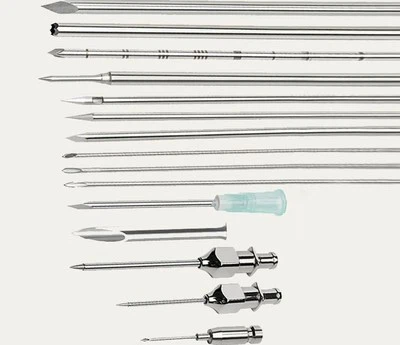
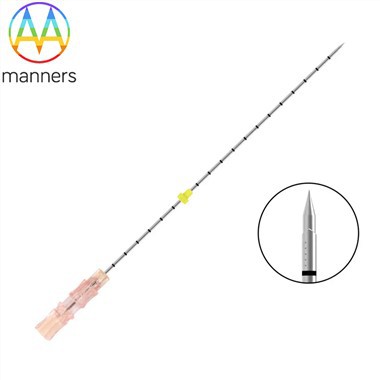
When we talk about breast needle biopsy, technological advancement has always revolved around a "needle." But this "needle" is no longer a simple hollow tube. The integration of mechanical design, materials science, and energy technology behind it has vastly expanded diagnostic boundaries. From a technological evolution perspective, this article analyzes how different types of biopsy needles address different clinical challenges through the evolution of the "needle" itself.
First Generation: Fine-Needle Aspiration (FNA) – The Cytology "Probe"
Technical Core: It is essentially a high-precision, ultra-fine aspiration needle. The key technologies lie in the bevel design of the needle tip and the smoothness of the inner wall. These enable penetration of tissue with minimal trauma and the use of negative pressure to aspirate scattered cells.
Role of the Needle: Acts as a cell collector. It functions like a "straw," aiming to obtain free cells for smear examination. Due to its extreme fineness, it causes little disruption to tissue architecture, but the information obtained is also limited to the level of cell morphology.
Second Generation: Core Needle Biopsy (CNB) – The Histology "Biopsy Gun"
Technological Leap: From "aspiration" to "cutting." The core of CNB is a system consisting of a needle with a sharp cutting notch and a spring-loaded biopsy gun. During operation, the inner stylet is rapidly fired, propelling the tissue into the sample notch. The outer cannula then swiftly advances to complete the cut. This process happens in a fraction of a second.
Role of the Needle: Acts as a tissue cutter. It "cores out" a complete cylindrical tissue sample from the lesion. This design revolutionarily elevated diagnosis from the cytological to the histological level, making it possible to assess tumor tissue architecture, grading, and perform immunohistochemical analysis. This needle is the cornerstone for obtaining complete pathological diagnostic information.
Third Generation: Vacuum-Assisted Biopsy (VAB) – The Minimally Invasive "Rotary Cutter"
Technological Integration: Integrates vacuum suction, automated rotational cutting, and real-time ultrasound monitoring. Its "needle" is actually a cannula system with a side aperture and a high-speed rotating cutting blade. During operation, a vacuum draws tissue into the aperture, the rotating blade cuts it, and the specimen is removed. Multiple contiguous samples can be obtained sequentially.
Role of the Needle: Upgraded to a miniaturized, precise tissue excision system. Its function undergoes a qualitative change:
For Diagnosis: It can obtain large, contiguous tissue samples, offering diagnostic accuracy for non-palpable lesions (like clustered microcalcifications) far superior to CNB.
For Therapy: It achieves percutaneous minimally invasive complete excision. For smaller benign tumors, VAB can act like a "miniature scalpel," completely removing the lesion via rotational cutting under ultrasound guidance, achieving "biopsy as cure."
Innovation in Needle Path: The cannula design of VAB systems ensures specimens are not withdrawn through the needle track, theoretically reducing the risk of tumor seeding-another sophisticated aspect of its design.
Technological Convergence and Future Directions
Today's biopsy "needle" has long surpassed the definition of a mere physical object. It integrates precise mechanical structures, special alloy materials (ensuring sharpness and toughness), and sometimes combines with radiofrequency or microwave energy (for hemostasis or marking). Future evolution may involve integration with AI-based image analysis for automated targeting or the incorporation of micro-sensors for in vivo molecular diagnosis.
Conclusion
From the FNA "cell probe" and the CNB "tissue biopsy gun" to the VAB "minimally invasive rotary cutting system," the history of biopsy needle evolution is a history of using more sophisticated mechanical designs and more intelligent system integration to obtain clearer diagnostic information with less patient trauma. Each transformation in the form and function of the "needle" has profoundly reshaped the landscape of diagnosis and treatment for breast disease.