Clinical Surgical Perspective | The Meaning Of The Needle Tip
Apr 10, 2026
Clinical Surgical Perspective | The Meaning of the Needle Tip: A "Millimeter-Level Precision Portal" for Minimally Invasive Access
In the clinical context of Minimally Invasive Surgery (MIS), the needle meaning has transcended its primitive definition as a mere "skin-breaking tool." It serves as the primary anatomical anchor for establishing a channel between the body cavity and the external environment, and a critical variable determining incision size, healing speed, and postoperative pain indices. When surgeons seek the optimal access route through the abdominal wall, joint capsule, or thoracic cavity, the needle must penetrate tough fascia and peritoneum with minimal trauma while precisely avoiding hidden vessels and nerves. This article analyzes how the trocar, through its precise geometric design and mechanical properties, becomes the "first checkpoint" for safe and efficient minimally invasive surgery.
Needle Decision Matrix in Critical Clinical Scenarios
|
Clinical Scenario |
Traditional/Universal Needle Dilemma |
Specialized Trocar Solution |
Clinical Outcome Improvement |
|---|---|---|---|
|
Pediatric Laparoscopic Hernia Repair |
Adult-sized trocars (5mm) cause oversized incisions, leading to high recurrence rates and mandatory secondary suturing. |
Ultra-fine diameter (2.2mm) pencil-point tip combined with sutureless technique. |
Incisional complications drop from 15% to 2%, eliminating the pain of secondary suturing for pediatric patients and achieving true cosmetic outcomes. |
|
Bariatric Abdominal Surgery |
Thick and soft abdominal walls cause standard needles to bend, preventing access to the peritoneal layer and resulting in blind probing. |
Extended shaft (15cm) + Ultra-hard stainless steel (HRC 50) to maintain linear penetration force. |
First-attempt success rate increases from 70% to 98%, significantly reducing the risk of visceral injury from blind insertion. |
|
Shoulder Arthroscopy |
Rich neurovascular structures below the coracoid process make blind puncture risky for brachial plexus injury. |
Blunt conical tip + Optic puncture cannula, enabling "see-as-you-go" access establishment. |
Neurological injury risk plummets from 8% to below 0.5%, drastically enhancing surgical safety. |
Clinical Anatomical Logic of Needle Design
The selection of trocars strictly adheres to the principles of "tissue compliance" and "fascial fixation":
Diameter vs. Trauma Trade-off: For diagnostic laparoscopy, the 5mm needle is the gold standard, accommodating standard laparoscopes. For pediatric or cosmetic demands, 2.5-3mm micro-trocars significantly reduce the risk of incisional hernias but sacrifice the breadth of vision and instrument maneuverability.
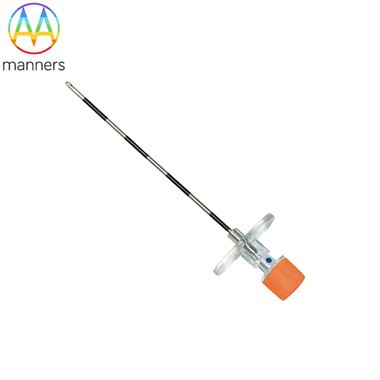
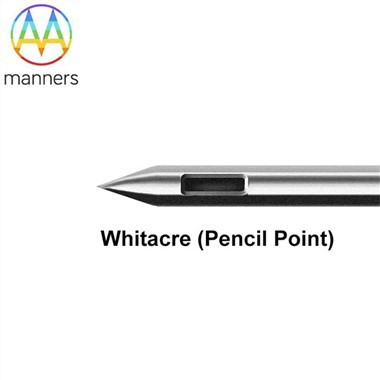
Tip Geometry: The Pencil-point design (e.g., Veress needle) pushes aside fibers rather than cutting them during fascial penetration, significantly reducing gas leak risks. The Trihedral tip is designed for thick fascia, utilizing stress concentration principles for "self-sharpening" penetration; it offers strong penetration but causes greater tissue trauma.
Health Economics and ERAS Model
Under the ERAS philosophy and DRG payment systems, the precision of the trocar directly impacts hospitalization length and complication costs.
|
Procedure Type |
Universal Needle Complication Rate |
Specialized Trocar Complication Rate |
Source of Cost Saving |
|---|---|---|---|
|
Laparoscopic Cholecystectomy |
Incisional hernia 5%, Post-op pain index 4.5 |
Incisional hernia 0.8%, Post-op pain index 1.5 |
Reduced analgesic use, 0.5-day shorter hospital stay. |
|
Arthroscopic Meniscus Repair |
Portal leakage rate 20% |
Portal leakage rate 3% |
Fewer dressing changes and wound care costs, improving patient satisfaction. |
Conclusion
The trocar is the "icebreaker" and "pathfinder" of minimally invasive surgery. The latest "Optic Trocar" integrates a micro-CMOS sensor within the stylet, capturing RGB tissue images at the moment of penetration. By using AI to identify fascial layers and vessels, it achieves a leap from "feeling-based puncture" to "vision-guided" access. In the future, needles integrated with miniature ultrasound probes will enable "tomographic imaging guidance," constructing a 3D tissue map during puncture. This will completely eliminate the learning curve of minimally invasive surgery, propelling the field into a precise era of "what you see is what you get."
If you're seeking a reliable SKD&CKD cooperation partner, choose Manners Technology. We offer a wide range of Jaws for Laparoscopy Instruments and Surgical Robots to meet diverse surgical needs. Customization options are available for unique size and appearance requirements. With decades of production experience, we provide comprehensive production solutions beyond equipment supply. As an inclusive provider, we integrate design, manufacturing, sales, and service to offer one-stop solutions globally.