Clinical Safety Analysis Of Atraumatic Pencil Point Spinal Needle & Manufacturer Quality Control System
Aug 05, 2026
Clinical safety is the core evaluation standard of spinal puncture medical devices, and the atraumatic pencil point spinal needle has been widely recognized by global clinical institutions for its low complication rate and high operational safety. Professional atraumatic pencil point spinal needle manufacturers take clinical safety as the core of production and R&D, building a perfect quality control system to ensure that each product can effectively reduce the risk of postoperative complications and protect patient safety during spinal anesthesia and lumbar puncture diagnosis.
Post-lumbar puncture headache is the most common postoperative complication of traditional spinal puncture operations. Clinical data shows that most patients will have varying degrees of headache after lumbar puncture, which is mainly caused by the temporary decrease of cerebrospinal fluid pressure due to intraoperative cerebrospinal fluid loss. This typical headache has obvious positional characteristics: the pain is relieved or completely disappears when the patient lies flat, and is significantly aggravated when sitting or standing. In mild cases, the headache can be relieved by drinking more water and resting for 1 to 2 days; in severe cases, persistent headache will affect the patient's recovery, and even require further neurological examination.
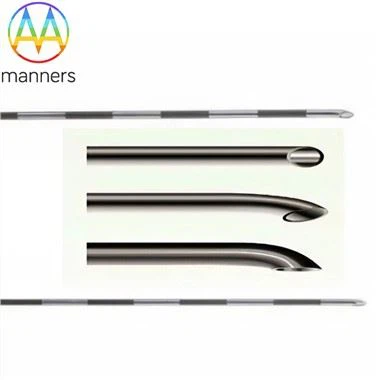
The atraumatic design of the manufacturer's pencil point spinal needle effectively solves the problem of postoperative headache from the source. Different from the cutting damage of traditional sharp needles, the pencil blunt tip separates dural fibers without cutting, forming a tiny and self-healable puncture wound. After the operation, the dural tissue closes quickly, avoiding continuous cerebrospinal fluid leakage, greatly reducing the probability of intracranial pressure drop, and significantly lowering the incidence and severity of post-lumbar puncture headache. A large number of clinical verifications show that the use of manufacturer-standard atraumatic pencil point spinal needles can reduce the postoperative headache rate by more than 60% compared with traditional Quincke point needles, with higher clinical safety.
In addition to common headache complications, cauda equina nerve injury is a serious potential sequela of lumbar puncture, and professional manufacturers fully consider this risk in product design and production. The cauda equina nerve is composed of 10 pairs of nerve roots derived from L2-5, S1-5 and caudal ganglia, and is connected to the spinal cord at the L1 conus medullaris level. The complex anatomical structure determines that any improper puncture operation or unqualified instrument may cause nerve compression and injury. The atraumatic pencil point spinal needle produced by formal manufacturers features precise tip radian and smooth needle body, which can avoid accidental stabbing and extrusion of nerve roots during puncture, effectively preventing cauda equina nerve damage and other severe complications.
To maintain long-term clinical safety, manufacturers have built a full-link quality control system. From medical stainless steel raw material screening, CNC precision machining, sterile disinfection to finished product delivery, every link implements strict testing standards. The manufacturer conducts mechanical performance tests such as needle body bending resistance and puncture stability, biological safety tests such as cytotoxicity and sterility, and appearance size inspection for each batch of products to eliminate unqualified products. The standardized quality control system ensures that the atraumatic pencil point spinal needle always maintains high safety and stability in clinical application, protecting the medical safety of global patients.
https://www.bmj.com/content/361/bmj.k1920