Bevel Orientation And Cannula Curvature
Nov 18, 2026
The Pass That Went Somewhere Else
An operator plans a path to a small target, advances the needle, checks the image, and finds the tip several millimetres from where it was intended. The target is still reachable, but each correction adds a pass, adds trauma, and adds time. In deep or small-target work, a few millimetres of unplanned deviation is the difference between a diagnostic sample and a non-diagnostic one.
The deflection is not random. A needle bends and steers according to the interaction between its tip geometry and the tissue it passes through, and that interaction is predictable in direction even when it is unwelcome in magnitude. Understanding it converts a nuisance into a controllable variable. This article explains how bevel orientation and cannula curvature determine where a needle goes, how different tip forms behave, and what operators do to keep the tip on the planned line.
How Bevel and Curvature Steer a Needle
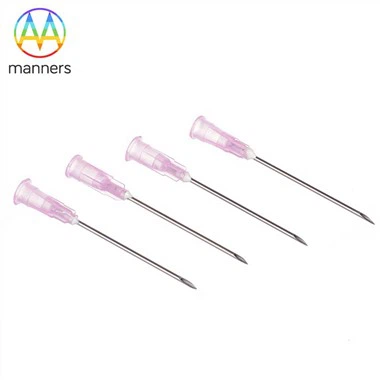
A bevelled tip is asymmetric. One side of the tip is longer than the other, so the cutting edge is offset from the axis, and the force required to advance the needle is not aligned with the shaft. The result is a lateral component that bends the needle toward the shorter, sharper side. This is the mechanism behind the familiar observation that a bevel-tipped needle curves away from the bevel as it is advanced, and it is the reason that rotating the needle during insertion changes the path.
Cannula curvature adds a second influence. A needle that has a preformed bend, or that has acquired one during handling, will follow the curve as it advances because the tissue resists the straight configuration. A slight bend is often used deliberately to reach targets that a straight approach cannot reach, particularly where the entry point is constrained.
The tissue contributes a third factor. Layered structures, such as fascia and muscle, deflect a needle differently depending on the angle at which they are crossed, and dense structures push a flexible needle aside rather than being penetrated. The combined behaviour is a system property of tip, shaft, and tissue, which is why two needles of the same gauge can track differently in the same patient.
Tip Geometries and Their Steering Behaviour
Different tip forms steer differently, and the differences should be matched to the procedure. A single-bevel tip steers consistently and predictably toward the bevel side, which makes it suitable where a controlled curve is useful and where the operator can rotate the hub to aim.
A symmetric tip, such as a Franseen or a crown style with evenly distributed teeth, distributes the cutting force around the circumference and therefore tracks straighter than a single bevel. A crown core cut tip belongs to this group: the ring of teeth cuts on all sides, the lateral bias is small, and the needle follows the planned line more closely when advanced with rotation rather than pushed.
A closed point configuration concentrates the cutting action at the side rather than at the tip, so the needle advances along the shaft rather than ahead of it. A trocar tip, with its three-plane point, penetrates firm structures with relatively little deflection but is not intended for sampling.
A manufacturer offering a Crown End Needles range with selectable tip styles, in stainless steel from 0.25 mm to 30 mm, allows a service to choose between a tip that steers deliberately and a tip that tracks straight, and to specify the shaft straightness and stiffness that make either behaviour repeatable.
Controlling Direction in Practice
Control starts before the needle is inserted. Inspect the shaft for curvature, because an unintended bend from packaging or handling will steer the needle no matter how the tip is oriented. Confirm that the bevel marker on the hub aligns with the bevel at the tip, since a misaligned marker makes orientation meaningless.
During insertion, use the hub to orient the tip deliberately. Where the needle tends to drift, rotate the hub so that the asymmetry counteracts the drift rather than adding to it. Advance in short increments and re-image frequently; long advances allow error to accumulate before it is visible. Where a curved approach is required, choose a needle with a softer temper that will follow the intended curve, and use the bevel orientation to reinforce the direction rather than fight it.
Where a straight track is required, prefer a symmetric tip and advance with rotation rather than steady pressure, since rotation evens out the cutting forces. Where the target is deep and the needle is fine, consider the shaft's column strength: a very fine needle in soft tissue will bow before it will penetrate a firm structure, and no amount of tip adjustment will fix a stiffness problem. Finally, record which tip and orientation produced a successful pass, because a repeat procedure in the same patient is far easier when the working geometry is known.
What Operators Report After Conversion
Clinicians who have changed tip forms report specific differences. The first is reduced need for redirection in superficial procedures such as thyroid sampling, where the short distance makes lateral drift immediately visible and where a symmetric tip removes a source of error that was previously compensated by experience.
The second is that a straight-tracking tip shortens the procedure, because fewer confirmation images are needed. The third is that the feel of the pass changes: a symmetric cutting tip produces a steadier resistance rather than a series of catches, which gives the operator feedback about tissue type without requiring interpretation of the image alone.
The fourth is a caveat. Operators used to a single bevel sometimes over-rotate with a symmetric tip, expecting a steering effect that is no longer present. Training therefore matters as much as the component, and a supplier who provides samples for hands-on evaluation, together with drawings from 2D or 3D files to match hub and length, makes that transition practical rather than theoretical.
Steering as a Design Property
The lesson is that directionality is a design property that can be specified, purchased, and taught. A bevel that steers predictably and a crown tip that tracks straight are both useful, in different procedures, and the choice should follow from the target and the approach rather than from what happens to be in stock.
That requires a specification that states tip form, bevel orientation relative to the hub marker, shaft straightness, material temper, and tolerance. It also requires a supplier whose process control holds those parameters between lots, because a marker that drifts by a few degrees or a shaft that arrives slightly bowed changes the behaviour the operator has learned. ISO 13485 documentation, first-article inspection, free samples for evaluation, and standard carton packaging that keeps fine tips and straight shafts intact all support the same goal: a needle that goes where it was aimed.
The Next Step in Directional Control
Interest is growing in tip geometries designed for a specific steering response, and in hub markings that make orientation unambiguous at a glance. Better imaging is also making small deviations visible earlier, which raises expectations for the needle rather than lowering them.
For services, the practical measure is to evaluate tip forms against recorded outcomes: number of passes, number of redirections, and adequacy of the specimen. A crown end needle evaluated that way, alongside a single-bevel alternative and a Franseen option, produces evidence that supports a decision, and evidence that can be revisited when the supplier or the procedure changes.
There is a further practical note on documentation. When a service changes tip geometry, the improvement is only defensible if the geometry is recorded, so the drawing should state the bevel angle, its orientation relative to the hub marker, and the allowable shaft bow. A Crown End Needles order placed against such a drawing, with samples supplied for hands-on evaluation before the first production lot, lets a department confirm that the steering behaviour it trained for is the behaviour it receives on every subsequent delivery.