Development Origin Of The Puncture Needle Industry——The Journey Of Technological Iteration Driven By Manufacturers
Apr 27, 2026
Development Origin of the Puncture Needle Industry--The Journey of Technological Iteration Driven by Manufacturers
Question & Interpretation
From primitive puncture tools to standardized minimally invasive devices, what lies at the core of the puncture needle industry transformation? The consistent driving force is technological innovation by medical device manufacturers and clinical demand orientation. The industry widely discusses how domestic puncture needles have evolved from import reliance to independent mass production. Behind this transition lies the efforts of successive generations of manufacturers who have focused on research and development, broken through technical barriers, and improved production systems. It also reflects the developmental changes of the global minimally invasive medical device industry.
Historical Origin
The development of the puncture needle industry is deeply integrated with technological upgrades achieved by manufacturers, and its evolution can be divided into three stages.
In the initial budding stage (19th century to the mid-20th century), no standardized manufacturing system was available for puncture devices, which were mostly handmade. A small number of European and American manufacturers attempted to produce simple metal puncture needles with chaotic specifications and poor safety performance, limited only to basic puncture and drainage procedures.
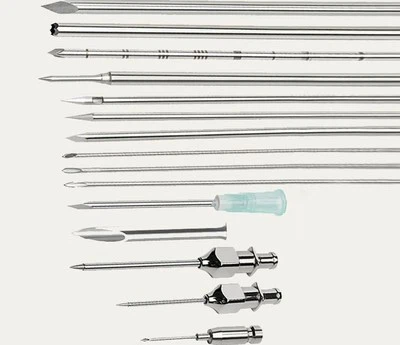
During the rapid development stage (mid-20th century to the early 21st century), minimally invasive surgery gained rapid momentum. Multinational manufacturers in Europe and the United States took the lead in establishing standardized production lines, developed structurally optimized puncture needles featuring stylet and cannula designs, completed comprehensive product specification systems, and formulated industrial production criteria. Their products dominated the global high-end medical market and secured industry leadership.
In the domestic rise stage (21st century to present), domestic medical consumable manufacturers have achieved rapid growth. They have broken through technical bottlenecks in material processing, precision manufacturing and aseptic production, built internationally compliant production systems, and realized independent research and development as well as large-scale mass production of puncture needles. Leveraging cost-effectiveness and localized service advantages, domestic puncture needles have rapidly captured grassroots and mid-end domestic markets. Through continuous technological upgrading, leading domestic manufacturers have entered global markets, participated in international competition, and promoted the restructuring of the global puncture needle industry landscape.
Standard Definition
From an industrial development perspective, puncture needles are minimally invasive interventional devices professionally produced by qualified medical device manufacturers. Manufactured in strict accordance with the ISO 13485 quality management system and national medical device standards, they adopt medical-grade raw materials and undergo precision processing and sterile treatment.
Manufacturers must hold valid medical device registration certificates and production licenses, and comply with standardized production specifications to ensure that product biocompatibility, mechanical properties and sterile safety fully meet clinical requirements. Puncture needles are classified as Class III medical devices under strict national supervision.
Unified industrial standard definitions clarify core norms regarding manufacturer qualification, process requirements and quality inspection, laying the foundation for standardized industrial development and ensuring safety in all clinical applications.
Clinical Application
Standardized puncture needles manufactured by global and domestic suppliers have covered minimally invasive diagnosis and treatment across all clinical departments, fundamentally overcoming the drawbacks of traditional open surgery such as severe trauma and slow recovery.
In general minimally invasive surgery, puncture needles serve as the preferred device for establishing surgical channels, facilitating the widespread adoption of abdominal minimally invasive procedures while reducing surgical risks and patient discomfort.
In orthopedic joint diagnosis and treatment, specially developed thin-diameter, high-precision puncture needles adapt to delicate joint structures and enable accurate intra-articular manipulation.
In pathological biopsy, dedicated biopsy puncture needles ensure complete tissue sampling and improve the accuracy of disease diagnosis.
In emergency drainage and hemostasis procedures, puncture needles rapidly establish operative access and save critical time for emergency treatment.
Meanwhile, with the popularization of grassroots minimally invasive care, conventional puncture needles supplied by mainstream manufacturers have been widely adopted in primary medical institutions, enabling more patients to benefit from minimally invasive diagnosis and treatment.
Through differentiated product layouts, manufacturers with varied market positioning meet diverse clinical needs, ranging from high-precision complex surgeries in tertiary hospitals to routine diagnosis and treatment in grassroots medical facilities, and accelerate the comprehensive popularization of minimally invasive medical services.