From Rigid Puncture To Flexible Tissue Harvesting: Engineering Wisdom And Evolution Of Bone Marrow Biopsy Needles
Apr 23, 2026
From Rigid Puncture to Flexible Tissue Harvesting: Engineering Wisdom and Evolution of Bone Marrow Biopsy Needles
The excellence of bone marrow biopsy needles is rooted in sophisticated engineering wisdom that resolves a series of extreme mechanical contradictions. The instrument must strike a delicate balance between extreme rigidity and refined flexibility: the needle shaft requires sufficient stiffness to penetrate bone, while the inner core mechanism must be precisely engineered to intactly capture delicate bone marrow tissue. The procedure demands substantial manual torque, yet simultaneously requires clear and sensitive tactile feedback to sense bone penetration. As a single-use interventional device, it must withstand mechanical stress comparable to orthopedic bone drills. Manufacturers including Manners Technology unify these conflicting performance requirements within a single needle through innovations in materials, structural design and manufacturing processes.
Materials science and its practical application form the foundation of overall performance. Surgical-grade stainless steel such as 304 and 316L is the primary material for needle shafts, owing to its comprehensive mechanical properties, corrosion resistance and cost-effectiveness. For high-end markets demanding lightweight construction, superior biocompatibility and non-magnetic performance, titanium alloys are adopted. Material selection extends far beyond structural strength; it is also critical to fatigue lifespan. During biopsy procedures, the needle is subjected to complex torsional stress, compressive stress and bending load, especially in patients with dense or sclerotic bone.High-quality materials paired with precise heat treatment processes including quenching and tempering achieve exceptional tip hardness above HRC 50 while retaining adequate toughness across the needle body, preventing brittle fracture. This unique property of hard exterior and tough interior is fundamental to procedural safety.
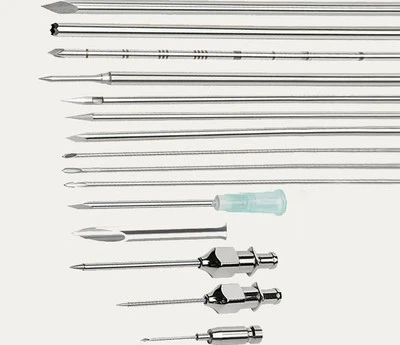
Evolution of tip geometry reflects continuous optimization of operational efficiency and clinical safety. Early biopsy needles featured simple bevel tips, while modern designs have diversified into multiple configurations:
Beveled tip: A classic design exemplified by the Jamshidi needle. Its long sharp bevel cuts through bone during rotation; although bone penetration is relatively slow, it provides excellent operational control.
Triangular pyramidal / conical tip: Reduces contact area with bone, delivers strong initial penetration force and provides superior anchoring to prevent slippage.
Spiral drill tip: Compatible with manual and electric drilling devices, enabling effortless and rapid cortical bone penetration, particularly suitable for patients with dense osseous tissue.
Each geometry corresponds to distinct operational tactile feedback and clinical indications, with the core objectives of minimizing patient discomfort and surgeon fatigue.
The tissue capture mechanism of the inner stylet constitutes the essence of the device design. Successful core biopsy relies on the stylet's ability to cleanly excise and retain intact marrow tissue cores. Its critical components include the precision-machined cutting window and tissue stopper at the distal end of the inner core.The finely polished bevel of the cutting window severs the base of the tissue core like a shovel during rotational advancement. A miniature protrusion or structural feature behind the window acts as a physical stopper, preventing the harvested tissue core from sliding backward and detaching during needle withdrawal.Advanced designs adopt nut-type inner cores with threads or barbs at the distal end, which screw and secure the tissue core inside the lumen during cutting. These micrometer-scale mechanical designs directly determine specimen integrity and procedural success rates.
The distinction between manual and powered operation represents two divergent pathways of ergonomic optimization and procedural standardization. Manual biopsy needles depend on the surgeon's wrist force and clinical experience, delivering distinct penetration feedback at low cost; however, they feature a steep learning curve and impose considerable physical exertion on operators.Electric and pneumatic bone marrow biopsy systems represent a revolutionary advancement, integrating consistent rotational speed and controllable advancing force within a pistol-grip handle. Their clinical advantages include:
Standardized procedures: Eliminating performance variances caused by differences in operator strength and technique for uniform, repeatable tissue sampling.
Reduced operational difficulty and fatigue: Lowering technical barriers to allow novice clinicians to perform procedures with relative ease.
Enhanced patient comfort: Rapid bone penetration shortens painful procedural duration, and stable motion reduces repetitive periosteal compression.
Optimized specimen quality: Constant rotational speed produces cleaner tissue cuts and minimizes compressive damage to harvested marrow tissue.
Refined specification diversification embodies in-depth clinical rationalization. Needles of variable lengths, ranging from short models for pediatric patients to extended-length versions for obese individuals, accommodate anatomical discrepancies across different age groups and body types.Gauge selection is equally critical. Larger-gauge needles such as 11G harvest thicker tissue cores with intact trabecular bone architecture, offering superior diagnostic value for evaluating myelofibrosis and metastatic lesions at the cost of increased procedural trauma and discomfort. Finer needles such as 15G minimize soft tissue injury yet may yield undersized specimens insufficient for comprehensive pathological analysis. Surgeons must balance diagnostic requirements with patient tolerance during instrument selection.
In summary, the engineering value of bone marrow biopsy needles lies in transforming an experience-dependent, tactile-sensitive clinical procedure into a standardized, safe and ergonomically optimized intervention through elaborate mechanical design. Every fine adjustment of tip angle, innovation in inner core structure, and advancement in power transmission aims to enable stable operation, minimal tissue trauma and complete, intact specimen harvesting from the core of human physiology. Such progress embodies profound humanistic care and powerful technical support afforded by engineering innovation for vulnerable human life.