A Paragon Of Technological Synergy – The Symbiotic Advancement Of The Soft Tissue Biopsy Needle And Contrast-Enhanced Ultrasound in Musculoskeletal Intervention
Apr 28, 2026
A Paragon of Technological Synergy – The Symbiotic Advancement of the "Soft Tissue Biopsy Needle" and Contrast-Enhanced Ultrasound in Musculoskeletal Intervention
Abstract: This article explores, from a technological synergy perspective, how the "soft tissue biopsy needle" and contrast-enhanced ultrasound (CEUS) imaging technology mutually reinforce each other, jointly advancing musculoskeletal interventional diagnostics. It focuses on analyzing the closed-loop they form in operational workflow, information feedback, and clinical decision-making. The biopsy needle relies on CEUS for biological navigation beyond anatomy; conversely, the diagnostic value of CEUS ultimately requires validation and realization through the histopathology obtained by the biopsy needle. Combining clinical research, this article explains how this integrated model of "imaging identification - precise intervention - pathological verification" becomes the new standard for diagnosing complex soft tissue tumors.
Main Text:
In the history of medical technological progress, the synergistic evolution of diagnostic tools and therapeutic/sampling tools is often key to breakthroughs. In the field of interventional diagnosis for soft tissue tumors, the "soft tissue biopsy needle" and "contrast-enhanced ultrasound" are such a golden pair. The former is the executing "hand," the latter is the insightful "eye." A recent comparative study (diagnostic yield: CEUS 91.1% vs. US 73.1%) not only proves the superiority of CEUS but also reveals, on a deeper level, the profound symbiotic relationship between these two technologies.
CEUS provides "intelligent navigation" and "quality pre-assessment" for the biopsy needle. Under traditional US guidance, target selection for the biopsy needle is based on static morphological grayscale differences. The operator is essentially planning a route on a black-and-white map with insufficient detail. The introduction of CEUS upgrades this map to a dynamic, color-coded satellite image annotated with "traffic flow" (blood perfusion). It can display in real-time:
- Target Viable Area: Hyper-enhancing regions are the preferred targets for the biopsy needle.
- Areas to Avoid: Non-enhancing areas (necrosis, old hemorrhage) are "diagnostic vacuums" the biopsy needle must avoid.
- Tumor Margins: Especially for tumors with infiltrative growth, CEUS can more clearly distinguish the tumor from surrounding edema or normal tissue, guiding sampling within a safe and effective range.
The study mentioned that all CEUS-guided biopsies were performed under real-time conventional US guidance, utilizing the "target information" provided by CEUS and the "high-resolution needle tract monitoring" provided by conventional US. This "dual-modality synergy" strategy perfectly combines the functional advantages of CEUS with the real-time spatial resolution advantages of conventional US, ensuring the biopsy needle accurately hits the predetermined target along the optimal path.
The biopsy needle is the "ultimate value realizer" of CEUS imaging. No matter how clearly CEUS images suggest malignant perfusion features (e.g., rapid heterogeneous enhancement, central necrosis), the final diagnostic gold standard remains histopathology. Therefore, the quality of the tissue specimen obtained by the biopsy needle directly determines whether the value of the prior CEUS assessment can be realized. A perfect CEUS exam loses its value if subsequent biopsy sampling is inaccurate. The significant improvement in diagnostic yield in the CEUS group is precisely the result of the combined force of "high-quality imaging navigation" and "precision instrument execution." Here, the biopsy needle acts as a "value converter," transforming imaging suspicions into pathological evidence.
Synergistic攻坚 (Tackling) of Special Cases: The value of technological synergy is particularly prominent for the types of tumors where the study indicated the most significant gains from CEUS (deep-seated, large volume, ill-defined borders, heterogeneous). For example, a mass located deep to the fascia, >5cm in diameter, with extremely heterogeneous echogenicity may appear as an uninterpretable chaotic echo pattern on conventional US. CEUS can quickly identify scattered, nodular hyper-enhancing foci within it (possibly active parts of a high-grade sarcoma) while excluding large non-enhancing areas (possibly necrosis or degeneration). The operator can then confidently guide the biopsy needle to perform targeted punctures on these hyper-enhancing nodules. This process represents a high degree of unification between diagnostic imaging thinking and interventional operative technique.
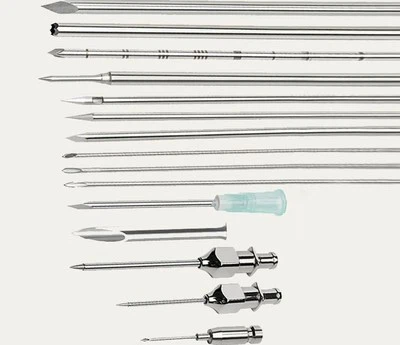
Implications for Industry and Training: This synergy demands that clinicians be not only experts in interpreting ultrasound images but also skilled masters of interventional procedures. Future training systems need to strengthen the "imaging-intervention" integrated mindset. The development of "soft tissue biopsy needles" should also consider better adaptation to the CEUS workflow, such as developing needles that are more visible in contrast mode or designing biopsy guns that facilitate stable operation while observing contrast. Medical device companies could consider offering "Musculoskeletal Interventional Diagnosis Solution Packages," integrating high-performance contrast ultrasound, dedicated biopsy probes, a range of "soft tissue biopsy needles" in different gauges and lengths, and standardized operational training.
In summary, the "soft tissue biopsy needle" and "contrast-enhanced ultrasound" are not merely a simple combination of devices but form a tight technological ecosystem in diagnosing complex soft tissue tumors. CEUS extends the "perceptive capability" of the biopsy needle, while the biopsy needle realizes the "diagnostic intent" of CEUS. Working in synergy, they advance the percutaneous biopsy of soft tissue tumors from an empirical technique to a new stage based on precise biological imaging navigation.