What is body piercing
Apr 08, 2022
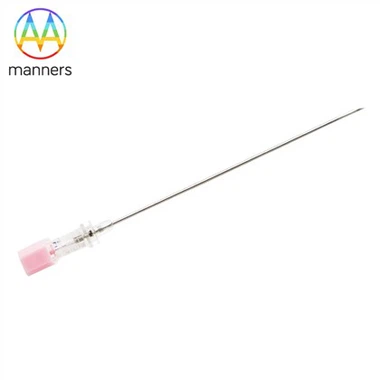
A diagnosis and treatment technique, the puncture needle is inserted into the body cavity to extract secretions for testing, gas or contrast agent is injected into the body cavity for contrast examination, or drugs are injected into the body cavity. Commonly used puncture are the following. Brain or spinal tap for diagnosis or treatment. There are the following: Subdural puncture. Often in infants and young children. When the anterior fontanelle is not closed or the coronal suture is enlarged, a lumbar puncture needle is inserted into the subdural layer from the lateral angle of the anterior fontanelle or from the coronal suture to extract the subdural effusion in traumatic chronic subdural hematoma and suppurative meningitis, and then Inject an appropriate amount of antibiotics. Ventricular puncture. Can be divided into anterior angle puncture, lateral angle puncture and posterior angle puncture three. The easiest way is to use a cranial cone to quickly drill through the skull 2cm behind the anterior hairline and 2.5cm next to the midline, and then use a lumbar puncture needle or a ventricular drainage tube to penetrate the anterior horn of the lateral ventricle. When the cerebral pressure is too high, the patient is in a coma, the pupil is dilated, the breathing is superficial, and the brain herniation is formed, a rapid ventriculocentesis is performed to release the ventricular fluid, and the brain herniation can be relieved immediately. Ventricular pressure can also be measured, or a drainage bottle can be connected for continuous ventricular drainage, and the ventricular fluid can be taken for testing. Methylene blue can also be injected to understand the circulation of cerebrospinal fluid. Air, oxygen, and contrast agents, such as iodophenyl ester, 60% iodine, meglumine (Kangrui), and meglumine meglumine, can also be injected from the puncture needle for ventriculography to diagnose intracranial space-occupying lesions and ventricular system obstruction. People who are allergic to iodine should not do angiography. Ventricular fluid discharge is too rapid, occasionally causing epidural and subdural hematoma. Cerebral vascular puncture. The cerebral hemisphere is supplied by the internal carotid artery, and the cerebellum and brain stem are supplied by the vertebral artery. The common carotid artery or vertebral artery can be punctured, and the contrast agent can be injected for cerebral angiography, and the common carotid artery angiography can display the blood vessels of the cerebral hemisphere. The method is to level the upper edge of the thyroid cartilage and the inner edge of the sternocleidomastoid muscle to puncture the common carotid artery with an angiography needle, and then inject a contrast agent, such as meglumine meglumine, 60% meglumine iodine (Kangrui), and excellent only. Vertebral artery angiography can display the lower blood vessels. The method is to level the 3rd to 4th or 4th to 5th cervical intervertebral space next to the trachea, puncture the vertebral artery with an angiography needle, and inject the above drugs for angiography. Lumbar puncture. Using lumbar puncture needle to puncture the subarachnoid space of the lumbar spinal cord is an important clinical auxiliary examination method in neurology. It can be used to measure brain pressure, collect cerebral effusion for routine, biochemical and bacteriological examinations, tumor cells and medical examinations, and provide a basis for the diagnosis of intracranial inflammation, tumors, hemorrhage and cerebral white matter demyelination diseases. However, when the intracranial pressure is too high, the lumbar puncture must be careful, and the fluid must be discharged slowly. Contrast agents such as iodophenyl ester, 60% meglumine iodine (Congrui), DimerX, Amipague, and meglumine meglumine can also be injected into the subarachnoid space for descending or ascending angiography. Air (or oxygen) can also be injected into the subarachnoid space, directional flow into the brain, do spinal lesions angiography, ventriculo-encephalography and cisternography. There are several types of thoracentesis: thoracentesis. Puncture the pleural cavity with a thoracic needle. The puncture point is in the subscapular 7-9 intercostal space or the mid-axillary line is equivalent to the 6-7 intercostal space. After puncturing the pleural cavity, air can be extracted to treat pneumothorax, inflammatory exudate from the pleural cavity can also be extracted, or drugs can be injected to treat pleurisy and relieve symptoms of respiratory distress. The extracted liquid can be used for testing and bacterial culture. A diagnostic aspiration of 50 to 100 ml is sufficient. The first suction of pneumothorax caused by trauma should not exceed 600ml. Continuous chest drainage can also be done to extract fluid and gas. If the patient has symptoms of collapse such as pale complexion, sweating, palpitations, and local severe pain, stop expelling fluid and deflate immediately, and inject 1:1000 adrenal gland 0.3-0.5ml, and make him lie down. Pericardiocentesis. The pericardial cavity was punctured from the 5th to 6th intercostal space of the left midclavicular line with a thoracic needle outside the border of cardiac dullness. The inflammatory fluid is withdrawn to relieve the compression on the heart. The first pumping should not exceed 300ml. When changing the needle during operation, the tube should be clamped to prevent air from entering. Antibiotics can also be injected into the pericardium for treatment. Abdominal body cavity and organ puncture includes the following: paracentesis, using a puncture needle, 1cm above the midpoint of the umbilical to pubic connection, and 1 to 1.5cm laterally to puncture the abdominal cavity. Used to diagnose unexplained ascites and release ascites to relieve dyspnea. It can also be injected into the abdominal cavity. The initial discharge does not exceed 3000ml, and continuous closed drainage can be done if necessary. However, if the patient collapses, the fluid should be stopped immediately and supine, and hypertonic glucose should be injected intravenously. Liver puncture. Can be used for biopsy (see Liver biopsy). Renal puncture. Using a 9-10 gauge lumbar puncture needle, puncture the kidney at the lower border of the twelfth rib, 6-6.5 cm next to the dorsal midline, and take a biopsy. For unclear primary glomerulonephritis, pyelonephritis, nephrotic syndrome, multiple myeloma involving the kidney, renal tumor, nephrosclerosis, etc. Patients with bleeding tendency, high blood pressure, perirenal abscess and renal tuberculosis should avoid puncture. Cystocentesis. The bladder is punctured above the midpoint of the pubis for patients with urinary retention due to enlarged prostate and failure of catheterization. Hysterocentesis. The uterus is punctured above the pubic bone, and the amniotic fluid is taken out to measure the lecithin/nitrophospholipid ratio (L/s), which is helpful to determine the fetal lung maturity, whether to suffer from hyaline membrane disease after birth, and to predict the best time and best way of pregnancy. Bone marrow puncture includes iliac puncture, spinous process puncture and sternal puncture. For the diagnosis of blood diseases, certain parasitic diseases such as kala-azar. Bone marrow aspiration is prohibited for those with bleeding tendency. Lymph node puncture is used to puncture the superficial lymph nodes of unknown cause, and the fluid can be extracted for laboratory and pathological examination. However, malignant lymphoid tumors and deep lymph nodes should not be punctured. Arthrocentesis There are shoulder joint cavity, elbow joint cavity, wrist joint cavity, hip joint cavity, knee joint cavity and ankle joint cavity puncture. After puncture, liquid can be drawn for testing, and air imaging and drug therapy can also be injected. Arthrocentesis requires strict sterility to prevent infection. It is suitable for unexplained joint diseases, joint cavity tumors, etc. Vascular puncture Common such as femoral artery puncture, femoral vein puncture and subclavian vein puncture. The purpose is blood test, blood transfusion, fluid infusion (including placement of catheter to retain fluid), and placement of catheter for angiography. Three blood vessels can be punctured to draw blood. After the subclavian vein can be punctured, a catheter can be placed and retained for intravenous hypernutrient therapy. Puncture the femoral artery and place the catheter for cardiac and cerebral angiography. Cerebral angiography. The femoral artery was punctured, and the catheter was sent under the TV screen to the opening of the aortic arch, common carotid artery or vertebral artery by Seldinger's method, and the contrast agent was injected under pressure. Phase cerebral vascular imaging to diagnose supratentorial tumors and vascular lesions. Spinal angiography. The catheter was inserted into the femoral artery by Seldinger's method, and sent to the vertebral artery or spinal root artery under the X-ray screen for cervical spinal cord and upper thoracic spinal artery angiography. The catheter was sent to the root artery of the 4th to 7th intercostal arteries for mid-thoracic spinal arteriography. The catheter was sent to the 9th to 12th intercostal arteries and the radicular arteries of the 1st to 2nd lumbar arteries, and a lower thoracic or lumbar spinal arteriography was performed. For the diagnosis of spinal cord vascular malformations, intramedullary tumors, occlusive spinal cord vascular disease, etc. It is generally safe and complications are rare. Left heart and coronary angiography. From the femoral artery puncture, the catheter is sent to the aorta, left heart angiography is performed or the catheter is sent into the left and right coronary ostia by Juakin's method, and the contrast agent is injected, and coronary angiography is performed. Suitable for congenital heart disease, coronary infarction, rheumatic heart valve disease, syphilitic aortic valve disease, myocarditis, endocarditis, complete left bundle block, heart failure, pulmonary hypertension. Contraindicated in patients with iodine allergy. Intravenous catheter angiography. From the femoral vein puncture, into the catheter, through the external iliac vein, iliac vein to inject contrast agent 25 ~ 40ml, continuous filming, do spinal venography, for the diagnosis of spinal venous malformation, spinal cord tumors and lateral intervertebral disc herniation. The common jugular vein can also be punctured, and the catheter can be sent to the superior vena cava, right atrium, right ventricle, and pulmonary artery for right heart catheterization. For the diagnosis of congenital heart disease such as atrial or ventricular septal defect, patent ductus arteriosus, tetralogy of Fallot, pulmonary valve stenosis, rheumatic valve disease, etc. Contraindications with left heart angiography
If you have any questions, please contact us. Our company can produce various customized needles, medical needles, puncture needles, hypodermic needles, biopsy needles, vaccine needles, injection needles, syringe needles, veterinary needles, pencil point needle, ovum pick up needles, spinal needles, etc. If you need customized needle products, please contact us. We look forward to your inquiry! The quality of the products manufactured in our factory will surely satisfy you!
Please contact us if you need: zhang@sz-manners.com