What are the items for lumbar puncture needle puncture
Jan 13, 2022
Lumbar puncture can be used for both diagnosis and treatment. In order to perform this operation safely and effectively, physicians need to understand the contraindications of lumbar puncture, related anatomy, and methods to minimize the risk of complications. Although a lumbar puncture is rarely dangerous, once it occurs, it can be very serious and may even endanger the patient's life. Understanding the indications, contraindications and correct operation methods of lumbar puncture can minimize the risk of occurrence.
Lumbar puncture equipment
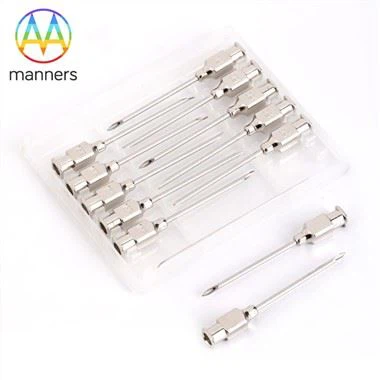
The commercialized lumbar puncture kit includes the necessary equipment for lumbar puncture: a lumbar puncture needle with a needle core, skin disinfectant, surgical towel, collection tube and a manometer. The 22-gauge puncture needle is preferred because the small puncture hole reduces the risk of CSF leakage. Generally speaking, babies use 1.5-inch (3.8 cm) needles, children use 2.5-inch (6.3 cm) needles, and adults use 3.5-inch (8.9 cm) needles.
posture
Patients should take a side lying or sitting position. In order to obtain an accurate opening pressure and reduce the risk of headaches after puncture, a lateral position is better. Not all patients can receive lumbar puncture in any position, so doctors should learn to perform this operation when the patient is lying on the left, right, and upright. Once the patient's basic posture is determined, the physician should instruct the patient to adopt a fetal position or arch the waist "like a cat" to increase the gap between the spinous processes. When the patient is in a sitting position, the lumbar spine should be perpendicular to the table top, and when the patient is in a lateral position, the lumbar spine should be parallel to the table top.
Landmark
Draw a line between the upper edges of the iliac ridges on both sides and intersect the midline passing through the L4 spinous process. Insert the needle in the gap between L3 and L4 or L4 and L5 because these points are located below the terminal segment of the spinal cord. Physicians should find out the landmarks before disinfecting the skin and injecting local anesthetics, because these operations may obscure the landmarks. Use the skin marker to mark the correct position.
Preparation before puncture
After the doctor puts on sterile gloves, he disinfects the skin with an appropriate disinfectant (povidone-iodine or a solution containing chlorhexidine), starting from the center and expanding outwards in circles. Then cover with a disinfectant towel.
Analgesia and sedation
Lumbar puncture can make the patient feel pain and anxiety, and it is suitable to use the smallest dose of local anesthetics. If time permits, the physician can apply anesthetic cream locally before disinfecting the patient's skin. After the skin is disinfected and a sterile towel is spread, local anesthetics can be injected subcutaneously, or systemic sedatives and analgesics can be used.
lumbar puncture
After locating the landmarks again, the doctor inserted a puncture needle with a needle core at the midline position and the upper edge of the next spinous process. The needle was facing the head at an angle of about 15 degrees, which seemed to be toward the patient's umbilicus. CSF leakage can cause headaches after puncture. The latest information suggests that the use of "pencil-like" needles can reduce the risk of headaches, because such needles can spread the fibers of the dural sac without cutting them. If you use a more commonly used beveled needle, the bevel of the needle should be in the sagittal plane, so that the fibers parallel to the spinal axis can be spread out without cutting them.
If the needle position is correct, the puncture needle should pass through the skin, subcutaneous tissue, supraspinous ligament, interspinous interspinous ligament, ligamentum flavum, and epidural space (including the internal vertebral venous plexus, dura mater, and arachnoid). , Into the subarachnoid space, and located between the cauda equina nerve roots. When the puncture needle passes through the ligamentum flavum, the physician can feel a sense of breakthrough. At this time, the needle core should be pulled out 2 mm to observe whether there is cerebrospinal fluid outflow. If the puncture is unsuccessful and the bone is touched, retract the puncture needle to the subcutaneous tissue, but do not withdraw from the skin, adjust the direction and insert the needle again. Once the needle enters the subarachnoid space, CSF flows out. If there is trauma during the puncture, the CSF may be slightly bloody. When collecting CSF, CSF should be clear and bloodless, unless there is subarachnoid hemorrhage. If the cerebrospinal fluid does not flow out smoothly, the needle can be rotated 90 degrees because the opening of the needle may be blocked by the nerve root.
If you have any questions, please contact us. Our company can produce various customized needles, medical needles, puncture needles, hypodermic needles, biopsy needles, vaccine needles, injection needles, syringe needles, veterinary needles, pencil point needle, ovum pick up needles, spinal needles, etc. If you need customized needle products, please contact us. We look forward to your inquiry! The quality of the products manufactured in our factory will surely satisfy you!
Please contact us if you need: zhang@sz-manners.com