Ultrasound-Guided Core Needle Biopsy: A Key Tool in Diagnosing Breast Tumors
Nov 01, 2024
Introduction
Breast diseases pose significant health risks to women and include conditions like benign cysts or malignant tumors like breast cancer. Imaging techniques, such as mammography, ultrasound, and MRI, are crucial for identifying nodules, but confirming their nature requires a more precise approach. When the suspicion for malignancy arises, accurately distinguishing between benign and malignant growths becomes vital for effective treatment planning.
Pathology remains the "gold standard" for diagnosing breast conditions, and one of the most reliable, minimally invasive techniques available today is the ultrasound-guided core needle biopsy (CNB). This article explores the importance, methodology, and advantages of this critical diagnostic tool.

▲ Image of Ultrasound-Guided Biopsy Procedure
What Is Ultrasound-Guided Core Needle Biopsy?
Ultrasound-guided core needle biopsy is a minimally invasive procedure performed under real-time ultrasound imaging. It involves using a specialized needle to collect tissue samples from the suspicious breast area. The process is collaborative, often involving radiologists, pathologists, and breast surgeons to ensure accurate results. The biopsy tissue can then undergo comprehensive analysis, including histopathological examination, immunohistochemistry, and even genetic testing.

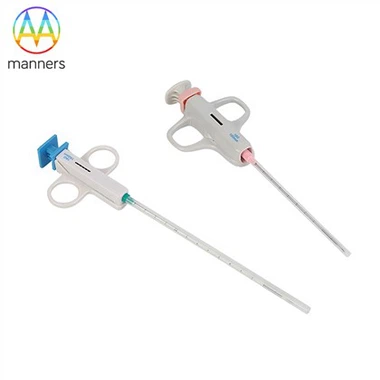
▲ Image of Core Needle Biopsy Tools
Who Should Consider a Core Needle Biopsy?
Doctors recommend this procedure for individuals who present with:
- High BI-RADS Scores: Patients whose imaging studies classify them as BI-RADS category 4 or higher, indicating a suspicious or likely malignant lesion.
- Family History and High-Risk Factors: Even patients with a BI-RADS 3 rating may require a biopsy if they have a significant family history of breast cancer.
- Preoperative Diagnosis for Cancer Staging: For patients considering breast-conserving surgeries or preoperative chemotherapy, biopsies help in planning treatment and assessing key biomarkers like estrogen, progesterone receptors, and HER2.
- When Imaging Alone Is Insufficient: Sometimes, even small or hard-to-detect lumps may require biopsy if imaging indicates suspicious features.
- Unclear Clinical Findings: Cases where physical examination and imaging present ambiguities about the nature of the lump.
Advantages of Core Needle Biopsy
Ultrasound-guided CNB offers several significant advantages:
- Quick Procedure: It typically takes about 10-15 minutes, making it a convenient option for patients.
- Minimally Invasive: The process involves minimal tissue damage and faster recovery.
- Radiation-Free: Unlike certain imaging tests, CNB does not expose patients to ionizing radiation.
- High Diagnostic Accuracy: It can distinguish between benign and malignant tissues with high precision, often eliminating the need for more invasive procedures.
How the Procedure Works
- Preparation: The skin over the breast is sterilized, and local anesthesia is applied. A small incision of about 2-3 mm is made to facilitate needle entry.
- Tissue Sampling: Using ultrasound guidance, the needle is inserted into the lump. Typically, 3-6 tissue samples are collected to maximize diagnostic accuracy.
- Post-Biopsy Care: The site is cleaned and compressed to minimize bleeding, and a sterile dressing is applied.
Post-Procedure Care Tips
After the biopsy, certain care measures can help ensure a smooth recovery:
- Compression and Observation: Apply pressure for around 30 minutes to stop any bleeding. Stay under observation to monitor for any adverse reactions like dizziness or chest discomfort.
- Avoid Heavy Lifting: Refrain from strenuous activities for at least a day.
- Manage Mild Pain and Bruising: It's normal to experience some bruising or tenderness around the site, which usually subsides quickly.
- Watch for Signs of Infection: Observe the wound for signs of redness, swelling, or discharge. If none are present after 1-2 days, you can remove the bandage and resume normal hygiene practices, avoiding excessive stimulation of the site.

▲ Image of Post-Biopsy Care
Related Diagnostic Techniques
Beyond core needle biopsy, other emerging technologies like liquid biopsy-which detects circulating tumor cells (CTCs) and cell-free DNA (cfDNA)-are under research. These methods show promise for identifying cancer markers with minimal invasiveness and are being evaluated for their potential to detect recurrences and improve precision in cancer management.
Conclusion
Ultrasound-guided core needle biopsy is a powerful tool in breast cancer diagnosis, offering a blend of precision, safety, and efficiency. Understanding its role and benefits can help patients make informed decisions about their health, and ongoing advancements in diagnostic technologies promise even more breakthroughs in the fight against breast cancer.