


What are the types of teeth implants?
Aug 06, 2024
Dental implants are classified using a variety of methods, including categorization by number, fixation method, surgical procedure, material, implant system, etc.
Next Shenzhen Manners Technology Co., Ltd. will provide you with detailed answers, and come to help you get to know!

Ⅰ Classification by Location of Missing Teeth
Each tooth occupies a unique position within the oral cavity, which is divided into anterior (front) and posterior (back) regions.
The anterior teeth include the central incisors, lateral incisors, and canines, for a total of 6 teeth on each side and 12 teeth for both the upper and lower jaws.
In simple terms, this refers to the two central incisors in the middle, along with two teeth on each side, both left and right. The remaining teeth are classified as posterior teeth.
Based on the location of the missing teeth, dental implants can be divided into anterior and posterior implants. Implants placed in the front tooth region are called anterior tooth implants, while those placed in the back tooth region are called posterior tooth implants.

Ⅱ Classification by Number of Missing Teeth and Implants
Classification based on the number of missing teeth and the number of dental implants can be done as follows:
1. Number of Missing Teeth
- Single tooth loss
- Multiple tooth loss
- Partial tooth loss (half-arch)
- Complete tooth loss (full-arch)
2. Number of Dental Implants
- Single Implant Placement
- Multiple implant placement
- Half-arch implant placement
- Full-arch implantation


It's important to note that the number of missing teeth is not always directly related to the number of dental implants. For example:
- One missing tooth can be restored with a single dental implant.
- Two missing teeth can be restored with two dental implants.
- If there are three or more missing teeth in a row, 2-6 dental implants can be placed to restore the missing tooth area.
This classification system allows for a customized approach to dental implantation based on the extent of tooth loss and the specific needs of the patient.
Ⅲ Single Crown Implantation, Connected Crown Implantation, and Fixed Bridge Implantation
1. Single Crown Implantation
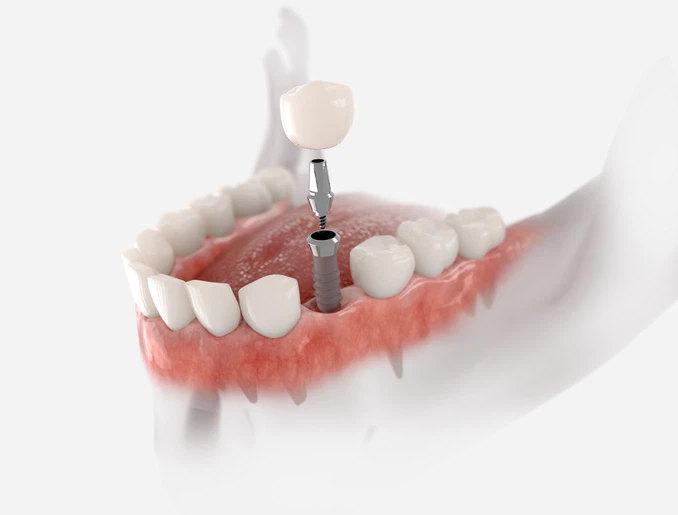
When a patient is missing a single tooth, a dental implant is placed and a single crown is attached to the implant for restoration. This type of restoration is known as a single crown restoration, where one implant supports one crown.
2. Connected Crown Implantation
Connected crown implantation typically involves connecting two or more crowns, which are then connected to the appropriate number of dental implants. This is a method of dental restoration where multiple crowns are attached to multiple implants.

3. Fixed Bridge Implantation
Fixed bridge implantation refers to a situation where the number of dental implants is less than the number of crowns. Dental implants serve as bridge abutments, forming a fixed bridge to support multiple crowns above.
These different approaches to dental implantation provide flexibility in addressing different tooth loss scenarios and allow for customized solutions based on the number of missing teeth and the desired outcome for the patient.
Ⅳ Classification by Implantation Timing
According to the timing of dental implantation, it can be classified into immediate implantation and delayed implantation.
1. Immediate implantation
As the name suggests, immediate implantation involves the removal of teeth with little significance or decayed tooth roots, followed by an immediate implantation procedure.
There is no need to wait and the dental implant is placed directly into the socket of the extracted tooth to restore the missing tooth.
This method of restoration is relatively less traumatic, reduces the number of surgical procedures, effectively prevents bone resorption in the alveolar ridge, protects against alveolar bone disease, saves time in alveolar bone healing, and facilitates better restoration of chewing function.

Currently, immediate dental implantation is mainly used in the anterior region, especially in cases of trauma or other reasons leading to the loss of front teeth. It is advantageous in restoring normal speech and social functions to patients. In addition, for patients with missing teeth in the lower or upper jaw, immediate implantation in cases of complete tooth loss also falls under the category of immediate dental implantation. However, it's important to consider both the advantages and disadvantages of immediate implantation.
Advantages of immediate extraction and implantation
1. Immediate implant placement allows implants to be placed immediately after residual root extraction, eliminating the need to wait for the 3-6 months required for alveolar bone regeneration. This saves a considerable amount of time and shortens the overall implantation period.
2. It reduces the number of implantation steps, eliminating the need for a second implantation. Patients with missing teeth are spared multiple discomforts.
3. Since the implant is placed immediately after extraction, it helps prevent physiological resorption of the alveolar bone during the waiting period, better preserves the surrounding bone tissue of the extraction socket, and maintains the natural shape of the gum tissue.

Disadvantages of immediate extraction and implantation
1. There are higher requirements for the condition of the alveolar bone, and not everyone is eligible for this procedure. Gaps between the extraction socket and the implant may require artificial bone powder or membranes for filling, especially if the socket diameter is larger than the implant diameter.
2. This procedure requires a high degree of skill on the part of the dentist. A perfect fit between the socket and the implant is rare and requires adjustments in the later stages of the dental procedure. Precision is critical because even small mistakes can result in misalignment of the implant.

2. Delayed Implantation
Delayed implantation involves first extracting the natural tooth roots, waiting for the surgical site to heal completely, and then implanting the dental implant once the alveolar bone absorption has stabilized.
Although this method requires more time, it is suitable for individuals with recurrent dental infections, severe alveolar bone atrophy, or poor oral conditions, and contributes to a higher success rate of dental implantation.
After a tooth is extracted, the extraction socket typically takes about 3 months to heal completely. Once the socket has healed, the dentist will prepare a hole in the alveolar bone at the site of the missing tooth and place the dental implant in the bone.
After 2 to 3 months, the implant usually fuses with the alveolar bone. The dentist then places the abutment and attaches the crown.
Dental implantation encompasses several classification methods, and the most appropriate implant restoration method is one that precisely addresses the patient's tooth loss issues. It is important not to focus on efficiency alone, but to tailor the restoration plan to the individual circumstances and professional skills of the dentist. When choosing dental implantation, it is important to visit reputable healthcare institutions. Care should be taken to avoid seeking cheaper alternatives or rushing into treatment, as poor oral health not only affects one's well-being but also poses a significant threat to overall physical health.


