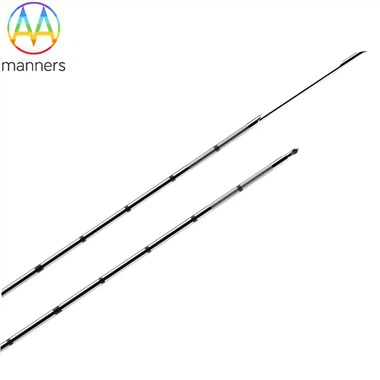
How to Choose the Right Nerve Block Needle for Different Clinical Applications
Aug 30, 2025
Regional anesthesia and pain management are highly dependent on the correct selection of Nerve Block Needles. With multiple clinical scenarios such as orthopedic surgery, pain clinics, and emergency interventions, anesthesiologists and purchasing managers need clear guidelines to match the right needle type to the right application. This article provides a practical selection guide for procurement teams and clinical users, helping you identify the most suitable needles for specific procedures.

Peripheral vs Central Nerve Blocks
Choosing the right needle starts with differentiating between peripheral nerve blocks and central nerve blocks.
Peripheral Nerve Blocks
Peripheral blocks target nerves outside the spinal cord. They are commonly used in:
- Smaller gauges for precision
- Echogenic surfaces for better ultrasound visibility
- Options for nerve stimulation when guidance is necessary

Central Nerve Blocks
Central blocks, such as epidural or spinal anesthesia, demand longer and more rigid needles. These are designed to reach spaces around the spinal cord and provide profound anesthesia. Key considerations include:
- Length and rigidity to pass through ligamentous structures
- Durability to avoid bending
- Different bevel designs for reducing tissue trauma
For procurement, distinguishing between the needle requirements of central and peripheral blocks is essential to ensure safe stock availability across departments.
Nerve Block Needles for Orthopedic Surgery
Orthopedic operations often require prolonged analgesia and precise nerve localization. The right Nerve Block Needles are critical in these cases.
Common Orthopedic Scenarios
Shoulder surgery: Interscalene block
Knee replacement: Femoral and sciatic block
Hand or foot procedures: Brachial plexus or ankle block
Recommended Needle Features
20G Ultrasound Nerve Stimulation Needle:
- Optimal for large nerve blocks in orthopedic procedures
- Balances size and flow rate, ensuring effective anesthetic delivery
- Often comes with electrical connectors for dual guidance (ultrasound + stimulation)
Length options (50–100 mm) for deeper nerve targets
Graduation markings for insertion depth control

Ultrasound-Guided Needles for Pain Clinics
Chronic pain clinics rely heavily on precision. Whether it is for nerve blocks in the cervical spine, paravertebral injections, or targeted peripheral nerve treatments, needle selection defines both safety and efficiency.
Why Ultrasound Matters in Pain Clinics
- Real-time visualization prevents accidental vascular puncture
- Improves patient comfort with more accurate anesthetic spread
- Shortens procedure time
Echogenic Needle For Nerve Block
One of the best choices for pain clinics is the Echogenic Needle For Nerve Block:
- Special surface treatment enhances visibility under ultrasound
- Reduces the risk of needle misplacement
- Available in various lengths (50 mm to 150 mm) depending on target location

Additional Considerations for Pain Clinics
- Short bevel tips for controlled advancement
- Stylet availability to reduce tissue coring
- Sterile, single-use packaging for infection prevention
Procurement managers supplying pain clinics should prioritize echogenic needles, especially for providers who perform ultrasound-guided blocks daily.
Disposable Options for Emergency and ICU Use
In emergency and intensive care settings, speed and sterility are paramount. Disposable Nerve Block Needles offer convenience without compromising safety.
When Disposable Needles Are Essential
ICU patients requiring continuous analgesia for ventilator tolerance
Emergency trauma blocks when immediate action is required
High-turnover environments where sterilization is not feasible
Benefits of Disposable Needles
Guaranteed sterility for infection control
Cost-effective for large hospitals with high patient volume
Available in multiple sizes, including 20G Ultrasound Nerve Stimulation Needle options for versatility
Practical Procurement Recommendations
When building an inventory of nerve block needles, purchasing managers should consider:
Clinical department needs
Orthopedics: 20G nerve stimulation needles
Pain clinics: Echogenic ultrasound needles
Emergency/ICU: Disposable sterile needles
Needle specifications
Gauge (20G vs smaller/larger)
Length (short for superficial, long for deep nerve blocks)
Tip design (short bevel, facet tip, or pencil-point)
Budget and supply chain stability
Ensure multiple suppliers for critical needle types
Choose FDA/CE-approved products for guaranteed compliance

Choosing the correct Nerve Block Needles is vital for anesthesia safety, procedural efficiency, and patient comfort. From orthopedic surgeries that benefit from the 20G Ultrasound Nerve Stimulation Needle, to pain clinics relying on the Echogenic Needle For Nerve Block, and ICU teams requiring disposable options, procurement teams must match product features with clinical needs.
By investing in the right selection of needles, hospitals and clinics can improve clinical outcomes, reduce complication rates, and ensure that practitioners always have the appropriate tools for safe and effective nerve blocks.