Does bone marrow examination hurt?
Jan 04, 2022
Painful; tolerable; use local anesthesia to relieve pain; bone marrow aspiration
1. Purpose
Observe the morphology and classification of cells in the bone marrow to assist in the diagnosis of blood system diseases; sepsis or certain infectious diseases require bone marrow bacterial culture and smears to check for certain parasitic diseases; malignant tumors are suspected of bone marrow metastasis; used for bone marrow transplantation, etc.
2. Indications
2.1 Diagnosis of various blood diseases.
2.2 Sepsis, certain infectious diseases or parasitic diseases require bone marrow bacterial culture or smears to search for Plasmodium and kala-azar.
2.3 Diagnosis of diseases of the reticuloendothelial system.
2.4 Patients with suspected bone marrow metastasis of malignant tumors.
3. Contraindications
The puncture is not suitable for hemophilia, infection and skin disease at the puncture site.
4. Utilities
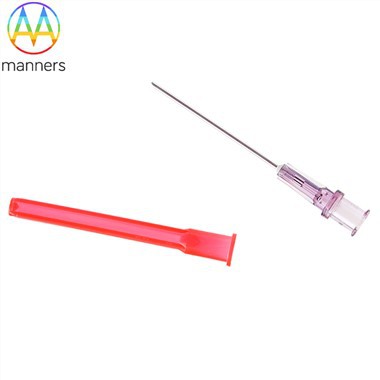
Clean plate, bone marrow puncture kit, 2% iodine and 75% alcohol, 5ml and 20ml sterile syringes, sterile gloves, 2% procaine, clean and dry slides, push slides, for bone marrow culture, another 20ml is required Sterilized syringe, bacteria culture bottle with culture medium, alcohol lamp, match.
5. Patient preparation
5.1 The patient needs to take a bath and change clean clothes.
5.2 Do a good job of explaining to the patient in order to obtain cooperation.
5.3 Enable patients to build up confidence and eliminate their fear and tension.
6. method
6.1 Anterior superior iliac puncture
6.1.1 The patient lies on his back, and a wider rim of the anterior superior iliac spine 1 to 1.5 cm posteriorly is used as the puncture point. After local routine disinfection, a drape is placed, and the local anesthesia should reach the periosteum.
6.1.2 The left thumb and index finger of the operator fix the skin inside and outside the anterior superior iliac spine, and the right hand puncture needle vertically penetrates the periosteum and then enters 1 cm to reach the bone marrow cavity.
6.1.3 When the bone marrow cavity is pierced, there is a sense of loss, immediately withdraw the needle core, connect a 20ml sterile dry syringe, and extract about 0.2ml bone marrow for smear examination; for culture, take 3~5ml bone marrow.
6.1.4 After the operation, insert the needle core, pull out the needle, apply sterile gauze locally, and fix it with tape.
6.2 Puncture of posterior superior spine
6.2.1 The patient is lying on his side or prone, the posterior superior iliac spine generally protrudes above the hip, on both sides of the energy bone; or the intersection of 6~8cm below the upper edge of the skeleton and 2~4cm next to the spine is the puncture point .
6.2.2 The direction of the puncture needle is almost perpendicular to the back, slightly inclined to the outside.
6.3 Sternal stem puncture
6.3.1 The patient lies on the treatment table with a pillow on the shoulder and back to make the head recline as far as possible and turn to the left to fully expose the suprasternal notch.
6.3.2 Standing on the side of the patient’s head, the surgeon first uses his left hand to uncover the upper sternal notch, and press the skin down against the upper edge of the sternal stem. Hold the needle in the right hand from the center of the notch to the level of the sternal stem. Insert the needle in the direction, slowly rotate and pierce it, reaching the median depth of the bone plate on the upper edge of the sternum stem, about 0.5 to 1.0 cm.
6.4 Spinal process puncture
6.4.1 The patient lies on his side or sits in a chair with his arms on the back of the chair and his headrest arms.
6.4.2 The upper lumbar spinous process is the puncture point. The left thumb and index finger are used to fix the skin above and below the scheduled spinous process, and the right hand needle is pierced vertically from the side or center of the spinous process.
6.5 Tibia puncture (only for children under 2 years old)
6.5.1 The child is placed on the treatment table, the lower limbs are fixed by the assistant, and the puncture point is selected about 1cm below the plane of the tibial tubercle (or the 1/3 junction of the upper and middle iliac).
6.5.2 Fix the skin with the thumb and index finger of the left hand, hold the needle in the right hand, and pierce it perpendicular to the middle of the bone surface.
7. Precautions
7.1 The purpose and method of the examination should be explained to the patient before the operation to obtain cooperation.
7.2 Strict aseptic operation to prevent infection.
7.3 All items are ready.
7.4 After the puncture needle reaches the periosteum through the skin, the needle should be perpendicular to the bone surface and slowly rotate into the needle. The needle must be held securely. Do not use excessive force or the needle to slide on the bone surface. If it has penetrated the bone marrow cavity, the needle should be fixed at this time.
7.5 When taking a bone marrow smear for examination, the negative pressure should be slowly increased. When blood is seen in the syringe, the aspiration should be stopped immediately to prevent the bone marrow from being diluted. If you want to make a smear and culture at the same time, you should take a small amount of bone marrow smear first, and then take the bone marrow culture. When removing the syringe, the needle core should be inserted back quickly to prevent bone marrow overflow.
7.6 When puncturing the sternum stem, the puncture angle must be parallel to the sternum stem to prevent the needle tip from slipping off or piercing the cortex of the posterior wall of the sternum stem.
8. Nursing
8.1 During the operation, observe the patient's complexion, pulse, and breathing.
8.2 When the needle is withdrawn, press the puncture point firmly until no bleeding occurs.
8.3 Observe the puncture site for signs of hematoma, bleeding and infection within 24 hours after surgery.
8.4 Change dressing at the puncture site once a day.
8.5 Instruct patients not to take a bath within three days.
If you have any questions, please contact us. Our company can produce various customized needles, medical needles, puncture needles, hypodermic needles, biopsy needles, vaccine needles, injection needles, syringe needles, veterinary needles, pencil point needle, ovum pick up needles, spinal needles, etc. If you need customized needle products, please contact us. We look forward to your inquiry! The quality of the products manufactured in our factory will surely satisfy you!
Please contact us if you need: zhang@sz-manners.com