

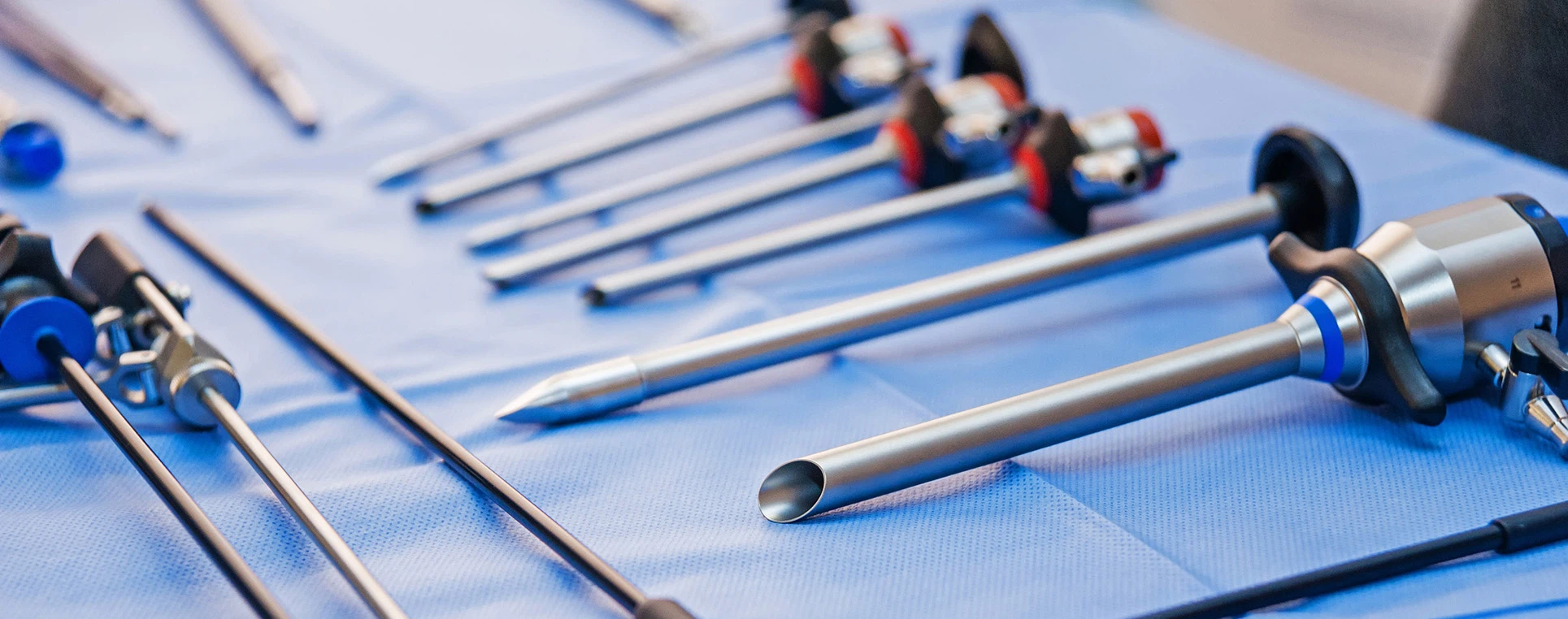


Internal Hex Dental Implant
Product Name: Internal Hexagon Dental Implant
Treatment: SLAcitive
Material: Titanium
Diameter: Ø3.5 / Ø4.1 / Ø4.7 / Ø5.3 mm
Lengths: 7 / 9 / 11 / 13 / 15 mm
Description
Internal Hexagon Dental Implant
Production introduction
Hex Internal Implants represent an innovation in the field of oral restoration, offering patients unique and exceptional advantages through their hexagonal internal connection structure. Here are the prominent features of Hex Internal Implants:
1. Outstanding Stability of Hexagonal Connection:
The hexagonal design establishes a tighter and more robust connection, ensuring the stability and reliability between the implant and the restoration.
2. Enhanced Overall Restorative Effect:
Through the hexagonal connection structure, Hex Internal Implants provide greater stability to the restoration, contributing to the creation of a more natural and durable oral restorative effect.
3. Exceptional Internal Counterforce:
The hexagonal connection demonstrates remarkable internal counterforce, effectively reducing stress at the connection site and enhancing the overall durability of the system.
4. Superior Anti-Rotation Performance:
The design of the hexagonal structure imparts superior anti-rotation performance to the implant in the oral environment, ensuring directional stability of the restoration.
5. Simplified Restorative Process:
The design of the hexagonal connection streamlines the restorative process, reducing operational complexity while simultaneously improving the precision of the restoration
Product Parameter
|
Product Name |
Internal Hexagon Dental Implant |
|
Material |
Gold alloy, Titanium alloy, Ni-Cr alloy, Titanium |
|
Type |
Internal Hexagon |
|
Treatment |
SLAcitive |
|
Hex Size |
Small Implant Hex Size: 2.1 mm Regular Implant Hex Size: 2.5 mm |
|
Abutment Contact Surface Diametermeters |
Small Implant: 2.8 mm Regular Implant: 3.35 mm |
|
Availiable Dia |
Ø3.5 / Ø4.1 / Ø4.7 / Ø5.3 mm |
|
Available Lengths |
7 / 9 / 11 / 13 / 15 mm |
Diverse Sizes and Hex Sizes
Small Implant Hex Size: 2.1 mm
Regular Implant Hex Size: 2.5 mm
|
Diameters |
Lengths |
Lengths |
Lengths |
Lengths |
Lengths |
|
SI Ø3.5 mm (Hex: 2.1 mm) |
|
9mm |
11mm |
13mm |
|
|
RI Ø4.1 mm (Hex: 2.5 mm) |
7mm |
9mm |
11mm |
13mm |
15mm |
|
RI Ø4.7 mm (Hex: 2.5 mm) |
7mm |
9mm |
11mm |
13mm |
|
|
RI Ø5.3 mm (Hex: 2.5 mm) |
7mm |
9mm |
11mm |
13mm |
|
Our product line encompasses a diverse range of materials, including gold alloy, titanium alloy, nickel alloy, nickel-titanium alloy, and various types such as cylindrical threaded, stepped cylindrical threaded, conical threaded, and blade-shaped implants. Customization options are available for materials, dimensions, sizes, and shapes tailored to individual patient needs.
Application Areas
The application areas of hex internal dental implants in the field of dentistry are diverse and include the following aspects:
1. Single Tooth Replacement:
Hex internal dental implants can be used to replace a single missing tooth, providing patients with a stable artificial root to restore oral function and aesthetics.
2. Multiple Tooth Replacement:
For patients with multiple missing teeth, hex internal dental implants can serve as a support system for bridges or full-mouth restorations.
3. Full Mouth Restoration:
Hex internal dental implants play a crucial role in full-mouth restorations, offering patients a fixed solution for comprehensive oral restoration, enhancing overall function and aesthetics.
4. Bone Defect Reconstruction:
For patients with bone defects, hex internal dental implants can be implanted through bone grafting procedures to help reconstruct the missing jawbone structure.
5. Clinical Research and Education:
The widespread use of hex internal dental implants also contributes significantly to dental research and education, serving as an important tool for training and academic studies.
Production details


Thread Roughening and Thread Titanium Plasma Spray Dental Implants
In the realm of modern dentistry, to enhance the bone integration and surgical success rate of dental implants, we introduce advanced surface treatment techniques-Thread Roughening and Thread Titanium Plasma Spray. These two techniques not only underscore our commitment to exceptional dental solutions but also enable patients to experience a more robust and reliable oral restoration.
1. Strengthened Bone Integration:
Through Thread Roughening, we create minute and refined surface irregularities on the dental implant, enlarging the surface area and enhancing the mechanical locking effect. Consequently, the implant can more effectively fuse with the surrounding bone tissue, improving the bone integration force and ensuring a more secure restoration.
2. Biologically Active Surface:
Thread Titanium Plasma Spray technology coats the thread surface with a micron-level titanium particle slurry, elevating its biological activity. This treatment not only increases the affinity with surrounding bone tissue but also promotes the healing process, providing an ideal environment for the smooth integration of the dental implant.
3. Dual Advantages:
By combining the benefits of Thread Roughening and Thread Titanium Plasma Spray, our dental implants achieve a dual breakthrough in surface treatment. This not only enhances the stability of bone integration but also strengthens the biocompatibility with surrounding tissues, offering patients a more comprehensive and enduring restoration solution.
Conclusion:
The introduction of Thread Roughening and Thread Titanium Plasma Spray technologies ensures that our dental implants not only exhibit a refined appearance but also achieve significant breakthroughs in functionality and biocompatibility.
Product qualification
Dental Implants Crafted with Five-Axis CNC Machining
Our pride lies in the dental implants meticulously crafted using advanced five-axis CNC machining. This highly precise manufacturing process includes milling, endowing our implants with distinctive advantages.
1. Digital Design:
Firstly, precise three-dimensional data of the patient's oral structure is obtained through oral scans or impressions. These data are input into Computer-Aided Design (CAD) software for digital design, ensuring a precise match between the implant and the patient's oral anatomy.
2. CAD/CAM Integration:
The digital model generated by CAD is integrated with Computer-Aided Manufacturing (CAM) software. CAM software converts the design into machine language, providing instructions for the five-axis CNC machine to execute precise cutting and carving along five coordinates.
3. Material Preparation:
Based on the design requirements, an appropriate biocompatible material is chosen, typically a highly pure metal like titanium alloy. The material is loaded onto the machine, prepared for processing.
4. Five-Axis CNC Machining:
The five-axis CNC machine, guided by the design and instructions from CAM software, precisely controls cutting and carving along five coordinates. This includes precise machining of the implant's external shape and internal structure, ensuring its adaptability and quality.
5. Surface Treatment:
After machining, surface treatment may be required, such as polishing or coating, to enhance biocompatibility and corrosion resistance.
6. Quality Inspection and Adjustment:
Post-production, the implant undergoes rigorous quality inspection to ensure compliance with design specifications and dental standards. Adjustments or fine-tuning may be performed if necessary.
Advantages:
1. High Customization:
Five-axis CNC machining allows for highly customized production, ensuring the implant aligns perfectly with the patient's oral anatomy and functional requirements.
2. Precision Machining:
The use of five-axis CNC technology during the milling process enables the highly accurate machining of complex three-dimensional shapes, improving implant precision and quality.
3. Excellent Surface Quality:
The milling process not only addresses internal structures but also ensures a smooth and uniform surface for the implant, contributing to enhanced biocompatibility and corrosion resistance.
4. Efficient Production:
The efficiency of five-axis CNC machining makes the production process swift and controllable, catering to patient time constraints.
Through the application of five-axis CNC machining, our dental implants not only achieve high precision and customization during the manufacturing process but also exhibit outstanding biocompatibility and long-term stability.
Our factory
Shenzhen Manners Technology Co., Ltd., situated in Shenzhen, China, specializes in delivering top-notch CNC machining services. Our expertise spans customized hardware, medical needles, telescopic tubes, mechanical accessories, and more. Holding ISO and SGS certifications, we pride ourselves on being a united team of skilled engineers, machinists, and technical consultants.
What sets Manners Tech apart is our unwavering focus on quality control and efficient lead times. Equipped with over 50 sets of 3/4/5-axis CNC machining centers and cutting-edge technology, we enhance efficiency, dimensional accuracy, and product stability. Our commitment is to ensure that your products meet the highest standards and are delivered with 100% qualification.
At Manners Tech, we go beyond manufacturing. We are dedicated to resolving challenges related to precision machining, addressing concerns such as product costing, quality, and assembly services. Trust us for a partnership centered on excellence and innovation.


Hot Tags: internal hex dental implant, China, suppliers, manufacturers, factory, customized, custom, cheap, low price, made in China


