What Is Hollow Microneedle Therapy – Professional Definition And Medical Application Value
Aug 14, 2026
https://en.wikipedia.org/wiki/Microneedles
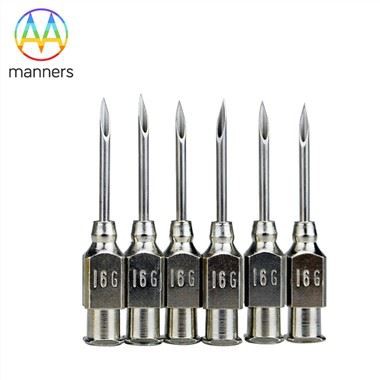
Hollow microneedle therapy is a professional medical-grade microneedle treatment technology, defined as a minimally invasive precise drug delivery method using hollow tubular micron-scale needle arrays. Different from solid and dissolvable microneedles, hollow microneedles have hollow inner cavities, which can connect with external micro-injection systems to realize quantitative, fixed-point and controllable liquid drug delivery. The needle body is tiny and hollow, which can accurately pierce the skin barrier and deliver liquid drugs deep into the dermis, realizing precise local administration. As a professional medical microneedle technology, hollow microneedle therapy is mainly oriented to clinical treatment and precision medical scenarios, with higher precision and controllability than conventional aesthetic microneedle therapy.
The core working principle of hollow microneedle therapy is micro-tube precise perfusion and directional drug delivery. The hollow needle cavity forms a closed delivery channel from the skin surface to the superficial dermis. By connecting the micro-injection power device, the medical liquid can be quantitatively injected into the target skin layer at a stable flow rate. It completely avoids the problems of uneven external absorption and inaccurate drug delivery depth of traditional microneedles. Meanwhile, the ultra-fine needle body will not damage deep blood vessels and nerves, realizing painless and minimally invasive precise treatment. In addition, hollow microneedles can also realize minimally invasive skin fluid sampling, which is used for skin disease detection and physiological index monitoring, integrating diagnosis and treatment functions.
Core Advantages of Hollow Microneedle Therapy
Firstly, quantitative and controllable precise drug delivery. The hollow perfusion structure supports accurate adjustment of drug delivery volume, speed and depth, realizing standardized and precise medical treatment. Secondly, ultra-high drug utilization rate. Direct deep injection avoids ingredient loss and skin surface residue, greatly improving the bioavailability of therapeutic drugs. Thirdly, painless and minimally invasive with high safety. Ultra-fine hollow needle body causes almost no pain and no bleeding, suitable for sensitive parts and vulnerable groups such as children and the elderly. Fourthly, dual functions of diagnosis and treatment. It can realize both drug delivery treatment and skin micro-sampling detection, with comprehensive clinical value. Fifthly, strong medical pertinence. It can be matched with high-concentration therapeutic drugs, which is suitable for clinical refractory skin diseases and local lesion treatment.
Clinical and Industrial Applications of Hollow Microneedle Therapy
In dermatological clinical treatment, hollow microneedle therapy is used for targeted administration of refractory skin diseases such as psoriasis, vitiligo and severe acne, improving local drug concentration and curative effect. In chronic disease transdermal treatment, it is applied to local anti-inflammatory and analgesic drug delivery for arthritis and soft tissue injury, reducing systemic drug side effects. In medical detection and diagnosis, it realizes minimally invasive extraction of skin interstitial fluid for rapid detection of skin inflammation indexes and physiological indicators. In postoperative rehabilitation treatment, it delivers repair drugs to surgical wound areas to accelerate tissue healing. In addition, it is widely used in precision vaccine delivery, tumor local intervention and animal disease treatment, becoming an important technical tool in precision medicine.
Manufacturing Process of Hollow Microneedle Medical Devices
Hollow microneedle products implement strict medical device production standards with ultra-high precision requirements. The first step is high-purity medical material selection, adopting medical stainless steel and high-purity silicon materials with stable chemical properties and zero irritation. The second step is precision tube body processing, using micro-drilling and etching technology to prepare uniform hollow inner cavities with smooth tube walls. The third step is needle tip forming and sharpening, polishing the hollow needle tip into a sharp inclined plane to ensure smooth penetration and avoid tissue blockage. The fourth step is internal and external surface treatment, adopting plasma polishing and antibacterial coating to keep the inner cavity unobstructed and prevent bacterial adhesion. The fifth step is sealing and connectivity testing to ensure no liquid leakage and stable perfusion. The sixth step is mechanical strength detection to avoid needle body breakage during perfusion and penetration. The seventh step is assembly with micro-injection control components. The eighth step is medical-grade sterilization and vacuum sterile packaging to meet clinical medical safety standards.