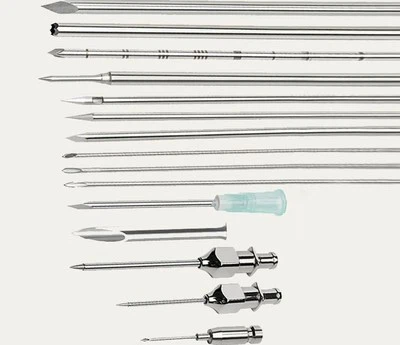
Top 10 Material Innovations And Advancements in Manufacturing Processes For Intraosseous Access Needles in 2026
Apr 16, 2026
Top 10 Material Innovations and Advancements in Manufacturing Processes for Intraosseous Access Needles in 2026
In 2026, the material science and manufacturing processes behind intraosseous (IO) access needles are undergoing revolutionary changes, propelling these emergency devices toward greater safety, efficacy, and intelligence. Leading global manufacturers are continuously enhancing the performance, safety, and user experience of IO needles through material innovation and process optimization to meet the growing demands of clinical practice.
Breakthroughs in Material Science
Traditional IO needles are primarily made from medical-grade stainless steel due to its excellent strength, corrosion resistance, and biocompatibility. However, with technological advancements, novel materials are increasingly being utilized:
Medical Titanium Alloys: Known for their superior strength-to-weight ratio and biocompatibility, titanium alloys are gradually being adopted in high-end IO needles. Their elastic modulus more closely resembles human bone, reducing the stress-shielding effect and lowering the risk of osteoporosis.
Bioabsorbable Polymers: Polymers like Poly(lactic-co-glycolic acid) (PLGA) are used for temporary IO needles. These materials degrade within the body, eliminating the need for secondary removal surgeries, making them ideal for scenarios where the access time is short. Degradation rates can be adjusted by modifying the polymer ratio and molecular weight to match treatment durations.
Antimicrobial Coatings: Technologies embedding antimicrobial agents like silver ions and chlorhexidine into the needle surface or matrix create a localized antimicrobial environment, reducing infection risks. Some advanced coatings sustain the release of these agents for 7–14 days, covering the typical dwell time of an IO line.
Engineering Optimization of Needle Design
The structural design of the needle body directly impacts puncture performance and patient safety:
Multi-bevel Tip Design: Reduces puncture resistance; studies show that a triple-bevel design can reduce the required insertion force by 30% compared to traditional single-bevel tips.
Progressive Taper Design: Optimizes stress distribution to prevent needle bending or breakage within the cortical bone.
Helical Flute Design: Enhances stability within the bone and reduces tissue damage caused by micromotion.
Side-port Design: Increases the number of infusion channels, boosting infusion speeds critical for rapid fluid resuscitation.
Computational Fluid Dynamics (CFD): Used to simulate and optimize the internal lumen design, minimizing fluid resistance and maximizing flow rates.
Finite Element Analysis (FEA): Assesses stress distribution within the needle body to guide structural optimization and improve fatigue resistance.
Pyng Medical's FAST system needles utilize a patented spiral reinforcement design, increasing bending strength by 30% without increasing the outer diameter. The unique geometry of the tip reduces bone debris formation, thereby lowering the risk of embolism.
Precision in Manufacturing Processes
Modern IO needle manufacturing employs high-precision machining technologies:
CNC Machining: Computer Numerical Control lathes achieve micron-level precision, ensuring dimensional consistency and surface finish.
Laser Cutting: Used to produce needle tips with complex geometries while maintaining sharpness and consistency.
Electropolishing: Removes microscopic surface defects, enhancing corrosion resistance and biocompatibility.
Automated Assembly Lines: Integrate needle tip grinding, barrel processing, surface treatment, and quality inspection to boost efficiency and product uniformity.
Teleflex's Arrow EZ-IO needles are produced on fully automated lines, with each needle undergoing 20 quality inspections to ensure clinical reliability. Integrated machine vision systems monitor critical dimensional parameters in real-time, enabling process quality control.
Innovations in Surface Treatment
Surface treatment technologies significantly enhance IO needle performance:
Diamond-Like Carbon (DLC) Coating: Increases surface hardness and wear resistance, extending the functional lifespan of the needle.
Hydroxyapatite (HA) Coating: Enhances osseointegration, reducing micromotion and the risk of infection.
Hydrophilic Coating: Reduces insertion friction, improving patient comfort.
Drug-Eluting Coatings: Allow for the localized release of antibiotics or anti-inflammatory drugs at the puncture site to prevent complications.
Smiths Medical's IO needles feature a multi-layered composite coating: a hydrophilic inner layer reduces friction, an intermediate reinforcing layer boosts durability, and an outer antimicrobial layer prevents infection. This composite coating reduces insertion force by 40% and decreases infection rates by 60%.
Application of Smart Materials
Smart materials are imbuing IO needles with new functionalities:
Shape Memory Alloys: The needle body returns to a preset shape at body temperature, enhancing stability within the bone.
Piezoelectric Materials: Integrated sensors can monitor insertion force and intramedullary pressure in real-time.
Conductive Polymer Coatings: Enable the transmission of electrical signals for nerve stimulation or electrophysiological monitoring.
Thermoresponsive Materials: Adjust mechanical properties in response to temperature changes, adapting to varying bone densities.
Experimental smart IO needles integrate micro-sensors to monitor physiological parameters like intramedullary partial pressure of oxygen (PO2), pH, and glucose levels, providing real-time feedback for resuscitation therapy. These features transform the IO needle from a mere conduit into a diagnostic and monitoring platform.
Advancements in Sterilization and Packaging
Sterilization and packaging technologies ensure the safety and convenience of IO needles:
Radiation Sterilization: Replacing traditional ethylene oxide (EtO) sterilization to avoid chemical residues and shorten sterilization cycles.
Sterile Barrier Systems: Ensure the product remains sterile during transport and storage.
Rapid-Access Packaging: Designed for one-handed operation in emergencies, minimizing preparation time.
Color-Coding Systems: Differentiate needle gauges/sizes to prevent selection errors.
PerSys Medical's IO products utilize a patented sterile packaging system featuring tear strips for quick opening without contaminating the contents. The transparent packaging allows for easy inspection of needle integrity, while the outer packaging clearly labels specifications and expiration dates for efficient inventory management.
Quality Control and Testing Standards
Stringent quality control ensures the safety and efficacy of IO needles:
Mechanical Testing: Includes insertion force, bending strength, torsion strength, and fatigue life.
Fluid Performance Testing: Evaluates flow resistance, flow characteristics, and pressure tolerance.
Biocompatibility Testing: Conducted in accordance with ISO 10993 standards, assessing cytotoxicity, sensitization, and irritation.
Clinical Validation: Animal studies and human trials confirm safety and effectiveness.
International standards such as ISO 7864 (Sterile hypodermic needles for single use), ISO 11608 (Needle-based injection systems), and ASTM F2504 (Standard Guide for Assessment of Intraosseous Vascular Access Devices) guide manufacturers in ensuring product quality.
Environmental Sustainability Considerations
Environmental sustainability has become a critical factor in IO needle manufacturing:
Material Selection: Prioritizing recyclable or biodegradable materials.
Process Optimization: Reducing energy consumption and waste generation during manufacturing.
Packaging Materials: Using recycled or biodegradable alternatives.
Design for Disassembly: Considering the ease of separating components for recycling.
Some manufacturers have begun using bio-based plastics instead of traditional petroleum-based ones to reduce their carbon footprint. Closed-loop manufacturing systems recycle processing waste, improving material utilization efficiency.
Future Directions for Materials and Processes
The future of IO needle materials and processes includes:
4D Printing: Manufacturing smart needles that change shape or function over time.
Nanocomposites: Integrating multiple functions such as antimicrobial action, healing promotion, and monitoring.
Bioinspired Design: Mimicking the microstructure of bone to enhance osseointegration.
Personalized Manufacturing: Customizing needle shapes and sizes based on patient CT/MRI data.
Continuous Manufacturing: Achieving seamless production from raw material to finished product to improve efficiency and consistency.
Driven by material science, manufacturing technology, and clinical needs, intraosseous access needles will continue to evolve toward greater safety, efficacy, and intelligence. Through interdisciplinary collaboration and technological innovation, manufacturers are providing more advanced tools for emergency medicine, ultimately improving patient outcomes and healthcare quality.