The Technological Evolution Of Meniscus Repair Needles And The Core Value Of The Total Internal Repair System
May 25, 2026
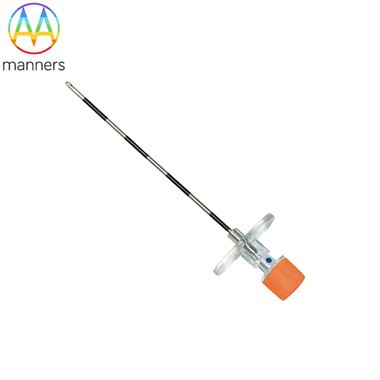
The meniscus repair technique has undergone a transformation from open surgery to arthroscopic minimally invasive surgery, and from "internal-external" and "external-internal" to "total internal" approaches. This evolution process is closely intertwined with the design innovation of the meniscal delivery needle (Meniscal Delivery Needle). As the "pioneer" and "transmitter" of the "total internal" repair system, the technical level of the repair needle directly determines the minimally invasive degree of the surgery, operational efficiency, and repair outcome. This article will deeply analyze its technical core and its core role in the system.
I. From "Support" to "Core": The Evolution of the Role of the Repair Needle
In the early "in-out" or "out-in" techniques, the repair needle mainly served as a lead wire or an auxiliary puncturing tool. The core steps of the surgery and the fixation points were often completed outside the joint, requiring additional skin incisions, resulting in significant trauma. However, the philosophy of the "total internal" repair system is to complete all operations entirely within the joint, without the need for additional auxiliary incisions. This upgrades the repair needle from an auxiliary tool to the core execution unit of the system. It must independently perform a series of difficult actions such as penetrating the tissue, guiding the suture line, and precisely aligning with the implant (anchor, threaded anchor, etc.).
II. Core Technical Characteristics of Modern Meniscus Repair Devices
A high-performance meniscus repair needle is the result of the combination of multiple cutting-edge technologies:
- Needle Geometry: The Balance of Sharpness and Safety:
- Ultra-sharp puncture tip: Utilizing multi-angled surfaces (such as triangular shapes) or specially tapered grinding, an extremely sharp needle tip is formed. The goal is to penetrate the meniscus with the minimum puncturing force (typically requiring a penetration force of less than 2N), reducing the compression and tearing of the fragile meniscus tissue, which is particularly important for the healing of "white zone" tears with poor blood supply.
- Blunt transition design: The part after the needle tip often features a slight curvature or blunt transition to avoid accidental injury to the precious articular cartilage during movement within the joint.
Needle Mechanics: The Challenge of Combining Strength and Flexibility:
- High strength and anti-bending: The needle body must be sufficiently rigid to resist the bending moment generated when penetrating the tough meniscus tissue (especially the base of the bucket-handle-like tear), preventing the needle from deforming and causing a deviation in the path.
- Moderate flexibility: At the same time, the needle body needs to have a certain elasticity to adapt to the complex anatomy within the knee joint, especially when dealing with posterior horn tears, being able to bypass the obstruction of the femoral condyle. This is achieved by selecting specific grades of stainless steel and precisely controlling the heat treatment process.
Surface Engineering: Achieving a "Smooth" Feel:
- Mirror-like polishing: Through electrolytic polishing, the surface roughness (Ra value) of the needle body can be reduced to below 0.1 micrometers, achieving a mirror-like effect. This significantly reduces the friction coefficient between the needle body and soft tissue, making the puncture and advancement process extremely smooth. Doctors can clearly distinguish the layering of different tissues within the joint capsule, synovium, and meniscus through the feel, which is the basis for precise operation.
- Hydrophilic coating (for some high-end products): A hydrophilic polymer coating is applied on the needle surface. When in contact with joint fluid, the coating becomes extremely lubricating, further reducing the puncture resistance by up to 80%.
Precision Structure and System Integration:
- Cable channel: Inside the needle, there is a precise passage for accommodating and guiding high-strength sutures (such as FiberWire, Ultrabraid). The inner wall of this passage must be extremely smooth to ensure that the sutures can pass through under great tension without being worn or stuck.
- Interface with implants: The end of the needle is designed with interfaces precisely matching the tensioner, firing device, or anchor loading chamber. For example, Manners Technology uses wire cutting (WEDM) technology to process complex clasps or threaded structures with an accuracy of ±1 μm, ensuring a secure connection and accurate force transmission during the operation.
III. Workflow in the "Total Internal" Repair System
Taking the currently mainstream wire anchor "fully internal" system as an example, the workflow for the repair needle is as follows:
- Establishing the channel and positioning: Under the monitoring of the arthroscope, the repair needle is guided to the location of the meniscus tear through the cannula.
- Puncture and threading: The doctor operates the handle, causing the repair needle to penetrate the torn meniscus (usually from the lower surface to the upper surface) one by one. The stitching line attached to the needle tip then passes through the tissue.
- Anchor deployment: When the needle tip reaches the preset position (such as the side of the joint capsule), the pre-installed threaded anchor inside the needle is pushed out and fixed to the bone or soft tissue through the firing mechanism.
- Thread retraction and knotting: The repair needle is withdrawn, leaving the stitching line in the tissue to form a "U" shape or "mattress" shape suture. The knotting is completed within the joint through an independent knotting device or self-locking mechanism.
- Repeating the operation: Depending on the size of the tear, the above steps are repeated to place multiple sets of stitches.
Throughout the entire process, the precision of the repair needle determines whether the stitch position is accurate; its smoothness determines whether the operation is smooth; and its strength determines whether it will bend or be damaged at the moment of firing the anchor nail.
IV. The Impact of Technological Evolution on Clinical Outcomes
The advanced repair needle technology directly translates into significant clinical benefits:
- More minimally invasive: It truly achieves complete intra-articular operation through small incisions, reducing soft tissue dissection and lowering the risk of nerve and blood vessel damage.
- More precise: It enables doctors to precisely place sutures in the biomechanically optimal position under the magnified view of the arthroscope, providing the best reduction and fixation effect.
- More efficient: The integrated design simplifies the surgical steps, reduces the number of instrument changes, and can shorten the operation time by approximately 20-30% on average.
- More reliable healing: Precise suturing and minimal tissue trauma create a better biological environment for meniscus healing. Although the reoperation rate reported in the literature may be slightly higher than traditional methods (mostly due to suture failure or poor healing), its advantages in preserving meniscus tissue, delaying the occurrence of osteoarthritis, and improving long-term functional scores are decisive, and it has better long-term cost-effectiveness.
Conclusion
The meniscus repair needle has evolved from a simple puncture tool to a highly integrated and intelligent precision surgical system terminal. Each technological iteration of it - sharper needle tips, smoother surfaces, and more precise interfaces - aims to provide surgeons with a more "hand-eye extension" control experience. Manufacturers like Manners Technology are quietly driving the meniscus repair surgery towards a more minimally invasive, more precise, and more successful future by integrating this ultimate engineering pursuit into each needle.