Panoramic Clinical Application Of Meniscal Repair Needles: Technical Selection And Surgical Strategies
May 25, 2026
Serving as an essential instrument in arthroscopic meniscal repair surgery, meniscal repair needles are applied throughout the entire diagnosis and rehabilitation process. The selection and utilization strategies of repair needles vary according to meniscal tear patterns, lesion locations and individual patient conditions. An in-depth understanding of its full clinical application is critical to optimizing surgical outcomes and improving patient satisfaction.
1. Core Concept of Meniscal Repair and Role of Repair Needles
The meniscus acts as a vital shock absorber and stabilizing structure of the knee joint. Different from traditional meniscectomy that removes torn tissues, meniscal repair preserves native meniscal tissue and has been proven to substantially reduce the long-term risk of knee osteoarthritis. The primary function of repair needles is to deliver and secure sutures precisely and minimally invasively within the narrow arthroscopic cavity, creating a stable environment for torn meniscus healing.
2. Technical Selection of Repair Needles Based on Tear Characteristics
Meniscal tears present diverse forms, requiring individualized repair strategies and corresponding needle selection.
2.1 Classification by Anatomical Location
- Posterior horn tear: The most common and surgically challenging lesion. Restricted operating space and adjacent vital popliteal arteries and nerves demand repair needles with large bending angles or flexible orientation adjustable via arthroscopic cannulas. Manufacturers including Manners Technology supply needles with diversified curvatures to adapt to posterior horn anatomical features.
- Mid-body tear: Relatively spacious operative field. Standard straight or mildly curved needles meet clinical requirements. Vertical suture penetration across tear margins ensures maximum gripping strength.
- Anterior horn tear: Shallow position facilitates easy access. Operators shall avoid damaging the infrapatellar fat pad, with proper selection of needle length and puncture angle.
2.2 Classification by Tear Pattern and Stability
- Longitudinal tear including bucket-handle tear: Optimal indication for surgical repair. Multiple sutures in varied directions are commonly adopted. Needles penetrate upper and lower meniscal flaps sequentially to form vertical or horizontal mattress sutures. Unstable bucket-handle tears require reduction via probes or positioning needles prior to firm fixation.
- Radial tear: Associated with high surgical difficulty and poor healing potential. Combined all-inside and inside-out suturing techniques are adopted, and needles are used to place sutures accurately at tear apices.
- Horizontal cleavage tear: Surgical goals focus on stabilizing layered tissues. Sutures are implanted between delaminated layers to achieve closed repair.
3. Detailed Surgical Procedures: Operational Techniques of Repair Needles
All all-inside repair systems follow standardized fundamental operating steps:
- Access establishment and exploration: Adopt standard anteromedial and anterolateral arthroscopic portals. Fully assess tear position, length, stability and meniscal tissue quality categorized as red zone, red-white zone and white zone.
- Tear margin preparation: Special rasps freshen torn and synovial margins and induce slight bleeding to stimulate natural healing response, a key biological procedure for successful repair.
- Needle insertion and positioning: Deliver repair needles into the joint cavity through cannulas. Surgeons align needle tips at preset puncture sites under direct arthroscopic visualization, judging tissue position via tactile resistance feedback.
- Puncture and suture passage: Apply steady pressure to penetrate meniscal tissues with ultra-sharp needle tips, with distinct breakthrough sensation clearly perceived. Activate delivery mechanisms to pass sutures or suture anchors through tissues. Smooth needle surface guarantees precise manipulation and avoids secondary tissue injury.
- Anchorage and knot tying: Anchors carried by needle tips are fixed against contralateral bone or joint capsule once reaching targeted sites. Withdraw needles and tighten sutures via knot pushers or built-in locking structures. Precise matching between needles and knotting devices ensures effective force transmission.
- Repair effect evaluation: Examine repaired tissue stability, suture tension and anatomical reduction with probes, and perform supplementary suturing when necessary.
4. Technical Features of Different Repair Systems and Needle Adaptability
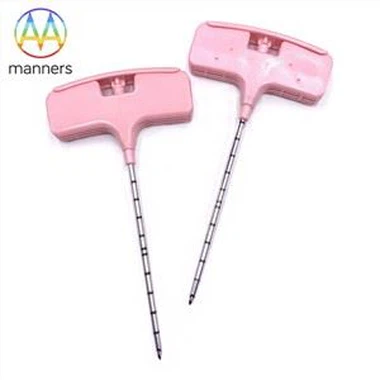
- All-inside system: Dominant mainstream technique. Preloaded suture anchors enable full intra-articular operation. Disposable integrated repair needles support rapid surgery, serving as core consumables manufactured by Manners Technology.
- Inside-out system: Needles penetrate outward through joint tissues, with knots tied subcutaneously. Auxiliary posterior incisions protect neurovascular structures. Reusable long straight or curved needles feature superior structural rigidity and straightness.
- Outside-in system: Needles are inserted from subcutaneous tissues into joint cavities, primarily applied for anterior horn tears. Simple needle structure requires proficient positioning skills.
5. Correlation Between Postoperative Rehabilitation and Repair Techniques
Favorable rehabilitation relies on sophisticated postoperative management. Minimally invasive advantages brought by advanced repair techniques allow active rehabilitation protocols. All-inside repair adopting high-strength sutures and rigid fixation enables early range-of-motion training and partial weight bearing with brace protection. Such interventions prevent joint stiffness and muscular atrophy, improve cartilage nutrition and optimize meniscal healing conditions indirectly.
Conclusion
Meniscal repair needles bridge clinical diagnosis, treatment concepts and practical surgical techniques. Surgeons operate like miniature sculptors, with repair needles serving as delicate carving tools. Accurate tear identification, proficient mastery of needle performance and flexible suturing skills jointly determine surgical outcomes. Continuous advancements in needle design and manufacturing enable surgeons to manage complex tears and achieve firmer fixation. More patients can benefit from meniscus-preserving surgery and maintain natural knee joint function for longer terms.