The Soul Of Regional Anesthesia: Mastering Nerve Block Needles
Aug 28, 2026
Identifying the Pain Points: The Weight of the Unseen
In the dimly lit operating room, the anesthesiologist holds their breath, advancing a needle into the unseen depths of human tissue. This is the daily reality of regional anesthesia, where the margin between success and failure is measured in mere millimeters. The most haunting pain point for clinicians is not just the failure of a block, but the profound sense of helplessness when a patient flinches in pain despite their best efforts. Traditional landmark techniques, once the gold standard, now feel like navigating a dense fog with a blindfold. The lack of real-time feedback turns every insertion into a gamble, leaving doctors with the heavy burden of uncertainty and patients with the lingering dread of inadequate pain control.
Principle of Operation: The Silent Conductor of Relief
At its core, the nerve block needle is a silent conductor, orchestrating a symphony of relief. It operates on a deceptively simple yet profound principle: delivering a local anesthetic, such as lidocaine, to the precise perineural space to interrupt the transmission of pain signals. Imagine the nerve as a high-speed data cable; the needle's role is to apply a temporary "insulator" around it. However, the true art lies in the diffusion. The anesthetic must spread evenly, bathing the nerve without causing mechanical injury. Modern needles, especially those designed for ultrasound guidance, act as extensions of the clinician's vision, transforming the invisible into the visible and ensuring the drug reaches its target with the gentleness of a whisper.
Equipment Classification: A Spectrum of Precision
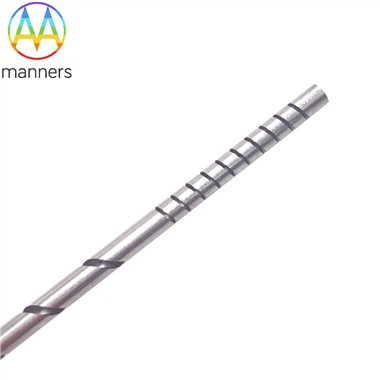
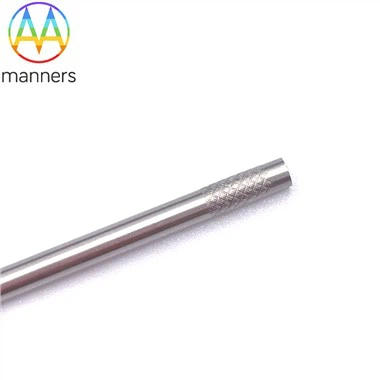
The world of nerve block needles is a testament to human ingenuity, offering a spectrum of tools for every clinical scenario. Gauges range from the robust 8G to the delicate 26G, each serving a distinct purpose. The 18G needle, with its wider lumen, is the workhorse for catheter placement, while the 22G to 25G needles are the ballerinas of superficial blocks, minimizing tissue trauma. Tip geometry is equally diverse: the short-bevel offers superior tactile feedback, the long-bevel glides through dense fascia, and the pencil-point design reduces the risk of post-dural puncture headaches. Beyond shape, surface treatments like electropolishing give the needle a mirror-like finish, reducing drag and making the journey through tissue as smooth as silk.
Practical Guide: The Dance of Hand and Eye
Executing a flawless nerve block is a dance between the hand and the eye. Begin by selecting the needle that best matches the patient's anatomy-a 22G, 50 mm short-bevel for an interscalene block, or a 20G, 100 mm insulated needle for a sciatic block. Under ultrasound, use the in-plane technique to keep the entire shaft in view, a golden rule that prevents the tip from vanishing into the abyss. Advance with the patience of a sculptor, aspirating frequently to ensure you haven't breached a blood vessel. Watch for the "hydrodissection" effect as the anesthetic spreads, pushing tissue aside like a gentle wave. This is not just a procedure; it is a mindful practice that demands focus, respect for the human body, and an unwavering commitment to patient safety.
Real-World Experience: Stories from the Trenches
Dr. Elena, a veteran anesthesiologist, recalls a pivotal moment when she switched from a standard 21G needle to a 22G insulated micro-blade tip. "The difference was night and day," she says. "The new needle cut through the supraclavular fascia with such precision that the patient barely winced, and the block was complete in minutes." Another clinician, working in a trauma center, shares how electropolished needles became his lifeline when dealing with patients with scarred tissues. "It's like the difference between dragging a rake through mud and gliding a hot knife through butter," he reflects. These stories are not just anecdotes; they are the collective wisdom of a community striving for excellence.
Summary and Elevation: The Art of Healing Touch
Mastering the nerve block needle transcends technical proficiency; it is an art that blends the precision of science with the empathy of human touch. Each successful block is a testament to the clinician's dedication to alleviating suffering. It represents a shift from the brute force of general anesthesia to the elegance of targeted pain management, reducing the opioid burden and accelerating recovery. In the hands of a skilled practitioner, the needle becomes more than a tool-it becomes a bridge to a pain-free future.
Outlook and Recommendations: The Horizon of Hope
The future of nerve block needles is bright with promise. We stand on the cusp of a new era where needles may be embedded with sensors that provide real-time feedback on tissue impedance or even the chemical environment of the nerve. Manufacturers must continue to innovate, focusing on eco-friendly materials that do not compromise performance. Clinicians should embrace lifelong learning, participating in workshops and sharing their insights. As we look ahead, let us remember that every advancement in this field is a step toward a world where pain is not just managed, but truly understood and conquered.