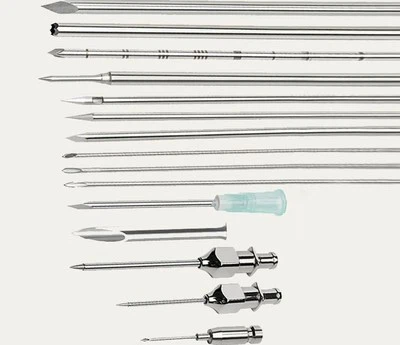
The Significance Of Puncture: How Bone Marrow Biopsy Needles Became The Gold Standard For Hematological Diagnosis
Apr 14, 2026
The Significance of Puncture: How Bone Marrow Biopsy Needles Became the "Gold Standard" for Hematological Diagnosis
Q&A Approach
When peripheral blood tests reveal unexplained cytopenias or abnormalities, how can physicians penetrate the hard bone cortex to precisely access the "hematopoietic factory" within the medullary cavity? The bone marrow biopsy needle exists to resolve this diagnostic dilemma. How does this needle-with a diameter of merely 1–2 mm-balance the矛盾 (contradiction) between obtaining a sufficient sample and minimizing trauma during millimeter-level manipulation, thereby becoming the final arbiter in diagnosing blood diseases?
Historical Evolution
The cognition regarding the significance of bone marrow puncture has evolved over a century, transitioning from "empirical speculation" to "direct pathological visualization." In 1883, German physician Paul Ehrlich attempted the first sternal puncture, achieving a success rate of less than 30%. In 1929, Soviet physician Arinkin improved needle design, raising the success rate to 60%. By the 1950s, the posterior superior iliac spine became the standard puncture site. The Jamshidi needle, introduced in 1971 featuring a beveled tip and depth limiter, set the industry standard. After 2000, the widespread adoption of image guidance and disposable safety needles propelled the technique to new heights of precision and safety.
Technical Standard Definitions
The modern bone marrow biopsy needle is a precisely balanced system:
|
Parameter Dimension |
Technical Standard |
Balancing Clinical Significance |
|---|---|---|
|
Needle Gauge Grading |
Aspiration: 18–22G; Biopsy: 11–15G |
15G biopsy needles acquire 1.5–2.0 cm intact cores; bleeding risk <3% |
|
Bevel Geometry |
Tip angle 15–20°, Inner groove design |
Sharp cutting reduces crush artifact; groove ensures sample integrity |
|
Length Adaptation |
Adults 8–11cm, Children 5–8cm, Obese 15cm |
Matches subcutaneous fat thickness across populations for precise medullary access |
|
Material Science |
316L SS shaft, 17-4PH cutter |
Shaft flexibility adapts to bone curvature; tip hardness maintains sharpness |
|
Safety Control |
Adjustable depth limiter, Accuracy ±1mm |
Prevents penetration of opposite cortex; pneumothorax risk <0.05% |
Anatomical Significance
Logic behind puncture site selection:
Posterior Superior Iliac Spine (PSIS): Adult first choice; flat bone plate, wide medullary cavity, safety zone diameter ≥3 cm.
Anterior Superior Iliac Spine (ASIS): Second choice; thinner bone plate suitable for children and cachectic patients.
Sternum: Used in special circumstances; depth strictly limited to <1 cm.
Tibia: Exclusive to infants; thin cortex with relatively superficial medullary cavity.
Diagnostic Value
"Information Density" of a single biopsy:
Cytomorphology: At least 0.5 ml bone marrow fluid for 5–8 smear preparations.
Histopathology: 1–2 cm intact core for H&E, Reticulin, and Iron stains.
Immunophenotyping: 2–3 ml marrow fluid for flow cytometry analyzing ≥10⁵ cells.
Cytogenetics: 1–2 ml cultures for chromosome karyotyping.
Molecular Testing: 1 ml sample sufficient for NGS panel of 50–100 genes.
Translational Research: Residual samples used for single-cell sequencing and organoid culture.
Safety Margins
Risk control in precision manipulation:
Bleeding Control: Procedure is safe with platelets >20×10⁹/L.
Infection Prevention: Strict asepsis; dedicated needles for immunocompromised patients.
Pain Management: Adequate periosteal infiltration keeps VAS score <3.
Complication Spectrum: Hematoma 0.5%, Infection 0.1%, Perforation 0.05%.
Chinese Practice
Data from Peking Union Medical College Hospital (2010–2020):
Annual Volume: Increased from 3,500 to 8,500 cases.
Success Rate: 98.7% on first attempt; 99.9% on second attempt.
Diagnostic Contribution: Provided critical information in 85% of acute leukemia diagnoses.
Tech Evolution: Ultrasound guidance ratio increased from 5% to 35%.
Operational Efficiency: Average procedure time shortened from 25 to 12 minutes.
Technological Innovation
The navigational revolution in diagnosis:
Real-time Ultrasound: Visualizes cortical thickness and medullary depth.
CT 3D Navigation: Locates residual hematopoietic foci in myelofibrosis patients.
OCT Integration: Needle-tip Optical Coherence Tomography differentiates yellow vs. red marrow.
Robotic Assistance: Robotic arms eliminate hand tremor with ±0.3 mm precision.
AI Planning: Automatic calculation of optimal needle path based on CT scans.
Economic Assessment
Health economics of bone marrow biopsy:
Diagnostic Cost: ¥1,500–2,500 per procedure.
Cost of Errors: Misdiagnosis and mistreatment increase costs by an average of ¥50,000–100,000.
Early Value: Early confirmation reduces leukemia treatment costs by 30–40%.
Social Benefit: Accurate classification guides targeted therapy, improving quality of life.
Research Output: Sample banks support new drug R&D, generating significant long-term returns.
Future Directions
Evolution of the bone marrow biopsy needle:
Liquid Biopsy Complement: Tissue confirms clones; ctDNA monitors clonal evolution.
Multi-omics Integration: Single sampling completes genomics, transcriptomics, and epigenomics.
Microenvironment Assessment: Acquiring stromal cells to evaluate immunotherapy potential.
Functional Testing: Ex vivo drug sensitivity assays to guide personalized medicine.
Dynamic Monitoring: Indwelling microneedles for real-time assessment of treatment response.
Professor John Gribben, Past President of the International Society of Hematology, pointed out: "The bone marrow biopsy needle is the eye of the hematologist; through it, we see the essence of the disease." The significance of this needle lies in illuminating the treatment path for every patient with a blood disorder.