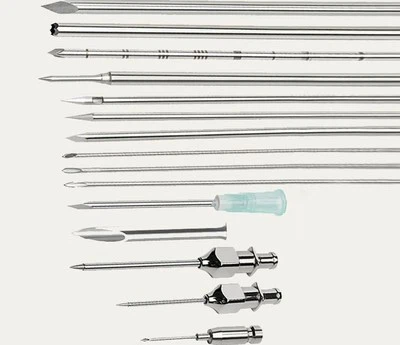
From Manufacturing To Quality Control: The Pursuit Of Zero Defects in Meniscal Repair Needles
Apr 14, 2026
From Manufacturing to Quality Control: The Pursuit of "Zero Defects" in Meniscal Repair Needles
Q&A Approach
When a meniscal repair needle must meet the contradictory requirements of being "sharp enough to penetrate the meniscus yet tough enough to withstand repeated bending without fracturing," how does the manufacturing process achieve this ultimate balance of properties? From raw material to finished product, spanning over 50 processes, even a micron-level deviation can compromise surgical success. How is the "Zero Defect" manufacturing philosophy transformed from a slogan into reality in the production of meniscal repair needles?
Historical Evolution
The evolution of quality philosophy for meniscal repair needles represents a comprehensive upgrade from "post-hoc inspection" to "process prevention." In the 1990s, reliance on manual spot-checking resulted in defect rates as high as 5–8%. The introduction of Statistical Process Control (SPC) in 2000 reduced this to 2–3%. By 2010, the proliferation of automated inspection and fool-proof tooling pushed defect rates below 1%. The implementation of 100% machine vision inspection in 2015 achieved defect rates <0.1%. Today, Digital Twins and predictive quality control are driving towards the Six Sigma goal of "three defects per million opportunities."
Full-Process Quality Control Map
Twelve key control points from raw material to shipment:
|
Control Phase |
Core Inspection Items |
Acceptance Standard |
Inspection Method & Equipment |
|---|---|---|---|
|
1. Raw Material |
Material cert., Spectroscopic analysis |
Compliant with ASTM F138/F139 |
Direct Reading Spectrometer, ICP-OES |
|
2. Tube Drawing |
ID/OD, Wall uniformity |
OD±0.01mm, Wall diff ≤0.005mm |
Laser Micrometer, Ultrasonic Thickness Gauge |
|
3. Deep Hole Machining |
Hole Dia., Straightness, Roughness |
ID 1.1±0.005mm, Ra≤0.4μm |
Air Plug Gauge, Inner Profile Projector, Profilometer |
|
4. Laser Cutting |
Slot Width, Positional Accuracy, HAZ |
Slot 0.6±0.02mm, HAZ<20μm |
Tool Microscope, Metallographic Analysis |
|
5. EDM Machining |
Slot Depth, Angle, Burr-free |
Depth 0.3±0.01mm, Angle 90±0.5° |
3D Profiler, Electron Microscope |
|
6. Laser Welding |
Weld Strength, Hermeticity, Crystallography |
Tensile Str. ≥90% base metal, No cracks |
Tensile Tester, Helium Mass Spectrometer, XRD |
|
7. Bending Forming |
Bend Angle, Arc Continuity |
Angle ±0.5°, R≥15mm |
CMM, Profile Projector |
|
8. Electropolishing |
Removal Amount, Roughness, Corrosion |
Removal 20±2μm, Ra≤0.25μm |
Weighing Method, White Light Interferometer, Salt Spray Test |
|
9. Cleaning/Sterilization |
Particles, Endotoxin, EO Residual |
Particles <100 pcs/unit, EO<10ppm |
Particle Counter, LAL Assay, GC-MS |
|
10. Assembly Test |
Fit Gap, Push Force, Rotation Smoothness |
Gap 0.1±0.02mm, Push Force ≤5N |
Pneumatic Gauge, Push-Pull Gauge, Torque Meter |
|
11. Functional Test |
Suture Patency, Bending Fatigue |
Smooth passage, 5000 bends no failure |
Simulation Test Bench, Fatigue Tester |
|
12. Packaging/Shipment |
Sterile Barrier, Labeling, Trace Code |
Compliant with ISO 11607, Info. fully traceable |
Dye Penetrant Test, Vision Inspection System |
Advanced Inspection Technologies
The "All-Seeing Eyes" achieving micron-level precision:
Machine Vision Inspection
Resolution:5 Megapixel CCD, inspection accuracy ±0.003mm.
Speed:120 units/minute, enabling 100% inspection.
AI Algorithm:Deep learning identifies 28 types of defects including scratches, dents, and contamination.
X-ray 3D CT
Scanning Accuracy:Voxel size 5μm.
Application:Inspecting internal weld quality, material inclusions, and micro-voids.
Software:VG Studio MAX for 3D reconstruction and defect analysis.
White Light Interferometer
Vertical Resolution:0.1 nm.
Application:Measuring tip roughness, coating thickness, and micro-morphology.
3D Reconstruction:Generating surface point clouds for topographic analysis.
Laser Confocal Microscope
Magnification:50–1000×.
Application:Observing grain structure, coating interfaces, and wear morphology.
Advantage:Non-contact measurement, capable of measuring transparent coating thickness.
Statistical Process Control (SPC)
"Building Quality" into the manufacturing process:
Control Charts: Real-time monitoring of critical dimensions (ID/OD), with Cp≥1.33 and Cpk≥1.0.
Measurement System Analysis (MSA): Regular GR&R analysis ensuring measurement system error <10%.
Failure Mode Analysis: PFMEA identifies high-risk processes to establish preventive measures.
Traceability System: Unique code for each product, traceable to raw material batch, operator, and equipment parameters.
Cleanliness Control
The "Clean Revolution" for medical devices:
Cleanroom: ISO Class 7 (Class 10,000) cleanroom, Temperature 22±2°C, Humidity 45±5%.
Ultrasonic Cleaning: Multi-tank series, frequency 40kHz, power density ≥0.5 W/cm².
Particle Control: Compressed air filtered to 0.01μm; workwear meets cleanliness standards.
Water Quality: Water for Injection (WFI), conductivity ≤1.3 μS/cm.
Personnel Training: Strict aseptic technique training and assessment; monthly microbial monitoring.
Chinese Quality Practice
Quality system certifications for local manufacturing:
System Certifications: ISO 13485, FDA QSR 820, China GMP.
Product Certifications: CE Marking, FDA 510(k), NMPA Registration.
Lab Accreditation: CNAS-accredited testing laboratories.
Customer Audits: Annual on-site audits by Top 10 global medical device companies.
Quality Culture: Company-wide quality awareness training; quality KPIs linked to performance.
Economic Analysis
The quality economics of "Zero Defects":
Prevention Costs: Account for 40% of total quality costs (includes SPC, training, fool-proofing design).
Appraisal Costs: Account for 30% (includes inspection equipment, personnel, third-party certification).
Internal Failures: Account for 20% (includes scrap, rework, downgrading).
External Failures: Account for 10% (includes complaints, recalls, litigation).
Return on Investment: Every 1investedinpreventionsaves5–10 in failure costs.
Future Quality Control
Quality 4.0 in the era of smart manufacturing:
Digital Twin: Virtual factory simulates manufacturing processes to predict and optimize quality.
AI Predictive Control: Big data analytics predict quality trends for proactive intervention.
Blockchain Traceability: Full supply chain quality data uploaded to the blockchain, immutable.
AR Inspection: Augmented Reality glasses guide inspectors and automatically identify defects.
Self-Sensing Products: Sensors embedded in products monitor their own status in real-time.
Quality Guru Philip Crosby said: "Quality is free. The only thing that is not free is the cost of poor quality." In the manufacturing of meniscal repair needles, the relentless pursuit of "Zero Defects" is not only a commitment to patient safety but also a solemn declaration of China's ascent to world-class precision manufacturing.