The Wisdom Of The Conduit: How The Inner-Outer Tube System Of Meniscal Repair Needles Achieves Precision Delivery
Apr 14, 2026
The Wisdom of the Conduit: How the Inner-Outer Tube System of Meniscal Repair Needles Achieves "Precision Delivery"
Q&A Approach
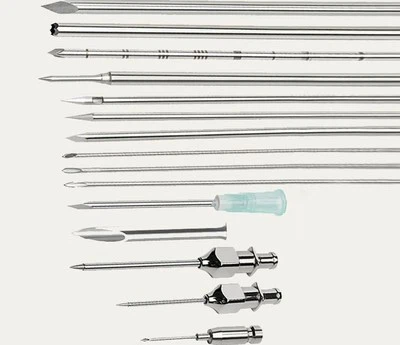
Within a puncture needle with a diameter of merely 1.45 mm, how does one design a precision "railway system" to ensure repair sutures travel smoothly through a curved needle tract to reach the tear site accurately? The "cannula-stylus" dual-tube system of meniscal repair needles is an engineering masterpiece born to solve this millimeter-scale delivery challenge. But how do the inner and outer tubes coordinate with micron-level precision to guarantee strength while minimizing frictional resistance?
Historical Evolution
The evolution of meniscal repair delivery systems is a history of micro-mechanical engineering. First-generation systems in the early 1990s featured thick cannulas (2.0 mm) paired with solid stylets, resulting in significant trauma and clumsy handling. The 1998 design of 1.8 mm cannulas with hollow stylets allowed for pre-loading of sutures. By 2005, the 1.45 mm thin-cannula system became mainstream, though concentricity issues caused high friction. The application of Nitinol inner tubes in 2010 significantly reduced friction in curved segments. In 2015, nano-diamond coatings on inner tubes further reduced friction by 50%. Today, intelligent self-lubricating inner tubes and steerable cannula systems are redefining "precision delivery."
System Design Matrix
The collaborative engineering of the "Cannula-Stylus" system:
|
Component |
Outer Tube (Cannula) |
Inner Tube (Stylus/Guidewire) |
Synergistic Significance |
|---|---|---|---|
|
Material |
304/316L Stainless Steel |
Nitinol Alloy / Stainless Steel |
Outer tube provides structural support; inner tube enables flexible delivery |
|
Dimensions |
OD 1.45mm, ID 1.1mm |
OD 0.88mm, Length 225mm |
Annular gap of 0.11mm provides a channel for sutures (0.5mm) |
|
Bending Capability |
Bendable up to 24° |
Can navigate 24° curves without permanent deformation |
Inner tube's superelasticity conforms to the outer tube's curve, maintaining patency |
|
Surface Treatment |
Electropolishing Ra 0.4μm |
Electropolishing Ra 0.2μm + DLC Coating |
Dual polishing reduces friction; coating optimizes further |
|
Connection Design |
Laser welding + Mechanical interlock |
Front slot 30mm, Back symmetric slot |
Ensures eccentric movement during bending to prevent jamming |
Fluid Dynamics Optimization
Motion control of sutures within a micro-channel:
Laminar Flow Design: Annular gap Reynolds number Re <500, ensuring smooth advancement of the suture.
Inlet Optimization: Trumpet-shaped inlet reduces the entry resistance of the suture tip.
Curved Section Compensation: Localized 5% inner diameter expansion in the 24° bend segment compensates for centrifugal effects.
Outlet Control: Needle tip bevel angle matches the suture release direction.
Lubrication Strategy: Saline perfusion + hydrophilic suture coating synergistically reduce friction.
Precision Manufacturing Processes
Micron-level precision machining challenges:
Deep Hole Drilling: 1.1 mm inner hole, aspect ratio 160:1, straightness ≤0.02 mm/100mm.
Laser Welding: Fiber laser welding of outer and inner tubes with weld width ≤0.1 mm.
EDM Machining: Wire EDM cutting 0.6 mm wide slots with ±0.005 mm accuracy.
Integral Molding: Swiss-type Citizen R04 lathes complete multi-feature machining in one setup.
Dynamic Balancing: Rotational dynamic balance grade G1.0 ensures minimal vibration at high speeds.
Tribological Breakthroughs
Triple strategy for reducing delivery resistance:
Material Pairing Optimization: Nitinol inner tube vs. Stainless steel outer tube, friction coefficient 0.15–0.20.
Surface Texturing: Laser-engineered micro-dimples (Ø20μm, depth 5μm) store oil to reduce friction.
Smart Coatings: Diamond-Like Carbon (DLC) coating, hardness HV2000, friction coefficient 0.05–0.10.
Real-time Lubrication: Micro-channels integrated into the stylus continuously release Hyaluronic acid lubricant during surgery.
Temperature Response: Phase-change material coating reduces friction coefficient from 0.25 to 0.08 at body temperature.
Failure Mode Analysis
Common faults in the delivery system:
Suture Snagging: 3% incidence, mostly due to knots or coating delamination.
Inner Tube Fracture: 1% incidence, often at stress concentration points in the curved segment.
Inner-Outer Tube Locking: 0.5% incidence, caused by bending-induced misalignment and jamming.
Tip Chipping: 2% incidence, resulting from puncturing bony tissue.
Coating Peeling: 1% incidence, caused by repeated use.
Quality Control System
Full-chain inspection from components to system:
Dimensional Inspection: CMM (Coordinate Measuring Machine), key dimension accuracy ±0.01 mm.
Concentricity Detection: Laser scanning, inner-outer tube concentricity ≤0.03 mm.
Patency Test: Standard suture (0.5mm) passage force ≤5 N.
Bending Fatigue: 50,000 cycles at 24° bend, performance decay ≤10%.
Sterility Verification: EO sterilization, residual gas ≤10 ppm.
Chinese Engineering Innovation
Breakthroughs in domestic precision manufacturing:
Micro-machining: Shenzhen enterprises mastered 0.3 mm deep-hole EDM technology.
Coating Tech: DLC coatings from Lanzhou Institute of Chemical Physics (CAS) reach international standards.
Inspection Equipment: Self-developed micro-channel endoscopic inspection systems with 5μm resolution.
Cost Optimization: Manufacturing cost is only 1/3 of imported systems with comparable performance.
Patent Portfolio: Established patent pools in bend-segment drag reduction and quick-connect structures.
Future Delivery Systems
Evolution towards intelligence and integration:
Magnetic Navigation Inner Tube: Needle tip integrated with magnetic beads for external magnetic field guidance.
Steerable Cannula: Multi-segment design allowing intraoperative remote-controlled angle adjustment.
Self-Propulsion System: Piezoelectric ceramic actuators achieving millimeter-level precise advancement.
Multi-line Simultaneous Delivery: Multi-lumen design completing complex suturing in a single puncture.
Bioabsorbable: Slow absorption 3–6 months post-op, eliminating the need for secondary removal.
Professor Bradley Nelson, expert in Microsystems Engineering at ETH Zurich, commented: "The delivery system of a meniscal repair needle reconstructs a precision railway on a millimeter scale. Its value lies not just in sending the suture to the destination, but in ensuring every delivery is stable, reliable, and predictable." Within the micron-level gaps, the wisdom of engineering is bringing revolutionary precision improvements to meniscal repair.