The Revolutionary Application Of Close-Range Radiotherapy Needles in The Treatment Of Prostate Cancer
Jun 15, 2026
Core point: The close-range radiotherapy needle is the key tool for achieving precise radiotherapy for prostate cancer. Through the permanent particle implantation technology, it achieves efficient tumor destruction while providing the utmost protection for normal tissues.
During the cancer treatment of the patient, a brachytherapy needle was used, marking a crucial step in the transition from "indirect" to "precise" modern cancer treatment. Especially in the field of prostate cancer, the application of this technology is a remarkable example. Prostate cancer is a common malignant tumor in men. Although traditional external beam radiotherapy is effective, it is difficult to avoid causing radiation damage to surrounding critical organs such as the bladder and rectum, leading to serious side effects such as frequent urination and bloody stools.
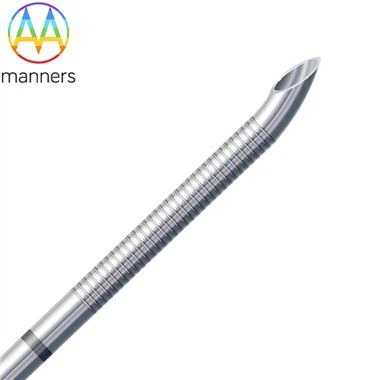
The emergence of close-range radiotherapy needles has completely changed this situation. According to the information you provided, these needles are usually made of medical-grade stainless steel or titanium alloy, with excellent biocompatibility and structural strength. Their length is typically between several centimeters and 20 centimeters, and the diameter ranges from 14G to 21G. For prostate cancer, doctors will select specific-sized needles and, through perineal puncture, insert them precisely into the predetermined coordinate points within the prostate under the guidance of ultrasound or MRI.
This process is akin to a meticulous military operation. Each close-range radiation therapy needle acts as a "missile launcher," responsible for permanently implanting tiny radioactive particles (such as iodine-125 or palladium-103) into the interior of the tumor. Although these particles are small in size, they can continuously release low-energy rays, creating extremely high radiation doses within the tumor, as if detonating a series of miniature bombs at the center of the enemy camp. Due to their short range, the radiation energy rapidly decays, having minimal impact on the normal tissues surrounding the prostate capsule, such as the bladder and rectum.
For patients with early-stage and low-risk prostate cancer, this treatment method can achieve a cure rate comparable to that of radical surgery, while significantly reducing the incidence of urinary incontinence and erectile dysfunction. Patients can complete the treatment in the outpatient department, recover quickly after surgery, and their quality of life is greatly guaranteed. It can be said that the brachytherapy needle is not only a medical device, but also a beacon of hope for prostate cancer patients to regain a healthy life. Its application perfectly embodies the connotation of "precision medicine" - achieving the greatest therapeutic effect with the minimum cost.