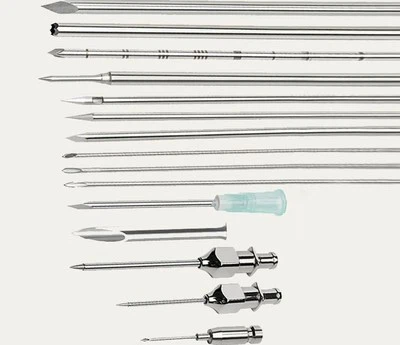
The Micron-Level Symphony Of Manufacturing Processes
Apr 09, 2026
The "Micron-Level Symphony" of Manufacturing Processes: From Lathe to Ultrasonic Cleaning – How Disposable Trocar Needles are Refined into "Sterile Artworks"
In the field of minimally invasive surgery, the disposable trocar needle is the critical pathway for surgical instruments to enter the body cavity. Its manufacturing process is far more than simple assembly of metal and plastic; it is a relentless pursuit of precision, cleanliness, and consistency at the micron scale. From raw material to finished product, every step is infused with a "zero-tolerance" quality philosophy-any minor defect can affect puncture accuracy, increase tissue trauma, or even pose an infection risk.
This article analyzes the core manufacturing process nodes of modern disposable trocar needles, revealing the complete technical pathway of their transformation from industrial semi-finished products into "sterile artworks."
Process Overview: The Seven-Step Journey from Metal Tube to Precision Assembly
The manufacturing workflow of a high-quality disposable trocar needle is a highly integrated, interconnected systems engineering process:
1. Material Preparation & Inspection → 2. Precision Machining/Turning → 3. Welding/Jointing (if applicable) → 4. Electropolishing → 5. Deep Ultrasonic Cleaning → 6. Insert/Overmolding Integration → 7. Final Assembly, Packaging & Sterilization
Each step fulfills an irreplaceable function, and processes are interdependent, collectively determining the product's final performance.
In-Depth Analysis of Core Process Nodes
1. Precision Machining on Sliding Headstock Lathes: Micron-Level "Metal Sculpting"
The fundamental shaping of the stainless steel cannula relies on high-precision CNC sliding headstock lathes, such as the Japanese Citizen Cincom L12-1M7 series. This equipment is specifically designed for the machining of tiny, high-precision metal tubes.
* Simultaneous Deburring Technology: In traditional processes, turning and deburring are separate steps, prone to secondary contamination or dimensional deviation. Advanced processes achieve "in-process simultaneous deburring." While cutting the tube body and forming small holes (e.g., side ports, connection holes), precisely controlled tool paths and spindle speeds immediately remove generated micro-burrs, ensuring smooth edges (burr height is typically required to be ≤ 0.01 inches/0.254 mm). This significantly improves efficiency, consistency, and reduces the burden on subsequent cleaning steps.
* Critical Dimension Control: Tolerances for key dimensions like inner diameter, outer diameter, wall thickness, roundness, and straightness often need to be controlled within ±0.01 mm or stricter ranges to ensure a perfect fit with seals and surgical instruments.
2. Electropolishing: Bestowing Metal with a "Mirror Finish" and "Armor"
The metal surface after turning still contains microscopic irregularities, stress concentration points, and a "deformed layer" caused by machining. Electropolishing is an electrochemical process, following standards like ASTM B912, whose role extends far beyond ordinary polishing:
* Microscopic "Sculpting," Not "Grinding": Through precisely controlled voltage, current, and time, it selectively dissolves microscopic protrusions on the metal surface, achieving atomic-level material removal.
* A Triple Mission:
1. Ultimate Smoothness: Reduces surface roughness to Ra 0.1-0.4 µm, creating a mirror-like effect. This not only drastically lowers friction resistance during tissue puncture but also minimizes the potential for bacterial and biofilm adhesion.
2. Enhanced Corrosion Resistance: Simultaneously forms a uniform, dense, chromium oxide passivation layer only a few nanometers thick on the surface. This is the key barrier ensuring the stainless steel remains stable in the body's complex electrolytic environment.
3. Defect Elimination: Eradicates potential fatigue sources and particle generation sites like micro-cracks and embedded abrasives.
3. Deep Ultrasonic Cleaning: The Final Physical Barrier to "Sterility"
Even after electropolishing, contaminants like polishing solution residue, oils, or particles may remain in component crevices. High-frequency ultrasonic cleaning is the decisive step in achieving medical-grade cleanliness.
* The Physical Power of "Cavitation": Under the action of 40 kHz or higher frequency ultrasonic waves, countless microscopic vacuum bubbles are generated in the cleaning solution. These bubbles implode instantaneously on the component surface, producing localized shock waves and micro-jets with pressures up to hundreds of atmospheres.
* Omnipresent Cleaning Power: This physical energy can penetrate the finest crevices, blind holes, and threads, completely stripping away sub-micron contaminants. This is a prerequisite for ensuring the product is pyrogen-free, particle-free, and sterile, and forms the foundation for the effectiveness of subsequent sterilization processes.
4. Insert/Overmolding Integration: The "Molecular-Level" Union of Metal and Plastic
The plastic components of a trocar needle (such as the tapered tip, seal valve, handle) need to be seamlessly and firmly joined to the stainless steel main body through precision injection molding.
* Interference Fit and Chemical Bonding: During molding, molten engineering plastic (e.g., PC, ABS, medical-grade silicone) is injected under high pressure into the mold cavity enveloping the metal part. The plastic achieves mechanical interlocking through an interference fit, and its molecular chains may, under certain conditions, form physical or chemical bonds with specially treated layers on the metal surface, ensuring the joint remains secure without loosening or leaking during sterilization and clinical use.
* Optical Quality of the Transparent Tip: The injection molding process for the transparent tip (often made of highly transparent PC like Makrolon or Lexan), used for visual guidance during puncture, must strictly control temperature, pressure, and cooling rates to eliminate defects like bubbles, flow lines, and shrinkage, ensuring an absolutely clear intraoperative view.
* Rapid Prototyping and Mass Production: Utilizing rapid tooling solutions like aluminum molds can shorten the delivery time for customized prototypes to 1-2 days, accelerating product development iteration.
The "Multiple Invisible Defenses" of Quality Control
In the systems of leading manufacturers like Manners Technology, quality control is not a final step but a gene integrated throughout the entire manufacturing process:
Control Stage Core Activities Objectives & Standards
Incoming Material Inspection Spectroscopic analysis, metallographic examination, mechanical testing Ensure raw materials (stainless steel, plastic pellets) meet medical-grade standards, with uniform composition and structure.
In-Process Control (IPC) Statistical Process Control (SPC), real-time monitoring of key dimension CPK values Ensure core processes like turning, polishing, and molding remain stable and controlled, preventing batch deviations.
Finished Product 100%/Sampling Inspection 1. Geometric Dimensions: Laser measurement, optical comparators
2. Surface Integrity: High-magnification electron microscopy inspection
3. Functional Testing: Puncture force, sealing integrity, patency
4. Destructive Testing: Connection strength, fatigue life (sampling) Ensure every product meets the ultimate appearance standard of "no spots, no scratches, no pits, no burrs" and all performance specifications.
Biocompatibility & Sterility Assurance 1. Biocompatibility testing (cytotoxicity, sensitization, intracutaneous reactivity, etc.)
2. Packaging in a Class 10,000 cleanroom environment
3. Processing via a validated sterilization process (EO/Gamma) Final proof that the product is safe, sterile, and suitable for human use.
Industry Insights: The Leap from "Functional Fulfillment" to "Process Aesthetics"
The evolution of disposable trocar needle manufacturing clearly maps the development trajectory of the high-end medical device industry:
1. Shift in Competitive Dimensions: Early competition focused on "functional realization." It has now comprehensively shifted towards "process aesthetics"-pursuing ultimate precision, consistency, cleanliness, and user experience while meeting all performance requirements.
2. Smart Manufacturing and Data Closed Loops: Future leaders will achieve a perfect quality closed loop of "every needle traceable, every parameter reproducible" through digital production lines, machine vision automated inspection, and full-process data traceability systems. Production data will iteratively inform and continuously optimize designs based on clinical feedback.
3. The Strategic Position of Clean Engineering: Controlling the cleanliness of the manufacturing environment and processes is no longer a simple cost factor but a core quality attribute and a brand moat. Creating ultra-clean manufacturing environments that exceed ISO standards will become the benchmark for high-end medical device manufacturing.
Conclusion
A seemingly simple disposable trocar needle is, in reality, a symphony of materials science, precision mechanical machining, electrochemistry, polymer processing, ultrasonics physics, and extreme quality management. Its manufacturing process is the concrete embodiment of the highest principles for medical devices: "safety" and "reliability."
When this "sterile artwork" is held in a surgeon's hand and successfully creates a minimally invasive pathway for a patient, it silently carries the modern manufacturing industry's guardianship of the dignity of life.