The Lifeline Of Quality: How Advanced Manufacturing Techniques Ensure The Reliability And Safety Of Bone Marrow Biopsy Needles
Apr 23, 2026
The lifeline of quality: How advanced manufacturing techniques ensure the reliability and safety of bone marrow biopsy needles
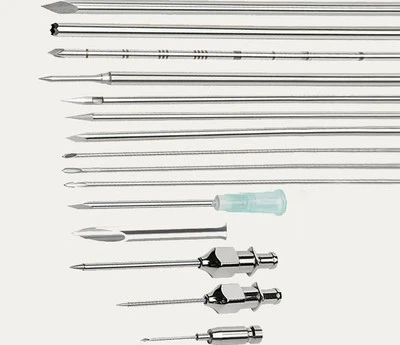
The performance and safety of the bone marrow biopsy needle are not solely determined by the design drawings. It will have to withstand tremendous stress from penetrating the bone and complete precise tissue cutting and capturing actions within the body. Therefore, from a medical-grade stainless steel bar to a reliable biopsy needle, the high-end manufacturing and strict quality control processes experienced along the way form the lifeline of its intrinsic quality. The precision manufacturing represented by Manners Technology is the fundamental guarantee to ensure that this needle does not bend, break, or fail at critical moments.
Precision CNC machining and 5-axis technology form the basis of the shaping process. The inner cavity, outer diameter, threaded interface (such as the connection point with the handle), and the complex geometric shape of the needle tip all require extremely high coaxiality and dimensional accuracy. 5-axis CNC machines can complete multi-angle and multi-surface composite processing in one setup, ensuring that the cutting edge of the needle tip is symmetrical, sharp, and perfectly aligned with the centerline of the needle body. Any minor eccentricity will cause vibration and deviation during the rotation insertion process, increasing patient discomfort and operational difficulty, and even causing the needle body to bend. The smoothness of the inner cavity is also crucial, as it affects the sliding smoothness of the inner core needle and the resistance when pushing out the tissue specimen.
The special hardening treatment of the needle tip is the essence of its penetrating power. Bones are one of the hardest tissues in the human body, especially in patients with osteosclerosis or bone metastatic cancer. The standard stainless steel is not hard enough to maintain sharpness for a long time. Therefore, the needle tip part needs to undergo local heat treatment, such as high-frequency induction quenching or laser quenching, to make its surface hardness reach over 50 on the Rockwell hardness scale, forming an ultra-hard "armor", while the needle body part maintains good toughness. This hardened layer must be firmly bonded to the base material and cannot peel off during use. In addition, some high-end products will adopt physical vapor deposition (PVD) technology on the needle tip, coating it with a layer of titanium nitride (TiN) or diamond-like carbon (DLC) coating. These coatings not only have extremely high hardness and low friction coefficient, but also provide a striking golden yellow or black appearance, making them easy to identify.
The "dark line" process of the core needle determines the success or failure of core extraction. The core needle, especially its front cutting window and stop structure, is the most precise component of the biopsy needle. The sharpness and symmetry of its cutting edge directly determine whether the bone marrow tissue strips can be cleanly cut rather than being squeezed or torn. This usually requires ultra-precise grinding machines to be completed under microscopic-level monitoring. The mating clearance between the core needle and the outer needle is another key parameter: too large a clearance will cause the tissue to be squeezed into the gap and break, while too small a clearance will result in poor sliding or even jamming. This clearance is usually controlled at the micrometer level, requiring extremely strict tolerance control.
Comprehensive deburring and surface treatment form the foundation of safety. After mechanical processing, the metal surface, especially the inner cavities, will leave microscopic burrs and sharp edges. These defects are sources of danger: burrs may scratch tissues and increase pain; detached metal particles may enter the bloodstream or remain in the specimen, interfering with diagnosis; sharp edges are stress concentration points, and under torsional loading, they may become the origin of cracks. Therefore, multiple steps of deburring and electrolytic polishing must be carried out. Electrolytic polishing uniformly dissolves the microscopic protrusions on the surface through electrochemical means, achieving a mirror-like smooth inner and outer surfaces, while forming a dense and uniform passivated oxide film, significantly enhancing corrosion resistance and biocompatibility, and enabling repeated high-pressure steam sterilization.
100% performance and safety tests are the final checkpoint before the product leaves the factory. Every qualified bone marrow biopsy needle must undergo a series of rigorous tests before packaging, such as:
* Piercing force test: Simulate the force required to penetrate the standard test material (such as a specific density polyurethane block) to ensure the sharpness meets the requirements.
* Torque test: Apply the specified torque to the needle body to test its anti-torsion strength, preventing it from breaking in the bone.
* Connection strength test: Ensure that the connection between the needle base and the needle tube, as well as between the needle base and the handle, will not loosen under the maximum operating force.
* Inner core sliding test: Test whether the inner core needle slides smoothly and without resistance within the tube.
* Fracture toughness test: Bend the needle to a certain angle to test whether it will break and evaluate its toughness.
* Biological load and sterility test: Ensure that the product is sterile and free of pyrogens.
Therefore, the significance of the manufacturing process of the bone marrow biopsy needle lies in converting the abstract requirements of "reliability" and "safety" set by the designer into quantifiable and detectable physical properties on each needle. Through extreme precision control, material modification, surface science, and destructive testing, it builds an intangible confidence for clinicians: when they hold this needle in their hands, they can fully focus on the patient's anatomy and condition without worrying about the failure of the instrument itself. This seemingly ordinary needle is actually a modern industrial work of art that embodies the essence of materials science, mechanical engineering, and quality control. It is the silent guardian safeguarding the safety of both patients and doctors.