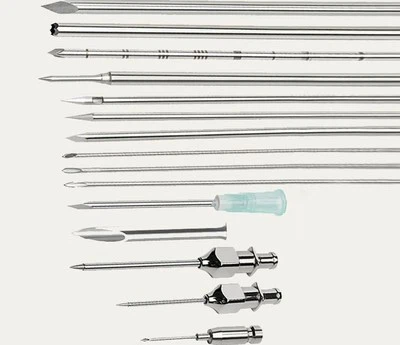
Beyond Diagnosis: Future Vision Of Bone Marrow Biopsy Needles As Information And Therapeutic Carriers In The Era Of Precision Medicine
Apr 23, 2026
Beyond Diagnosis: Future Vision of Bone Marrow Biopsy Needles as Information and Therapeutic Carriers in the Era of Precision Medicine
Traditionally, bone marrow biopsy needles have been perceived as instruments solely for acquiring diagnostic specimens. However, amid the rapid advancement of precision medicine and cellular therapy, the role of this device is undergoing profound evolution. No longer merely a pathological sampling tool, it is developing into a gateway for multi-dimensional information collection and a potential pathway for targeted therapeutic delivery. Its future value lies in intelligently, minimally invasively and functionally supporting the full-cycle clinical management ranging from disease diagnosis and classification to therapeutic monitoring.
From Histomorphology to Multi-Omics: Deepened Information Acquisition
Currently, bone marrow biopsy primarily yields tissue cores for hematoxylin-eosin (HE) staining and immunohistochemistry. Driven by progress in genomics, transcriptomics, proteomics and microbiomics, higher standards for specimen quality and pre-processing are required. Future biopsy needle systems are expected to integrate on-site specimen preservation functions. For instance, cryopreservation solution or RNA stabilizers can be preloaded inside the needle lumen. Upon completion of tissue core harvesting, an internal mechanism will automatically transfer the specimen into the preservation medium to maximally maintain biomolecular activity and prevent post-extraction degradation. This provides high-quality samples for high-throughput analyses including deep sequencing of minimal residual disease (MRD) and single-cell sequencing, exponentially expanding the diagnostic information obtainable from a single biopsy.
Exploration of Real-Time In Vivo Analysis and Optical Biopsy
Conventional pathological result reporting requires several days of laboratory processing. Next-generation intelligent biopsy needles embedded with miniature optical sensing probes will transform this workflow. Integrated confocal microscopic fibers or optical coherence tomography (OCT) probes at the needle tip can capture real-time microstructural images of trabecular bone and marrow tissue along the puncture pathway during insertion, achieving in vivo pathology assessment. This enables instant verification of whether the puncture site contains sufficient marrow parenchyma and preliminary identification of abnormal cell aggregates, thus improving sampling accuracy. Combined with Raman spectroscopy, the system can also perform label-free analysis of cellular metabolites and provide real-time biochemical data.
Extension of Therapeutic Functions: From Diagnostic Needle to Therapeutic Conduit
The bone marrow cavity serves not only as a diagnostic source but also as an ideal therapeutic target. The stable pathway directly into the marrow cavity established by biopsy needles creates opportunities for localized intervention. In the future, targeted drug injection, radioactive seed implantation and local ablation therapies such as radiofrequency ablation for intramedullary lesions including localized bone metastasis and intramedullary lymphoma may be delivered via modified therapeutic biopsy needles. Acting as a delivery conduit under precise image guidance, the needle will transport therapeutic agents directly to lesion centers, achieving high-efficiency, low-toxicity treatment.
Harvest and Reinfusion of Bone Marrow-Derived Cells
With the rise of cellular therapy, bone marrow has become both a window for pathological assessment and a source of healthy cells such as mesenchymal stem cells, as well as a target for reinfusion of genetically modified cells including CAR-T cells. Future bone marrow needle systems will integrate micro-perfusion and harvesting functions to isolate specific stem cell populations from marrow tissue. Similarly, intramedullary reinfusion of therapies such as CAR-T cells is projected to achieve higher cell homing efficiency and lower systemic toxicity compared with intravenous infusion. Biopsy needles will provide a direct access route for such precise cellular reinfusion.
Ultimate Pursuit of Painless and Standardized Procedures: Robot-Assisted Biopsy
Procedural pain and operator-dependent variability remain major clinical challenges of bone marrow biopsy. Future developments will combine real-time multimodal image navigation (ultrasound-CT fusion) with robotic puncture systems. Surgeons predefine the optimal safe pathway from skin to marrow cavity on a control console. A robotic arm equipped with dedicated biopsy needles will complete cortical bone penetration and tissue sampling with precision and stability surpassing manual operation. This greatly alleviates patient discomfort through precise anesthesia and rapid intervention, while standardizing procedures so that sampling quality is no longer constrained by individual operator experience or physical strength.
In conclusion, the future of bone marrow biopsy needles lies in transcending the physical limitations of disposable puncture tools and evolving into intelligent medical terminals integrating diagnostic sensing, minimally invasive therapy and cellular engineering interfaces. Its clinical role will expand from retrospective diagnosis of past pathological conditions to real-time monitoring of ongoing physiological changes, and further to active therapeutic intervention. Penetrating deep into osseous tissue, this needle is poised to become the most direct and powerful bridge connecting the deep physiological black box of the human body with cutting-edge biomedical technologies, ushering in a brand-new era of precision management for hematological diseases and beyond.