The Infection Control And Health Economics Game Of Breast Biopsy Needle Types
Jul 16, 2026
https://www.mayoclinic.org/tests-procedures/breast-biopsy/about/pac-20384812
In the classification of breast biopsy needles, "number of uses" is an often overlooked but crucial dimension. The choice between single-use and reusable biopsy needles is essentially a comprehensive trade-off between infection risk control, medical costs, and operational convenience.
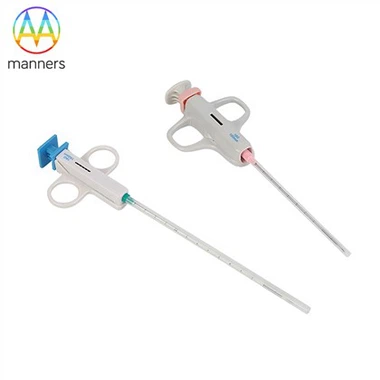
Single-use breast biopsy needles often employ a composite structure of medical polymers and stainless steel, with the 14G single-use automated biopsy needle being a typical example. Its core advantage lies in zero cross-infection risk-it is discarded directly after each patient's use, completely eliminating the possibility of transmission of bloodborne pathogens such as hepatitis B and HIV. Especially in primary healthcare institutions or areas with high incidence of infectious diseases, the single-use design significantly reduces the pressure on infection control management. Furthermore, single-use needles are sterilized before leaving the factory (mostly with ethylene oxide sterilization), and are ready to use immediately after opening, avoiding the cleaning, disinfection, and sterilization processes required for reusable needles, saving nurses' time. However, the disadvantages are also significant: the cost per needle is 5-10 times that of reusable needles, increasing hospital consumable expenses in the long term; and improper disposal of large quantities of discarded needles can cause environmental pollution.
Reusable breast biopsy needles are primarily made of stainless steel and have a complex structure, including a core, outer cannula, ejection device, and other components. Their advantage lies in long-term low cost-after a standardized "cleaning-enzyme washing-disinfection-sterilization" process (usually using autoclaving), they can be reused 50-100 times. For tertiary hospitals with high biopsy volumes, the annual consumable cost of reusable needles can be reduced by more than 60%. However, management is extremely difficult: incomplete cleaning can lead to cross-contamination from residual tissue fragments; repeated sterilization can dull the needle tip and reduce spring elasticity, affecting sampling results. US FDA data shows that between 2018 and 2022, hospital-acquired infections due to improper cleaning of reusable biopsy needles accounted for 37% of breast biopsy-related infections.
The current industry trend is an accelerated trend towards single-use: On the one hand, with the advancement of medical insurance cost control policies, some regions have included single-use biopsy needles in their billing catalogs, reducing the cost pressure on hospitals; on the other hand, the application of new biodegradable materials (such as polylactic acid coatings) is gradually reducing the environmental burden of single-use needles. In the future, with advancements in sterilization technology and optimized cost control, single-use breast biopsy needles are expected to become the mainstream choice.