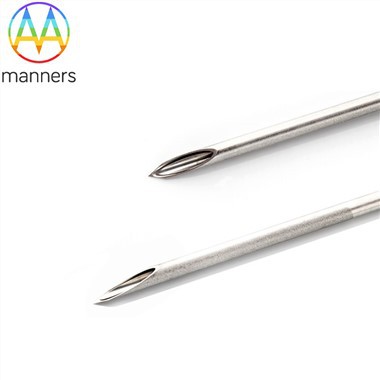
The Golden Channel Of Life: How Intraosseous (IO) Needles Reshape Survival Rules In Severe Trauma Emergency Care
Apr 30, 2026
In emergency medicine, especially in the treatment of severe trauma, time is measured in seconds. When a patient with hemorrhagic shock from a severe car accident arrives, establishing a reliable, rapid vascular access is the only way to pump resuscitation fluids, blood, and life-saving medications into a failing circulatory system. However, in extreme cases of hypovolemia-where peripheral veins collapse like deflated rubber tubes-or limb destruction with lost anatomical landmarks, traditional intravenous (IV) puncture can become a desperate, time-consuming "blind search." At this critical moment, a specialized needle-the intraosseous (IO) needle-evolves from a backup option into an irreplaceable golden channel. Bypassing the collapsed venous system, it anchors directly into the body's non-collapsible "core of life"-the bone marrow cavity-reigniting hope for survival in the darkest hours.
I. The "Life Anchor" in Desperation: Why Bone Marrow?
This stems from a long-overlooked physiological fact: the bone marrow cavity houses a rich, non-collapsible vascular network. Even in the most severe shock, venous sinuses within the bone remain patent and connect directly to the central circulation (superior and inferior vena cava) via intraosseous and nutrient veins. The rate of drug or fluid absorption into the central circulation via the bone marrow cavity is theoretically comparable to central venous access.
Thus, intraosseous access is not a new concept-it emerged in the early 20th century and was used during World War II. However, its adoption was long hindered by bulky manual instruments, high complication rates, and psychological/technical barriers associated with "drilling into bone." Its true revival began in the early 2000s with the engineering revolution of dedicated IO needles. No longer a simple puncture needle, it is a complete system integrating a high-strength stylet, protective cannula, stable hub, and contamination-resistant septum. The advent of battery-powered devices (e.g., EZ-IO®) simplified the procedure to three steps-locate, press the trigger, insert-enabling reliable access in 20–30 seconds with a first-attempt success rate of over 90%. This directly addresses the two core priorities of trauma care: speed and reliability.
II. IO Needles in Trauma Care: Beyond a "Last Resort" to a Preferred Choice
Historically, IO access was viewed as a last resort after failed IV attempts. But a decade of clinical evidence and evolving guidelines have driven a fundamental shift in its role: in specific severe trauma scenarios, IO should be considered a parallel or initial priority.
A Game-Changer in Pre-Hospital Care: In challenging environments like ambulances or accident scenes-with poor lighting, limited space, and unmanageable patient positioning-the failure rate and time required for peripheral IV access surge. Multiple pre-hospital randomized controlled trials (e.g., Reardon PM et al., 2017) show that medics establish IO access in a median time significantly shorter than IV (≈45 seconds vs. >120 seconds). For traumatic cardiac arrest, the 2025 ILCOR (International Liaison Committee on Resuscitation) consensus explicitly states: if venous access cannot be rapidly established within 2 attempts, switch immediately to IO. Every minute saved directly increases the likelihood of ROSC (Return of Spontaneous Circulation).
A Mandatory Choice for Specific Trauma Types:
Severe Burns: Extensive burns destroy superficial veins, and puncturing through wounds risks infection. Proximal humeral IO access becomes the ideal channel for fluid resuscitation and analgesic administration.
Limb Devastation or Pelvic Fractures: Access is contraindicated in injured limbs, while contralateral veins may collapse from shock. IO access via the proximal humerus or tibia on the uninjured side is the only viable option.
Hypovolemic Shock: When blood loss exceeds 30%–40% of total blood volume, peripheral veins constrict to the point of being unidentifiable and unpuncturable. Repeated blind IV attempts only delay resuscitation. Modern ATLS (Advanced Trauma Life Support) guidelines emphasize early decision-making: initiate IO immediately after the first failed IV attempt or if difficulty is anticipated.
III. Efficacy of IO Needles: More Than Just an "Access Route"
Establishing access is only the first step-its ability to meet the rigorous demands of trauma resuscitation is critical. Evidence confirms modern IO needles deliver exceptional performance:
Impressive Flow Rates: With a pressure bag or dedicated high-speed infusion pump, crystalloid fluids can be infused via IO access at 80–100 mL/min-comparable to large-bore central venous catheters, sufficient for rapid volume resuscitation.
Equivalent Drug Efficacy: Nearly all emergency medications for trauma resuscitation-including epinephrine, amiodarone, antifibrinolytics (tranexamic acid), sedatives, analgesics, and antibiotics-can be administered via IO. Their peak plasma concentrations and onset times show no statistical difference from central venous delivery, which is critical for early antibiotic coverage in post-traumatic sepsis.
Blood Product Transfusion: The historical contraindication to blood transfusion via IO has been overturned. Studies confirm packed red blood cells and plasma can be safely infused via IO under pressure. While slower than IV and requiring close monitoring to prevent occlusion, it provides a vital lifeline for patients with life-threatening hemorrhage when IV access is impossible.
IV. Safety and Clinical Judgment: The Art of Maximizing Benefits and Minimizing Risks
IO safety has improved dramatically, with complication rates generally below 1%. Key risks include:
Insertion-Related: Puncture site pain (in conscious patients), rare extravasation, and minor bone microfractures.
Indwelling-Related: Rare osteomyelitis and fat embolism (mostly associated with prolonged dwell time >24 hours).
Standardized practice and wise decision-making are critical:
Site Selection: Prefer the proximal humerus (deltoid tuberosity) for rich blood flow and fastest drug return to the heart; second choice is the proximal tibia (medial to the tibial tuberosity); sternal access is reserved for special cases. Never puncture fractured or infected bone.
Dwell Time: Limit to ≤24 hours. Once the patient stabilizes, establish definitive venous or central venous access and remove the IO needle promptly.
Analgesia: High intraosseous pressure causes severe pain in conscious patients during injection. Administer lidocaine (e.g., 2% lidocaine 0.5 mg/kg) via the IO catheter before injecting medications-this is both humane care and standard practice.
Conclusion: A Paradigm Shift in Mindset
The widespread adoption of IO needles represents not just a new tool, but a profound shift in trauma care philosophy. It breaks the "IV-first" mindset and establishes the pragmatic principle of securing any effective access as quickly as possible. In the race against death, this bone-penetrating needle symbolizes an unyielding commitment to saving every possible life. From a last-ditch "lifeline" to a solid, reliable cornerstone of modern trauma care, the IO needle in the emergency kit carries the first chance to pull patients back from the brink of death. Mastering and skillfully using it is an essential skill for every clinician involved in severe trauma care-one that must be honed for life.