The Evolution Of Needle Materials: The Safety Logic Behind Stainless Steel, Polymers, And Coatings
Apr 11, 2026
The Evolution of Needle Materials: The Safety Logic Behind Stainless Steel, Polymers, and Coatings
Experience: The Wisdom of Material Selection in Clinical Practice
In the medical frontline, the selection of needle materials is far from a simple specification check; it is a sophisticated decision-making system formed through decades of clinical practice. Senior Nurse Li Jing shares, "Two decades ago, we primarily used basic stainless steel needles, which had noticeable insertion resistance, especially with elderly patients and children. Today, the widespread adoption of siliconized coatings has revolutionized the puncture experience." Behind this shift lies an iterative process driven by clinical feedback-every patient facial expression and every subtle change in tactile resistance is converted into data points for material optimization.
Expertise: Medical Adaptation in Materials Science
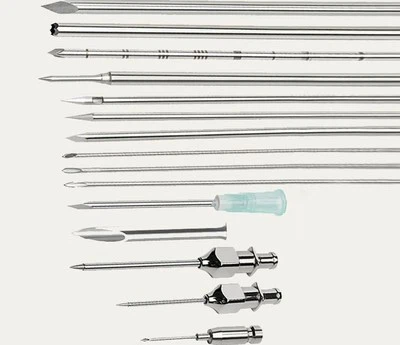
The dominance of stainless steel stems from its perfect balance of properties. Medical-grade 316L stainless steel contains 2-3% molybdenum, significantly enhancing its pitting corrosion resistance in chloride-containing environments like saline solution and blood compared to 304 stainless steel. Under an electron microscope, the needle surface, treated with special passivation, forms a dense chromium oxide layer-the micro-foundation of its "stainless" characteristic.
Breakthroughs in coating technology exemplify cross-disciplinary expertise. Modern siliconized coatings are controlled within a thickness of 0.5–2 microns; this seemingly negligible layer can reduce puncture friction by 30–50%. More advanced "super-lubricious coatings" utilize polyethylene glycol (PEG) to modify the surface, absorbing moisture upon contact with tissue to form a hydration layer, achieving a near "painless" insertion experience.
Emerging polymer needles represent another technological frontier. Polyether ether ketone (PEEK), with an elastic modulus similar to bone, is gaining prominence in delicate procedures requiring avoidance of tissue damage. However, its processing difficulty is extreme-drilling precise side holes in PEEK tubing less than 0.5 mm in diameter requires picosecond laser precision, ensuring the edges are free of slag and thermal distortion.
Authoritativeness: Standards Setting and Evidence-Based Basis
Every material choice for needles is underpinned by rigorous authoritative standards:
The ISO 7864 standard dictates the mechanical properties of stainless steel needles, including needle tube bend resistance (must withstand repeated bending at specific angles without fracturing) and hub connection strength (the needle hub and tube must withstand a pull-off force of 60N).
The USP <381> chapter strictly limits extracts from elastomeric components (like syringe plungers), mandating that heavy metal content must not exceed one part per ten million. This has driven continuous upgrades in cleanroom standards for needle manufacturing-modern facilities operate at ISO Class 7 (Class 10,000), limiting airborne particles ≥0.5 μm to no more than 352,000 per cubic meter.
Clinical authority studies provide the evidence base. A 2019 multicenter study published in The Lancetshowed that patients using insulin needles with super-lubricious coatings reported an average pain score reduction of 1.7 points (on a 0–10 scale), with the incidence of lipohypertrophy at long-term injection sites dropping from 32% to 18%. Such studies provide irrefutable clinical evidence for material upgrades.
Trust: Full-Chain Credibility from Lab to Patient
Establishing trust in needle materials requires a complete validation ecosystem:
Biocompatibility verification is the bedrock of trust. According to ISO 10993 standards, needle materials must pass a battery of tests including cytotoxicity, sensitization, and intracutaneous reactivity. The most stringent is the implantation test-material samples are implanted into animal muscle or subcutaneous tissue, with tissue reactions observed over 4 to 26 weeks. Only materials inducing minimal reaction earn the "passport" for medical application.
Inter-batch consistency is the trust guarantee of industrial production. High-end needle manufacturers employ Statistical Process Control (SPC), conducting spectroscopic analysis on raw materials for each batch to ensure trace element fluctuations are controlled within ±5%. On the production line, destructive tests-including puncture force, lubricity, and break force tests-are performed on samples every two hours, with data uploaded in real-time to the Quality Management System (QMS).
Traceability systems establish the final trust loop. Each needle package bears a Unique Device Identifier (UDI). Through this code, one can trace the melting furnace number of the raw materials, the production team, sterilization batch, and even the inspector's ID. When an anomaly was reported in a European country in 2022, the manufacturer locked down the problematic segment-a minor 3-hour deviation in a workshop's humidity control system-within two hours.
Industry Insight: Systematic Thinking in Material Innovation
The evolution of needle materials teaches us that innovation in medical devices is never a breakthrough in a single parameter, but a systematic equilibrium of material properties, processing techniques, clinical needs, and quality standards. In the future, with the development of bioabsorbable materials and stimulus-responsive technologies, needle materials will cease to be passive structural elements and become intelligent media capable of sensing, responding, and even participating in therapeutic processes. Yet, regardless of technological evolution, the core objective remains unchanged: ensuring every puncture is safer, more precise, comfortable, and effective. This is the eternal direction of medical material innovation and the microscopic embodiment of the commitment to human health.