The Fluid Dynamics Of Needle Design: When Blood Meets Precision Engineering
Apr 11, 2026
The Fluid Dynamics of Needle Design: When Blood Meets Precision Engineering
Experience: Observing Fluid Behavior in Clinical Practice
"Blood has a 'personality,'" says Dr. Wang, Director of the Laboratory Department with 30 years of phlebotomy experience. "With some needles, blood collection is smooth, with a continuous, full column; with others, it's intermittent, sometimes even bubbly. It's not just about the needle gauge." What Dr. Wang is describing is the complex behavior of fluids in micro-channels-engineering concepts like Reynolds number, boundary layers, and surface tension translate into tangible sensations of "smoothness" or "resistance" during clinical operations.
In the ICU, nurses have a deeper understanding: "During rapid blood transfusions via large-gauge needles, if the internal lumen design is poor, red blood cells suffer shear damage and hemoglobin leaks out, which affects the prognosis of critically ill patients." These empirical observations have directly driven the optimization of fluidic design within needle lumens.
Expertise: Fluid Dynamics in Micro-Channels
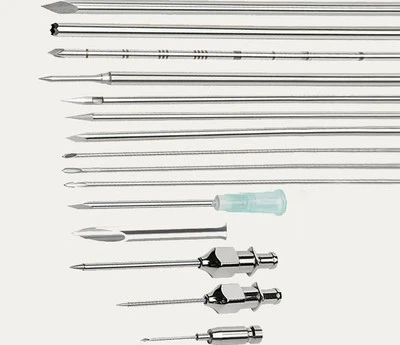
The bevel design of a needle tip is a science of precision. The standard hypodermic needle bevel angle is 12–15 degrees, representing the optimal balance between penetration resistance and flow rate. However, specialized uses demand unique designs:
Spinal needles adopt a unique "pencil-point" design with a bevel angle of only 5–7 degrees to minimize tissue trauma when penetrating the dura mater.
Biopsy needles may feature a bevel angle of 20–25 degrees to achieve a sharper cutting edge.
The latest biomimetic designs mimic mosquito mouthparts, featuring multi-stage variations in bevel angle to achieve a gradient release of puncture force.
The topology of the inner lumen surface is another specialized field. Traditional needle bores formed by cold drawing have a surface roughness (Ra value) of approximately 0.4 µm. Next-generation needles utilize electropolishing and laser micro-machining to reduce the Ra value to below 0.1 µm. At the microscopic scale, this means red blood cells encounter 75% fewer surface irregularities during passage, significantly reducing the risk of hemolysis.
Fluid optimization of side-hole design is core technology for biopsy needles. The side aperture of a Vacuum-Assisted Breast Biopsy (VABB) needle is not a simple circular hole but a teardrop shape optimized via Computational Fluid Dynamics (CFD). This geometry creates a stable vortex at the orifice the moment negative pressure is applied, "entraining" tissue debris into the needle cannula. This achieves a sample acquisition rate 40% higher than traditional round-hole designs.
Authoritativeness: Quantitative Standards and Testing Systems
Needle fluid performance is backed by a comprehensive authoritative evaluation system:
The ISO 1135-4 standard specifies flow requirements for transfusion needles: a 16G needle must deliver normal saline at a flow rate no lower than 120 ml/min under 100 mmHg pressure. Meeting this standard requires precise control of inner diameter tolerances-a nominal 1.7 mm ID must actually fall between 1.68–1.72 mm. This ±0.02 mm tolerance band was determined through thousands of fluid experiments as the optimal range.
ASTM F1831 focuses on particulate matter release. Due to friction between metal and rubber stoppers, needles can generate trace particles during use. The standard mandates no more than 25 particles larger than 10 µm per milliliter of effluent. To meet this, needle hubs undergo internal fluid simulation optimization to eliminate dead spaces where particles could accumulate.
Pharmacopoeial hemolysis testing provides authoritative biological evaluation. The USP stipulates that the hemolytic index for devices contacting blood must be less than 5%. This drives manufacturers to add a critical post-processing step after lumen machining: surface passivation. By precisely soaking the needles in a mixture of nitric and hydrofluoric acid, a chromium-rich passive layer forms, reducing metal ion leaching to the nanogram level.
Trust: The Closed-Loop Credibility from Design to Validation
Pre-validation using Computational Fluid Dynamics (CFD) is the starting point of trust in modern needle design. Before a new needle mold is cut, engineers have already run hundreds of virtual tests. They can visualize velocity distribution for red blood cells at every bend, predict regions where platelets might activate, and optimize transition curves at diameter changes to prevent turbulence. The correlation between these simulations and subsequent physical tests exceeds 90%, drastically reducing development risk.
Physical fluid testing platforms provide direct evidence for trust. Advanced platforms simulate the full spectrum of venous pressures (from 5 to 200 mmHg) from infants to adults, testing flow characteristics using standardized blood simulants. High-speed cameras record fluid behavior at the needle tip at 100,000 frames per second, revealing the mechanisms behind micro-bubble generation. These tests not only validate the design but also provide precise operational guidelines for clinicians-for instance, tests on a new catheter showed optimal flow at a 20-degree insertion angle, a datum point now written into the instructions for use.
Continuous feedback from clinical big data constitutes a dynamic loop of trust. A leading international medical device company established a needle usage database collecting anonymized data from over 2 million punctures worldwide. Analysis revealed that when the lumen's aspect ratio (length to diameter) exceeded 1:8, the risk of occlusion increased significantly. This finding directly led to a next-gen anti-clogging design: maintaining the outer diameter while optimizing wall thickness to increase the inner diameter by 0.05 mm, reducing occlusion rates from 3.2% to 0.7%.
Industry Insight: The Expanding Value of Fluid Thinking
The principles of needle fluid design are expanding into broader medical fields. In insulin pen needles, taper variations within the lumen are optimized to ensure dosage accuracy across different insulin concentrations; in dialysis needle dual-lumen designs, the relative positions of blood outflow and inflow ports are calculated to maximize solute clearance efficiency; even in minimally invasive surgical suction-irrigation tubes, internal spiral grooves borrow from needle drag-reduction designs.
These extended applications reveal a deeper trend: the evolution of medical devices is shifting from structural thinking to systems thinking. The needle is no longer an isolated "pipe" but a fluid control node within an entire therapeutic system. Understanding the behavioral patterns of blood, pharmaceuticals, and contrast agents in micro-channels is becoming the foundational language of medical device innovation. In the future, with the development of personalized medicine and precision drug delivery, needle fluid design will become even more refined-perhaps leading to smart needles that automatically adjust their inner diameter based on a patient's hematocrit, or adaptive designs that optimize internal topology according to drug viscosity. In this direction, every minute improvement redefines the precision boundaries of treatment.