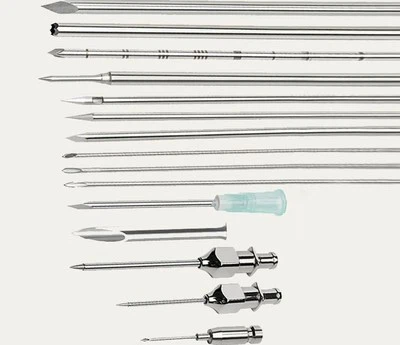
The Engineering Revolution Of Conical Shaver Blades: How Tapered Tips Reshape The Minimally Invasive Paradigm Of Soft Tissue Management in Arthroscopy
Apr 14, 2026
The Engineering Revolution of Conical Shaver Blades: How Tapered Tips Reshape the Minimally Invasive Paradigm of Soft Tissue Management in Arthroscopy
Q&A Approach
Within the confined space of a 5-mm arthroscopic working channel, how can one achieve precise debridement of tissues with varying textures-such as hyperplastic synovium or torn menisci-while avoiding injury to surrounding critical structures? Traditional straight cylindrical shavers often struggle to exert force effectively in narrow joint recesses; the emergence of conical shaver blades was engineered specifically to solve this spatial limitation. But how exactly does the conical design balance cutting efficiency with operational safety?
Historical Evolution
The evolution of arthroscopic shavers is a microcosm of the synergistic development of minimally invasive orthopedics and precision engineering. First-generation shavers in the 1980s featured simple cylindrical tips, suffering from low cutting efficiency and frequent clogging. In 1992, Dr. O'Connor's dual-portal cutting system increased efficiency by 50%. The advent of curved blades in 2000 enabled access to the posterior horn of the meniscus. The true breakthrough occurred in 2010-tapered blade design combined with fluid dynamics optimization finally cracked the code for accessing tight joints. By 2015, the introduction of 17-4 PH stainless steel extended blade lifespan from 50 hours to 200 hours. Today, the integration of digital design and 5-axis laser cutting is birthing a new generation of intelligent shaving systems.
Technical Standard Definitions
The conical shaver blade is a precision system optimized for multiple parameters:
|
Parameter Dimension |
Technical Standard |
Biomechanical Significance |
|---|---|---|
|
Taper Angle |
3–8° Gradual Taper |
5° taper reduces insertion resistance by 40% while maintaining cutting stability |
|
Window Design |
Elliptical outer window, double-cutting inner surface |
Limits fragment size, reducing clogging rate by 60% |
|
Material Gradient |
Tip: 17-4PH (HRC 52-56); Shaft: 316L |
Perfect balance between tip wear resistance and shaft flexibility |
|
Surface Treatment |
Electropolishing, Roughness Ra ≤0.2 μm |
Reduces tissue adhesion, lowers friction by 30% |
|
Fluid Optimization |
Inner tube constriction design, 25% flow increase |
Rapid debris clearance, maintaining a clear visual field |
Essentials of Cutting Mechanics
Physical advantages of the conical blade:
Progressive Entry: The tapered tip naturally displaces soft tissue under joint pressure, reducing insertion force by 50% compared to straight blades.
Pressure Distribution: The conical surface converts axial pressure into radially dispersed force, reducing pinpoint pressure on cartilage surfaces.
Vortex Effect: The rotating cone generates a centripetal vortex that actively "sucks" tissue into the cutting window.
Shear Optimization: Dual inner windows allow two cutting actions per revolution, doubling efficiency.
Clinical Scenario Adaptation
Personalized blade selection for different joints:
Shoulder: 4.5mm diameter, 5° taper, 120mm length for subacromial space.
Knee: 5.5mm diameter, 3° taper for narrow intercondylar notch access.
Ankle: 3.5mm diameter, 8° taper conforming to the curvature of the talar dome.
Wrist: 2.9mm diameter, fine taper for TFCC (Triangular Fibrocartilage Complex) repair.
Breakthrough in Manufacturing Processes
The technological revolution of 5-axis laser cutting:
Cutting Precision: Kerf width 15–30 μm, approximately 1/3 to 1/2 the diameter of a human hair.
Heat-Affected Zone (HAZ): <10 μm, preventing alterations to material properties.
Profile Matching: Perfect fit between inner tube and curved outer tube, gap ≤0.05 mm.
Welding Technology: Laser welding heat input controlled within 20 J to prevent annealing.
Quality Verification System
Full-chain quality control from material to finished product:
Raw Material Inspection: δ-Ferrite content in 17-4PH stainless steel controlled to <5%.
Heat Treatment Monitoring: Vacuum quenching + double aging, hardness gradient controlled at HRC 52-56.
Dynamic Balancing Test: Vibration value <0.5 g at 5,000 RPM.
Cutting Test: Continuous operation on simulated tissue for 4 hours with <10% efficiency decay.
Biocompatibility: Full ISO 10993 testing suite, cytotoxicity ≤ Grade 1.
Contribution of Chinese Manufacturing
Domestic engineering innovation:
Material Substitution: Domestic 17-4PH stainless steel reduces costs by 40% with comparable performance.
Process Optimization: Multi-station automatic machining increases production efficiency by 300%.
Inspection Technology: Machine vision automatically detects blade defects with 99.9% accuracy.
Cost Control: Domestic conical shavers are priced at 1/3 to 1/2 the cost of imported products.
Future Engineering
Technological frontiers for next-gen conical shavers:
Smart Sensing: Integrated fiber optic sensors providing real-time cutting resistance feedback.
Adaptive Tips: Shape memory alloys that automatically adjust taper based on tissue hardness.
Ultrasound Assistance: 40 kHz ultrasonic vibration reducing cutting force by 70%.
Nano-coatings: DLC (Diamond-Like Carbon) coatings lowering friction coefficient to 0.05.
Robotic Integration: Compatibility with surgical robots for sub-millimeter precision resection.
Dr. James Chow, former Chairman of the AAOS Technology Committee, commented: "The design philosophy of the conical shaver blade translates the 'feel' of the surgeon into engineering language, then returns that engineering precision back to the surgeon's hand." Within the millimeter-scale confines of the joint space, this represents not merely the evolution of a tool, but the engineering realization of the minimally invasive concept.