The Core Technology And Application Art Of Tuohy Needles in Epidural Diagnosis And Treatment
Apr 22, 2026
Exploring the "safe zone" of the human body: The core technology and application art of Tuohy needles in epidural diagnosis and treatment
The epidural space, which is a potential cavity located between the bony spinal canal and the dura mater that surrounds the spinal cord, is a "key area" for anesthesiologists and pain specialists. It serves as both the "positioning point" for performing regional anesthesia and the "target" for treating various painful disorders. How to safely, precisely, and controllably enter this "safe zone" that is only a few millimeters wide is the core challenge in clinical technology. And the Tuohy epidural puncture needle is precisely the "special key" designed to overcome this challenge. This article will deeply explore the core techniques, application scenarios, and the clinical art behind using the Tuohy needle for epidural diagnosis and treatment.
I. Technical Core: Understanding the Synergy between the "Resistance Disappearance Method" and the Tuohy Needle
The success of epidural puncture depends on the precise tactile feedback of the resistance of different tissue layers along the puncture path, which is the classic "resistance disappearance method".
1. Anatomical layers of the puncture path: Skin → Subcutaneous tissue → Dorsal/inter棘 ligaments → Firm yellow ligament → Resistance disappears and enters the epidural space. The yellow ligament is a dense elastic fibrous tissue and is the main source of the resistance sensation.
2. The unique advantages of the Tuohy needle:
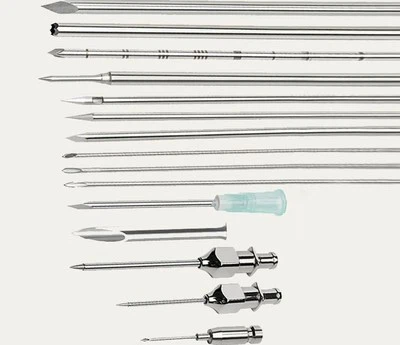
* Sharp and controllable tip: Its sharp needle tip can effectively cut the yellow ligament, providing clear resistance change signals. Its rounded and sloping surface will produce a significantly different feel when encountering hard tissues (such as bone), alerting the operator to adjust the direction to avoid accidental injury.
* Safe depth control: Once the needle tip penetrates the yellow ligament and enters the epidural space, the resistance will suddenly disappear. At this point, the "back eye" design of the needle tip causes it to "stop" in the epidural space instead of continuing to advance and puncture the deep dura mater. This is the first and most important safety mechanism to prevent cerebrospinal fluid leakage.
II. Comprehensive Clinical Application: From the Beginning of Life to Chronic Disease Management
The application of Tuohy needles has far exceeded surgical anesthesia and has permeated multiple aspects of disease management.
1. The guardian of perinatal medicine:
* Labor pain relief: This is the most classic and widely used application of Tuohy needles. By inserting a spinal epidural catheter through the intervertebral space, continuous administration of low-concentration local anesthetics and opioid drugs can provide excellent and controllable labor pain relief, and is hailed as the "standard" in modern delivery rooms.
* Cesarean section anesthesia: Combined with subarachnoid block (combined spinal-epidural anesthesia), or used alone, it can provide comprehensive and prolonged anesthesia for cesarean section surgeries.
2. The engine of surgical rapid recovery:
* Postoperative pain management for major thoracic and abdominal surgeries: Administering medication through thoracic or lumbar epidural catheters provides better pain relief than intravenous administration, significantly reducing surgical stress responses and promoting early ambulation and recovery of intestinal function. It is one of the core technologies of the accelerated recovery surgical concept.
3. Precise interventional treatment for chronic pain:
* Radicular pain: Under imaging guidance, precisely positioning Tuohy needles near the epidural space at the foramen of the affected nerve root, and injecting corticosteroids can effectively reduce nerve root edema and inflammation, treating radiating pain caused by lumbar intervertebral disc protrusion, spinal stenosis, etc.
* Cancer pain and spasticity: By puncturing and implanting a catheter for intrathecal drug infusion system with Tuohy needles, delivering analgesics (such as morphine) or muscle relaxants (such as baclofen) directly into the cerebrospinal fluid, it can achieve excellent analgesic or spasm-relieving effects at one-thirtieth of the oral dose, with minimal systemic side effects, significantly improving the quality of life of patients in the terminal stage.
* Epidural endoscopy diagnosis and treatment: As a tool to establish the initial channel, introducing a miniature endoscope, it can directly diagnose and treat epidural adhesions, cysts, and other lesions under direct vision, being an advanced technology in the field of pain intervention.
4. Diagnosis and emergency treatment:
* Diagnostic nerve block: Identifying the source of pain.
* Treating headache after spinal puncture: When cerebrospinal fluid leakage occurs due to other operations, a "epidural blood patch" can be performed using Tuohy needles, injecting a small amount of autologous blood into the epidural space to form a clot to seal the leak, which is a specific treatment method.
III. Clinical Art: Decisions and Feelings Beyond Technicalities
Using the Tuohy needle is an art. It requires doctors not only to master the anatomy and operation procedures, but also to possess:
* Precise anatomical positioning ability: This is particularly crucial in obese patients, those with spinal deformities, or those with a history of previous surgeries.
* Ultimate pursuit of "touch sensation": The subtle differences in resistance require long-term practice and concentration to be fully appreciated.
* Integration of imaging guidance: In modern clinical practice, ultrasound and X-ray fluoroscopy have become the "eyes" for Tuohy needle operations. Ultrasound is used to observe the puncture path in real time, measure depth, and avoid blood vessels; X-ray is used to confirm the final position of the needle tip and catheter in complex cases, achieving a leap from "blind puncture" to "visible puncture".
* Ability to predict and handle complications: Familiarity with potential risks such as hypotension, total spinal anesthesia, nerve injury, and hematoma formation, and the ability to quickly identify and handle them.
Conclusion
The Tuohy epidural puncture needle is not merely an instrument; it is a bridge connecting the doctor and the hidden "treatment space" within the patient's body. From welcoming the first cry of a new life to alleviating the persistent pain of chronic diseases, its application spans multiple key scenarios in human life and health management. With the advancement of visualization technology and the concept of precision medicine, the operation of the Tuohy needle is becoming safer and more controllable. However, its core value remains unchanged: based on a profound understanding of human anatomy and pathophysiology, it achieves precise regulation of neural functions with minimal trauma, which is both a manifestation of technology and an extension of medical humanistic care.