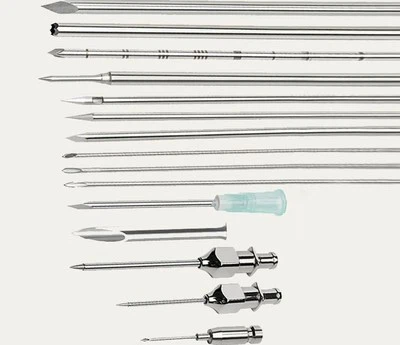
The Core Of Standardized Operation: The Role Of The Puncture Needle in Establishing Laparoscopic Access
Apr 27, 2026
The Core of Standardized Operation: The Role of the Puncture Needle in Establishing Laparoscopic Access
A laparoscopic surgery begins with a safe and reliable access point. This process is far from a random stab; it involves using the puncture needle as a pioneer to execute a set of highly standardized, precise operating procedures. This feature deconstructs this workflow to reveal how the puncture needle performs the "first incision"-from planning to execution.
Phase 1: Preoperative Planning and Localization - Setting the "Theoretical Trajectory" for the Needle
Before the puncture needle touches the skin, its path has already been pre-planned. The surgeon must precisely select puncture sites on the abdominal wall based on the type of surgery, the location of the target organ, and the patient's physique. The core principle is to select the best entry point for the physical penetration of the puncture needle to avoid subcostal vessels, previous surgical scars, and vital organs. For instance, the primary puncture site (observation port) is often chosen at the umbilicus because the abdominal wall is thinnest there. This planning stage is essentially calculating the optimal parameters for the puncture needle's "first-strike accuracy."
Phase 2: Pneumoperitoneum Establishment - Creating a "Safe Workspace"
In most standard laparoscopic surgeries, the puncture action of the needle does not occur within the natural peritoneal cavity but within a "pneumoperitoneum" moderately inflated with gas (usually CO₂). Initially, a finer Veress needle with a spring-loaded safety sheath is used to establish the pneumoperitoneum. Although this step is performed by the Veress needle, its purpose is to pave the way for the safe puncture of the main trocar needle: separating the abdominal wall from the intra-abdominal viscera to form a gas-filled operating cavity, significantly reducing the risk of inadvertently injuring the intestines or major blood vessels.
Phase 3: Precise Puncture and Channel Establishment - The "Core Performance" of the Puncture Needle
This is where the value of the puncture needle is most concentrated. Taking a standard disposable trocar as an example:
Combined Puncture: The sharp puncture needle (obturator) is placed inside the hollow puncture sleeve (cannula), forming a single unit. The surgeon holds the trocar handle and applies controlled, twisting forward pressure at the selected point, either perpendicular to or at an angle to the abdominal wall.
Perception of Penetration: The sharp tip of the puncture needle penetrates the skin, subcutaneous tissue, fascia, and peritoneum in sequence. An experienced surgeon can clearly perceive, through tactile feedback ("two pops" or loss of resistance), the exact moment the tip breaches the fascia and enters the peritoneal cavity-a key indicator of safe puncture.
Cannula Insertion: Once the entire trocar assembly enters the cavity, the internal puncture needle is withdrawn, while the hollow sleeve remains anchored in the abdominal wall. At this point, the puncture needle's mission is complete, and the cannula becomes the "gateway" for the camera and instruments to enter and exit the abdomen.
Phase 4: Subsequent Channel Establishment and Visual Guidance
After the primary channel (observation port) is established, the laparoscopic camera enters, providing a panoramic view of the intra-abdominal situation on the screen. Subsequently, when establishing auxiliary operating ports at other planned locations, the puncture process can be performed under direct visualization from the camera. This achieves "visual puncture," greatly enhancing safety. The screen clearly displays the entire process of the puncture needle tip tenting the peritoneum from the inside until it exits, ensuring foolproof accuracy.
Conclusion
The establishment of the laparoscopic channel is a precise, interlocking operational chain with the puncture needle as its executor. From theoretical planning and spatial preparation to physical puncture and visual confirmation, every step is designed to maximize the efficacy of the puncture needle while minimizing risk, laying a safe and stable physical foundation for the entire minimally invasive surgery.