The Clinical Significance Of The Tuohy Epidural Needle From A Technological Innovation Perspective
Apr 23, 2026
The Clinical Significance of the Tuohy Epidural Needle from a Technological Innovation Perspective
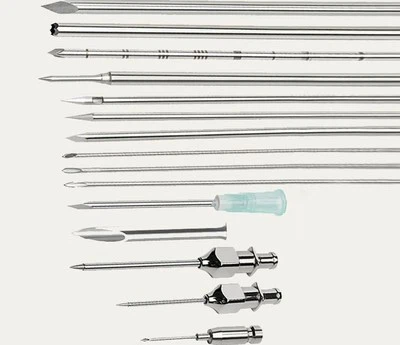
The Tuohy epidural needle (also known as the Tuohy needle, epidural needle, or Huber point needle) represents a milestone innovation in the fields of anesthesiology and pain management. The design philosophy behind this hollow hypodermic needle stems from a profound understanding of epidural procedural safety, and its unique curved tip design has revolutionized traditional clinical practice for epidural puncture.
Traditional straight-tip epidural needles pose a high risk of accidental dural puncture upon entering the epidural space, potentially leading to complications such as post-dural puncture headache (PDPH) and cerebrospinal fluid (CSF) leakage. The curved tip design of the Tuohy needle (typically at a 15–30 degree angle) offers a creative solution to this challenge. When the needle tip approaches the dura mater, the curvature allows it to "glide" along the arched space of the epidural cavity rather than directly penetrating the dura. This passive safety mechanism significantly reduces the incidence of dural puncture, thereby enhancing procedural safety.
In terms of material science, modern Tuohy needles are manufactured from medical-grade stainless steel, utilizing precision machining and specialized treatments. Manufacturers such as Manners Technology offer needle specifications ranging from 25G to 14G, catering to diverse clinical needs. Finer needles (e.g., 25G) are suitable for pediatric patients or scenarios requiring minimally invasive procedures, while larger-gauge needles (e.g., 14G) facilitate the placement of epidural catheters for continuous anesthesia or analgesia. The inner lumen undergoes special processing to ensure a burr-free, smooth edge, allowing catheters to pass through smoothly and minimizing tissue trauma.
The manufacturing precision of the Tuohy needle reaches ≤±0.01mm. This high level of accuracy ensures consistency in the shape of the needle tip, enabling operators to achieve a predictable "loss of resistance" sensation-a critical tactile feedback for confirming entry into the epidural space. Additional processes like electropolishing and ultrasonic cleaning further guarantee the cleanliness and biocompatibility of the needle, reducing the risk of infection.
In clinical practice, the versatility of the Tuohy needle extends far beyond its original design purpose of continuous spinal anesthesia. It has become the standard tool for procedures including epidural anesthesia, labor analgesia, chronic pain treatment, epiduroscopy, and the implantation of intrathecal drug delivery systems. Particularly for obese patients, the introduction of extended-length Tuohy needles addresses the challenge of insufficient puncture depth, reflecting careful consideration for patient diversity in medical device design.
The innovation of the Tuohy needle lies not only in the product itself but also in its role in advancing epidural techniques. Its safe and reliable design lowers the operational threshold, enabling more physicians to master epidural technology and thus allowing more patients to benefit from these effective analgesic and anesthetic methods. As medical technology continues to progress, the Tuohy needle remains the gold standard instrument for epidural procedures, and its design philosophy continues to influence the research and development direction of next-generation puncture devices.